
NHAI and National Road Safety Board Review Road Safety Measures on National Highways

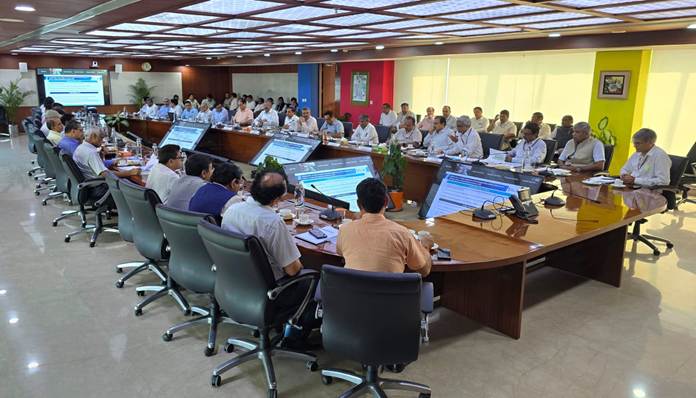
The National Highways Authority of India (NHAI) and the National Road Safety Board (NRSB) held an institutional meeting at NHAI Headquarters in New Delhi to undertake a comprehensive review of road safety systems across the National Highway network. The meeting focused on strengthening road safety governance, improving highway safety standards and developing coordinated measures to reduce accidents.
The meeting was attended by NRSB Chairman Dr. Nitin R. Gokarn and NHAI Chairman Santosh Kumar Yadav, along with other members of the National Road Safety Board, officials from the Ministry of Road Transport and Highways, NHAI, state administrations and road safety experts.
The deliberations marked an important step towards establishing a structured institutional framework for sustained cooperation between NHAI and NRSB. The two institutions discussed ways to improve road safety management, strengthen engineering and operational practices, and accelerate the implementation of safety interventions on National Highways.
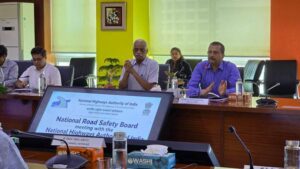
During the meeting, NHAI presented an overview of the existing road safety management system on National Highways. The presentation covered road safety performance, emerging trends, institutional arrangements and governance mechanisms. It also highlighted highway safety engineering and operations, road safety audits, management of accident-prone locations or black spots, speed management and the use of Intelligent Transport Systems.
Other areas discussed included emergency response and post-crash care, monitoring and performance management, citizen engagement and user-centric services. Commercial vehicle safety and driver welfare were also identified as important components of the broader road safety framework.
The discussions further examined the existing road safety ecosystem and identified areas where interventions could be strengthened through the adoption of a Safe System approach. This approach aims to reduce the risk and severity of road crashes through coordinated action across multiple areas.
The proposed framework includes six key strategic areas: risk identification, safe highway engineering and accident prevention; safe highway operations, commercial vehicle safety and Intelligent Transport Systems; emergency response, incident management and citizen-centric safety; digital safety management, monitoring and decision-support systems; performance monitoring, governance and institutional accountability; and the development of a strategic roadmap for National Highway road safety.
The meeting also included a detailed diagnostic assessment of existing safety mechanisms, with particular emphasis on technology-enabled solutions and emergency response capabilities. NRSB Chairman Dr. Nitin R. Gokarn appreciated NHAI’s efforts to deploy advanced technologies for improving road safety and incident management.
Among the technologies highlighted were Advanced Traffic Management Systems (ATMS), predictive Artificial Intelligence solutions and digital mapping of ambulances. These tools are aimed at improving traffic monitoring, identifying potential risks and enabling faster emergency response following road incidents.
The NRSB also emphasized the need to identify the top 10 accident-prone locations across the country and develop focused interventions for these areas. Strengthening first-response capabilities at toll plazas was another key recommendation. Toll plaza personnel could be provided with first-aid training so that they are better equipped to provide immediate assistance to accident victims before professional emergency services arrive.
The discussions also stressed the importance of stronger coordination between NHAI field offices and state administrations. Better information sharing and coordination at the local level would help ensure that road safety initiatives are implemented effectively and that emerging risks are addressed promptly.
The meeting is expected to form the foundation for continued engagement between NHAI and NRSB through periodic review meetings. These interactions will help the institutions assess road safety performance, identify emerging challenges and coordinate future interventions.
The structured partnership is aimed at creating a stronger and more responsive road safety ecosystem on National Highways, combining engineering improvements, technology, emergency response, governance and citizen-centric measures to make road travel safer across the country.