Vadodara Bullet Train Station Set to Become a New Gateway to Education and Opportunity

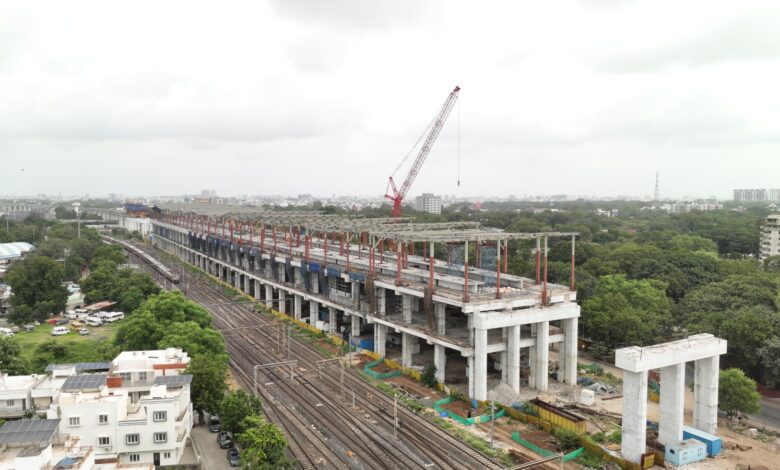
The upcoming Vadodara Bullet Train Station is set to create a new mobility gateway for students, young professionals and businesses by connecting the city more efficiently with major centres along the Mumbai–Ahmedabad corridor.
Vadodara, known as an important education and knowledge hub, attracts students and young talent from across Gujarat and other parts of the country. The city is home to prominent institutions including Maharaja Sayajirao University of Baroda (MSU), Gati Shakti Vishwavidyalaya (GSV), Indian Institute of Information Technology, Vadodara (IIIT), along with private universities such as Navrachana University, Parul University and Sumandeep Vidyapeeth.
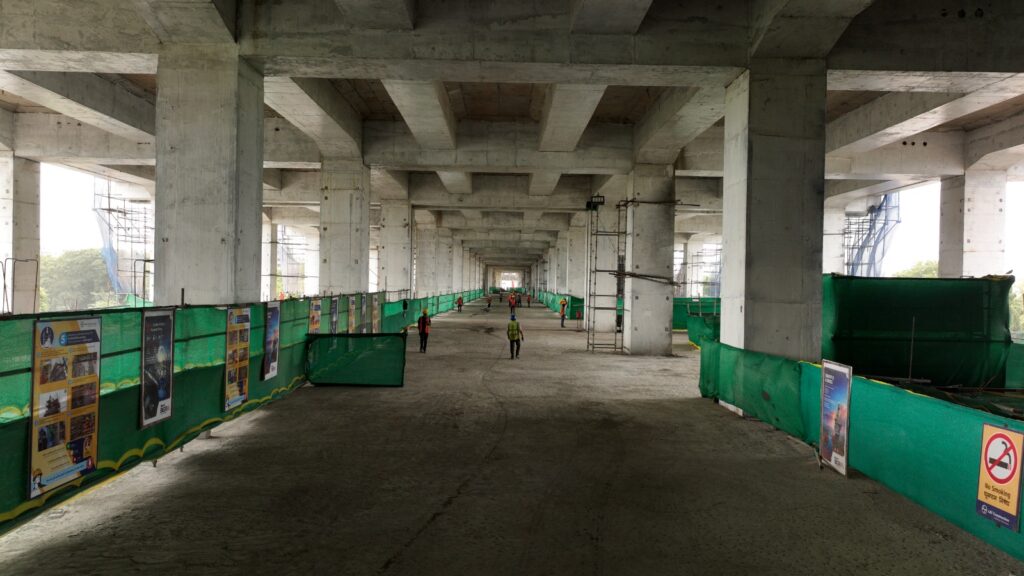
The combination of educational institutions and a strong industrial base has created an ecosystem spanning education, employment, research, technology, entrepreneurship and professional opportunities.
Connecting Education with Employment
For thousands of students and young professionals, mobility is closely connected with access to opportunities. Travel is often required for higher education, examinations, internships, research, employment, professional engagements and industry exposure.
Vadodara’s industrial ecosystem, covering sectors such as engineering, manufacturing, pharmaceuticals and chemicals, further strengthens the city’s employment and career potential.
The Bullet Train is expected to provide an additional mobility advantage by offering faster connectivity towards major cities such as Ahmedabad, Surat and Mumbai. This could allow students and professionals to access a wider range of educational and employment opportunities while making travel back to Vadodara more convenient.
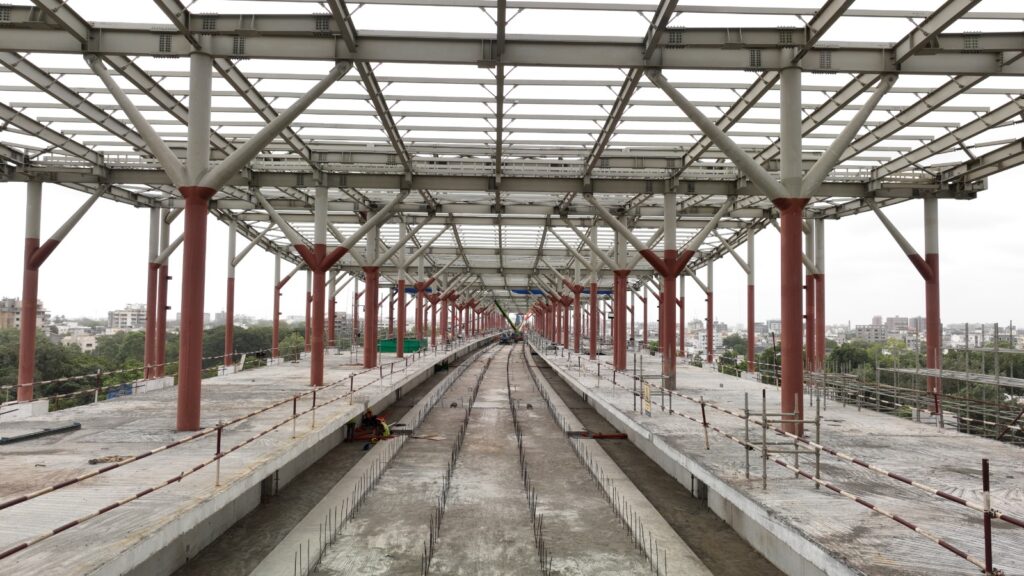
Bullet Train Station Integrated with Existing Railway Network
A key feature of the Vadodara station is its location. The Bullet Train station is being constructed above Platform No. 7 of Vadodara Railway Station, allowing passengers to interchange between the high-speed rail system and the existing Indian Railways network.
The station is also being integrated with the Western Railway station and the city and interstate bus depot. This multimodal connectivity is particularly important for passengers who need to combine rail and road transport during a single journey.
The objective is not limited to reducing travel time. The station’s design and connectivity are intended to make the overall passenger journey more convenient, accessible and comfortable.
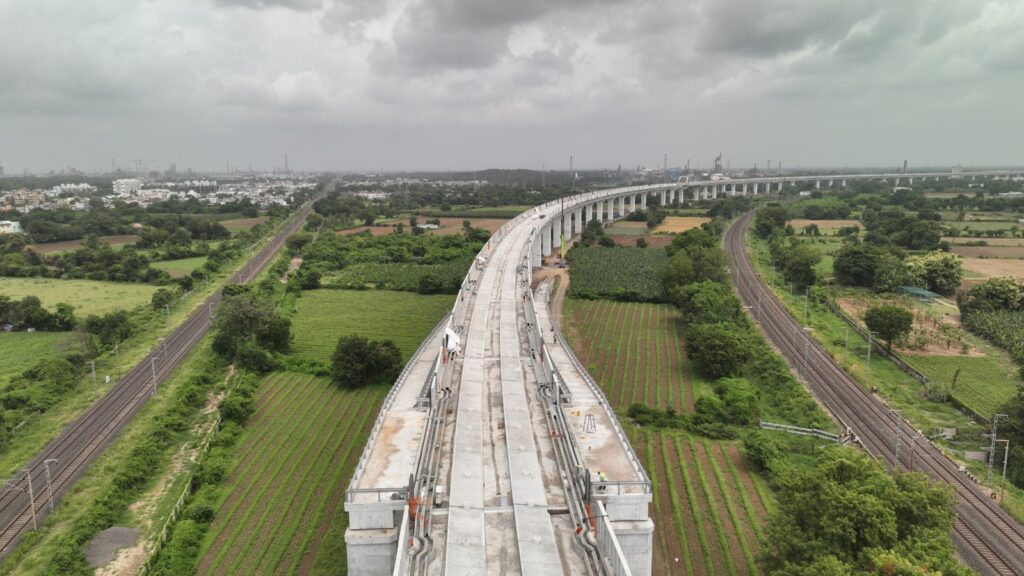
Key Passenger Facilities
The planned station infrastructure includes several facilities aimed at improving passenger convenience.
| Facility | Purpose |
|---|---|
| Comfortable waiting areas | Passenger convenience before boarding |
| Restrooms and retail facilities | Basic passenger and shopping needs |
| Dedicated pick-up and drop-off areas | Smoother road access to the station |
| Separate parking | Facilities for cars, buses and autos |
| Modern station plaza | Passenger circulation and waiting |
| Landscaping | Improved station environment |
| Clear wayfinding | Easier navigation inside the station |
A major feature of the station’s design is the integration of three Foot Over Bridges (FOBs). These structures are planned to improve interchange between the Bullet Train station, existing railway facilities, the bus depot and different parts of the city.
Three Foot Over Bridges for Seamless Interchange
FOB 1 will be the longest of the three, measuring approximately 534 metres. It will connect the Bullet Train station with Vadodara Railway Station and the GSRTC Central Bus Depot. The FOB will be equipped with travelators to make the interchange between rail and bus services easier for passengers.
FOB 2, measuring approximately 90 metres, will connect the Bullet Train station with the Alkapuri side of Vadodara, crossing over the railway tracks.
FOB 3, approximately 51 metres long, will provide connectivity between the station and the parking and station plaza. Lifts and escalators will be provided to improve passenger accessibility.
| Foot Over Bridge | Length | Main Connectivity |
|---|---|---|
| FOB 1 | 534 m | Bullet Train station–Vadodara Railway Station–GSRTC Central Bus Depot |
| FOB 2 | 90 m | Station–Alkapuri side |
| FOB 3 | 51 m | Station–parking/plaza |
The integrated design is aimed at reducing the friction involved in changing between different modes of transport. Instead of treating the Bullet Train station as an isolated facility, the planned infrastructure connects it with the existing railway and road transport network.
Architecture Reflecting Vadodara’s Identity
The Vadodara Bullet Train Station is also being designed to reflect the city’s identity. Its architectural concept draws inspiration from the Banyan Tree, reflecting Vadodara’s association with the Vad tree.
Passenger areas have been planned to provide ample natural light and views of the external sky. The design is intended to create an open and comfortable environment while giving the station a distinct architectural character.
A Gateway for the Next Generation
The significance of the Vadodara Bullet Train Station extends beyond high-speed transportation. Its integration with existing rail and bus services could make it an important component of the city’s wider mobility network.
For students, the faster connection could expand access to educational institutions, examinations, internships and research opportunities across the Mumbai–Ahmedabad corridor. For young professionals, improved connectivity could support employment, business, professional engagements and industry exposure.
For Vadodara itself, the station represents an opportunity to strengthen the connection between its education ecosystem, industrial base and wider regional economy.
The Vadodara Bullet Train Station, therefore, is being positioned not merely as a transport facility, but as a modern gateway connecting people with education, employment, business and opportunity. Its multimodal integration, passenger-focused facilities and city-inspired architecture are intended to make high-speed rail a more seamless part of everyday mobility in Vadodara.