
India Calls for Fair and Equitable Climate Action at UNFCCC COP31 in Türkiye
Developed Countries Must Honour Climate Finance Obligations Under Article 9.1 of Paris Agreement, Says India

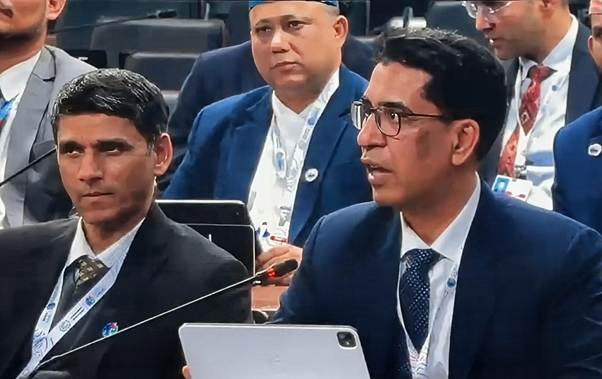
India has reaffirmed its commitment to climate multilateralism, calling for a fair, equitable and ambitious outcome at the 31st Conference of the Parties (COP31) to the United Nations Framework Convention on Climate Change (UNFCCC), being held in Antalya, Türkiye. India stressed that climate action must be guided by the principles of equity and Common But Differentiated Responsibilities and Respective Capabilities (CBDR-RC), while ensuring that the concerns and development priorities of developing countries receive adequate attention.
Delivering India’s opening statement at COP31, Narendra Bhooshan, Secretary, Ministry of Environment, Forest and Climate Change, Government of India, expressed gratitude to Türkiye and Australia for their leadership of the conference. He also appreciated the efforts of all participating countries and negotiating groups towards strengthening international cooperation on climate change.
India aligned itself with the positions expressed by the G77 and China, the Like-Minded Developing Countries (LMDC) and the BASIC group, reiterating the importance of collective action in addressing the global climate challenge.
India Reaffirms Faith in Multilateral Climate Framework
Highlighting the importance of multilateralism, India emphasised that the UNFCCC and its Paris Agreement remain the most inclusive international platforms for addressing climate change, providing every country with an opportunity to participate in global decision-making.
India reaffirmed its commitment to this multilateral process, stating that it must remain firmly rooted in equity and the principle of CBDR-RC. According to India, these principles are essential to ensure that countries with different levels of development, historical responsibilities and capabilities are treated fairly in global climate negotiations.
India also welcomed the COP31 Presidency’s vision of a ‘COP of Implementation’, guided by the three pillars of Dialogue, Consensus and Action.
The Indian delegation observed that dialogue helps build trust among countries, consensus ensures collective ownership of decisions, and action translates international commitments into tangible progress on the ground.
Equity and Just Transition Critical Amid 1.5°C Challenge
Drawing attention to the increasing threat of global warming crossing the 1.5°C threshold, India underlined that equity has become more important than ever in international climate negotiations.
India stressed that global climate action must ensure that no country or community is left behind. It reiterated its commitment to contributing its fair share towards addressing climate change while continuing to pursue the development and well-being of its population.
The country also highlighted the challenges associated with ensuring a just transition and meeting growing adaptation requirements, particularly in the Global South.
For developing countries, India pointed out, climate action is closely linked with broader development challenges. These nations must simultaneously address poverty, improve living standards, expand infrastructure and meet growing energy requirements while transitioning towards more sustainable development pathways.
India therefore emphasised that climate policies must recognise the differing national circumstances and development priorities of countries, rather than imposing uniform expectations.
India Calls on Developed Nations to Fulfil Climate Finance Commitments
Climate finance emerged as a key concern in India’s opening statement. The country emphasised that public finance provided by developed nations remains central to enabling developing countries to implement climate action and strengthen their resilience against climate-related vulnerabilities.
India specifically highlighted Article 9.1 of the Paris Agreement, which establishes the obligation of developed countries to provide financial resources to developing countries to support their climate mitigation and adaptation efforts.
It stressed that fulfilling these financial obligations is essential for strengthening climate action, particularly in developing economies that face significant resource constraints and increasing climate-related risks.
India also called for greater attention to adaptation finance, noting that developing countries require adequate and predictable financial support to address their vulnerabilities and prepare for the growing impacts of climate change.
India Pledges Constructive Engagement at COP31
Concluding its opening statement, India reiterated its willingness to engage constructively with all participating countries to advance meaningful outcomes at COP31.
It emphasised that international climate negotiations must deliver results that are fair, equitable and ambitious, while respecting the principles underpinning the UNFCCC and the Paris Agreement.
India’s position at COP31 reinforces its longstanding call for climate responsibility to be shared in accordance with national capabilities and historical obligations, with adequate financial and technological support for developing countries.
The country maintained that meaningful global climate action can only be achieved through inclusive cooperation, equitable burden-sharing and recognition of the development needs of the Global South