Netherlands Returns Historic 11th-Century Chola Copper Plates to India During PM Modi’s Visit

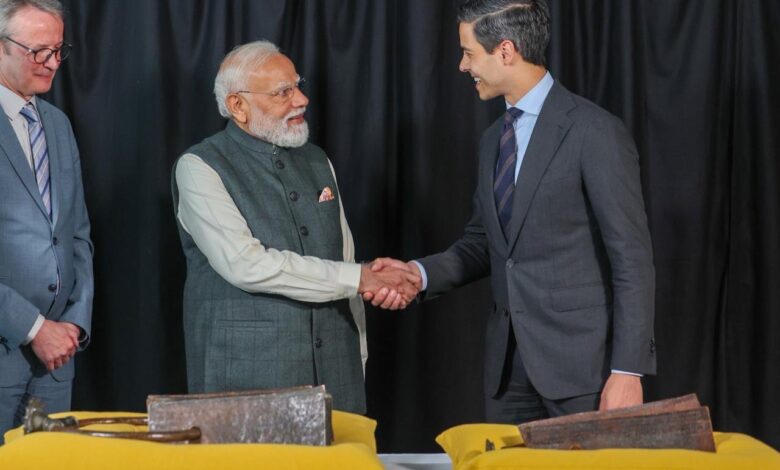
In a landmark moment for cultural diplomacy and heritage repatriation, the Netherlands on May 16, 2026, formally handed over the priceless 11th-century Anaimangalam Chola Copper Plates—also known as the Leiden Plates—to India. The return coincided with Prime Minister Narendra Modi’s visit to The Hague as part of his five-nation European tour, symbolizing strengthened bilateral ties and India’s ongoing efforts to reclaim its cultural artefacts.
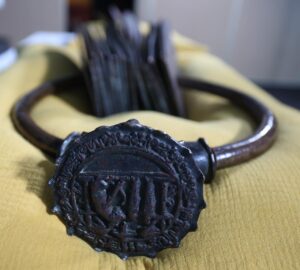
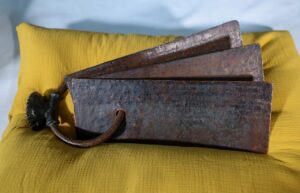
The 21-plate set, weighing around 30 kilograms and inscribed in Sanskrit (Grantha script) and Tamil, had been held at Leiden University for over 300 years. These plates represent one of the most significant surviving records of the Chola dynasty, documenting Emperor Rajaraja I’s (r. 985–1014 CE) generous grant of the village of Anaimangalam (near Nagapattinam in Tamil Nadu) to a Buddhist vihara established by the Srivijaya kingdom of Southeast Asia. The inscriptions, bearing the royal seal of his son Rajendra Chola I, offer rich insights into Chola administration, land grants, religious pluralism, and extensive maritime trade networks across the Indian Ocean.
Historians consider the plates vital for understanding the Chola Empire’s golden age, when Tamil maritime power extended to Southeast Asia. The artefacts were acquired in the early 18th century by a Dutch missionary or collector during the period when the Dutch East India Company controlled parts of the Coromandel Coast, including Nagapattinam. They eventually entered Leiden University’s collection in the 19th century via Professor Hendrik Arent Hamaker’s estate and remained there until this repatriation, which followed 14 years of sustained diplomatic efforts by India, involving the Dutch government and the university. The move aligns with the Netherlands’ evolving restitution policies and broader global discussions on returning colonial-era artefacts.
The handover ceremony added profound historical resonance to PM Modi’s engagements in the Netherlands. It underscores India’s proactive cultural diplomacy, which has successfully brought back several artefacts in recent years. Experts hope the plates will eventually be displayed in India, possibly near the Brihadeeswara Temple or Gangaikonda Cholapuram, reconnecting them with their original context.
Later on May 16, PM Modi addressed a vibrant gathering of the Indian diaspora at a community programme in The Hague. The event overflowed with enthusiasm, with cultural performances evoking the atmosphere of a festival back home. Modi remarked, “It feels like I am in India… The Hague has become a living symbol of Indian friendship today.” He praised the diaspora for maintaining deep roots despite living abroad, noting how passports and time zones may change, but the warmth, vibrancy, and cultural pride of Bharatiya sants remain constant.
In his address, the Prime Minister highlighted the contributions of the Indian community to Dutch society and economy, expressing gratitude to the Netherlands’ people and government on behalf of 1.4 billion Indians. He recalled his previous visits and interactions, emphasizing that the Indian diaspora’s story is one of resilience, cultural preservation, and progress. Community radio stations, Gandhi Centres, and schools run by the diaspora were lauded for transmitting Indian music, festivals, and values to future generations and even to Dutch families.
Modi connected the date—May 16—to a personal and national milestone: 12 years earlier, on May 16, 2014, the results of the Lok Sabha elections had paved the way for a stable, majority government. He credited the unwavering support of crores of Indians for his journey, from his early days in public service to over a decade as Prime Minister. “Your blessings are my greatest capital,” he said, reaffirming his commitment to fulfilling the aspirations of the people.
The Prime Minister painted a vivid picture of a transforming India driven by “Aspirations Unlimited” and “Efforts Limitless.” He cited achievements such as India becoming the world’s third-largest startup ecosystem, with over 2 lakh startups and more than 125 unicorns. Record infrastructure development—including highways, railways, renewable energy, and digital public infrastructure like UPI (which handles over 20 billion transactions monthly, accounting for more than half of global digital payments)—was highlighted. India’s successes in space (Chandrayaan missions), nuclear energy, AI summits, and G20 leadership were presented as evidence of its emergence as a global growth engine.
On bilateral ties, Modi noted deepening cooperation with the Netherlands in trade, semiconductors, green hydrogen, water security, and resilient supply chains. The recent India-EU trade agreement was expected to further boost this partnership, positioning the Netherlands as a natural gateway for Indian businesses into Europe. He invited the diaspora to act as a “trusted bridge,” leveraging their understanding of both Indian ambitions and European standards.
Cultural and sporting links were also celebrated. Modi drew parallels between Dutch tulips and the Indian lotus, symbolizing shared values of strength and beauty. He praised Indian contributions to Dutch cricket and Dutch coaching support for Indian hockey, looking forward to the Hockey World Cup hosted by the Netherlands. The government’s decision to extend OCI card eligibility for the Surinamese-Hindustani community was announced as a gesture of inclusivity.
The visit and the artefact return come at a time of robust India-Netherlands relations. Bilateral trade reached significant levels last year, with discussions focusing on defence, innovation, clean energy, and technology. Modi was scheduled to meet Dutch Prime Minister Dick Schoof (or Rob Jetten, per some references), King Willem-Alexander, and Queen Máxima.
This repatriation is more than a diplomatic success; it represents a reconnection with India’s ancient civilizational glory. The Chola plates, silent witnesses to a thousand years of history, now return home, enriching India’s cultural narrative while strengthening contemporary partnerships. As PM Modi concluded his address with “Bharat Mata ki Jai,” the event encapsulated the unbreakable bond between the motherland and its global children.
The homecoming of these heritage treasures amid energetic diaspora celebrations marks a memorable chapter in India’s journey on the world stage—one that honours the past while confidently building the future.