
PM Modi Participates in Paschimbanga Divas Celebrations in Hooghly, Launches Development Projects Across West Bengal

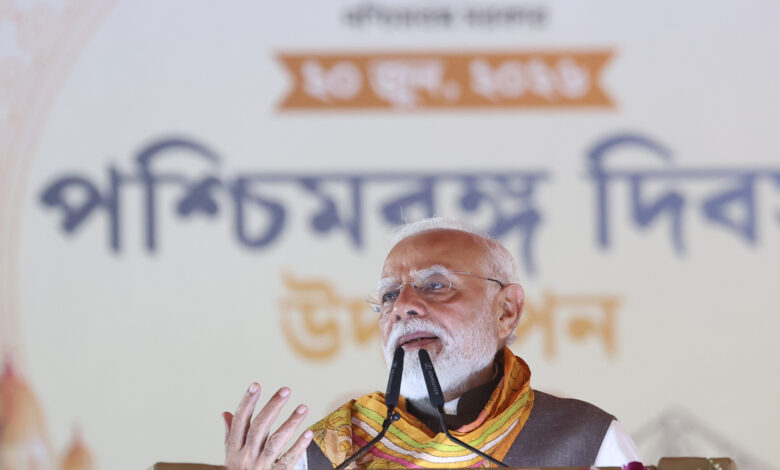
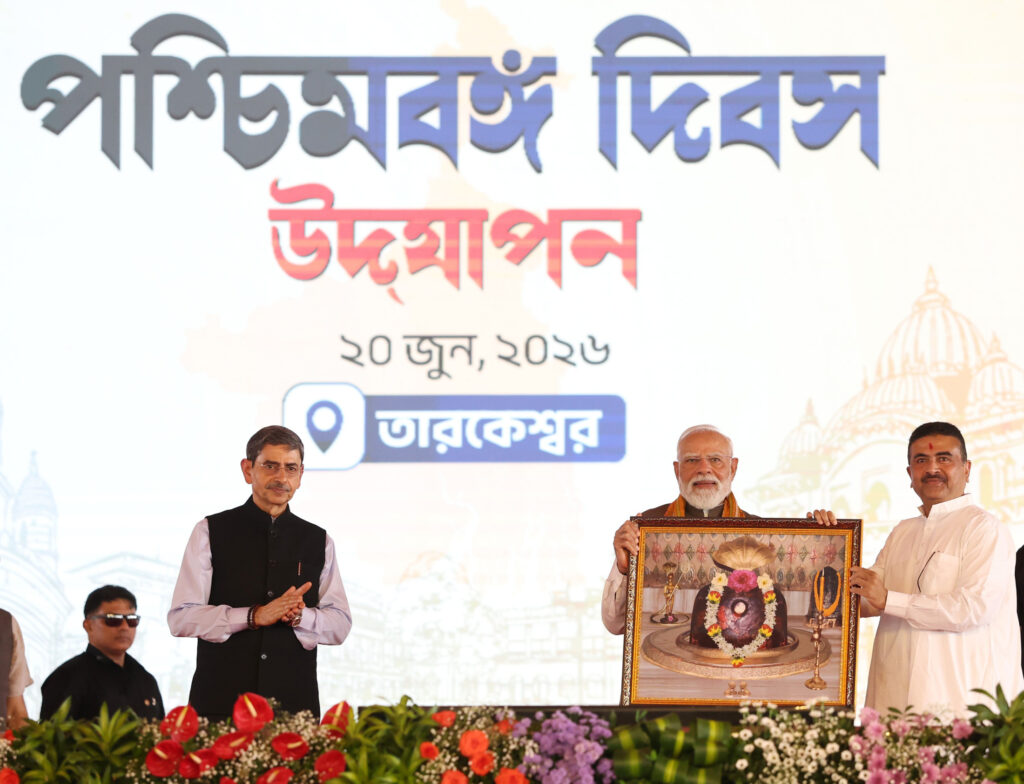
Prime Minister Narendra Modi on Saturday participated in the Paschimbanga Divas (West Bengal Day) celebrations at Tarakeswar in Hooghly district and launched, dedicated, and laid the foundation stones of multiple development projects spanning railways, agriculture, rural development, fisheries, and animal husbandry sectors.
The event marked a significant occasion as the Prime Minister visited West Bengal following the recent elections and the swearing-in of the new government. The state-level celebrations were organized under the theme “West Bengal: Heritage, Harmony and Development,” highlighting the state’s rich cultural legacy, social unity, and aspirations for growth.
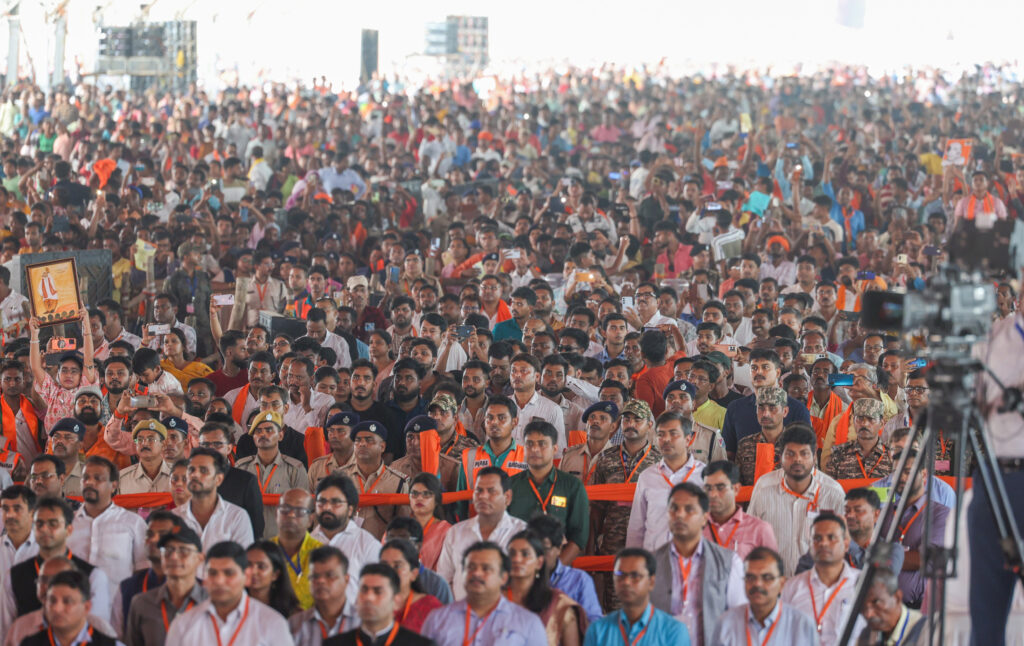
Addressing a large public gathering, Prime Minister Modi described the occasion as a historic moment and said that the dreams envisioned for Bengal’s future after Independence were gradually becoming a reality.
“This time, the date of West Bengal Day is even more special. The vision that the great personalities of Bengal had conceived for a bright future after Independence is today taking shape before our eyes,” the Prime Minister said.
During the programme, the Prime Minister inaugurated and laid the foundation stones of development projects worth hundreds of crores of rupees. The projects are expected to improve infrastructure, strengthen rural livelihoods, enhance farmer welfare, and accelerate socio-economic development across the state.
A major highlight of the event was the release of the 23rd instalment of the Pradhan Mantri Kisan Samman Nidhi (PM-KISAN). Under the latest instalment, more than ₹18,880 crore was transferred directly into the bank accounts of over 9.44 crore farmers across the country.
Extending his greetings to the people of West Bengal and the nation, Modi said the state had embarked on a new journey of growth and nation-building. He noted that the enthusiasm among citizens reflected growing confidence in a brighter future for Bengal.
The Prime Minister also congratulated people for their participation in the “Swachhta se Swagat” campaign and emphasized the importance of cleanliness as a key component of sustainable development.
Reflecting on the significance of Paschimbanga Divas, Modi said the occasion was not merely about commemorating a date but remembering Bengal’s long and rich history. He paid tribute to the sacrifices made by countless individuals who worked to preserve Bengal’s cultural identity and interests during the turbulent years of Independence and Partition.
“Bengal endured bloodshed and witnessed the division of its homeland, but it never allowed its identity and spirit to be destroyed,” he said.
The Prime Minister recalled the contribution of Dr. Syama Prasad Mookerjee in ensuring that a part of Bengal remained within India during Partition. He also acknowledged the role played by scholars, social reformers, intellectuals, industrialists, and community leaders in safeguarding Bengal’s future.
Highlighting the state’s rich heritage, Modi referred to the contributions of great personalities including Rabindranath Tagore, Bankim Chandra Chattopadhyay, Swami Vivekananda, Netaji Subhas Chandra Bose, and Ishwar Chandra Vidyasagar, stating that their legacy continues to inspire generations.
The Prime Minister said the newly formed government had started addressing long-pending issues and was working rapidly to revive stalled projects and unlock West Bengal’s economic potential.
He announced that every eligible poor family in the state would now benefit from the Ayushman Bharat health insurance scheme. Other welfare initiatives highlighted during the speech included the rollout of the Annapurna Scheme, expansion of clean drinking water access under the Jal Jeevan Mission, relaxation in age limits for government jobs, and free bus travel for women.
Modi said welfare schemes that had remained stalled for years were now being delivered directly to beneficiaries through public outreach programmes, ensuring transparency and eliminating middlemen.
On infrastructure development, the Prime Minister highlighted the progress of several major projects, including the completion of work on the Orange Line of Kolkata Metro at Chingrighata Crossing, the foundation stone laying for a new divisional railway hospital in Howrah, construction of road overbridges in Purba Medinipur, and the Sankrail–Santragachi rail connectivity project.
Focusing on agriculture, Modi welcomed the implementation of the Pradhan Mantri Fasal Bima Yojana in West Bengal, which will provide financial protection to farmers against crop losses. He also announced the state’s integration into the Digital Agriculture Mission, aimed at creating farmer registries, digitising land records, and improving agricultural service delivery.
The Prime Minister further revealed that four districts—Purulia, Darjeeling, Alipurduar, and Jhargram—would receive focused assistance under the PM Dhan Dhaanya Krishi Yojana to boost agricultural productivity, strengthen storage infrastructure, and improve access to institutional credit.
Recognising the importance of fisheries to the state’s economy, Modi highlighted projects including the expansion of the Fraserganj Fishing Harbour in South 24 Parganas and the development of a modern fish market in Birbhum, which are expected to enhance livelihoods and strengthen the fisheries sector.
Reiterating the Government’s vision of a Viksit Bharat by 2047, the Prime Minister emphasized that the development of Eastern India remains central to the national growth strategy under the Mission Purvodaya initiative.
“India’s goal of becoming a developed nation by 2047 rests significantly on the development of Eastern India, and West Bengal has a crucial role to play in this journey,” he said.
Concluding his address, Modi called for peace, social harmony, and preservation of Bengal’s cultural heritage while pursuing development. He also invited citizens to participate in the International Day of Yoga celebrations and expressed confidence that the land of Swami Vivekananda and Sri Aurobindo would continue to inspire the world through the message of yoga, wellness, and unity.