New Double-Line Mokama Rail Bridge Clears Safety Inspection, Ready for Operations

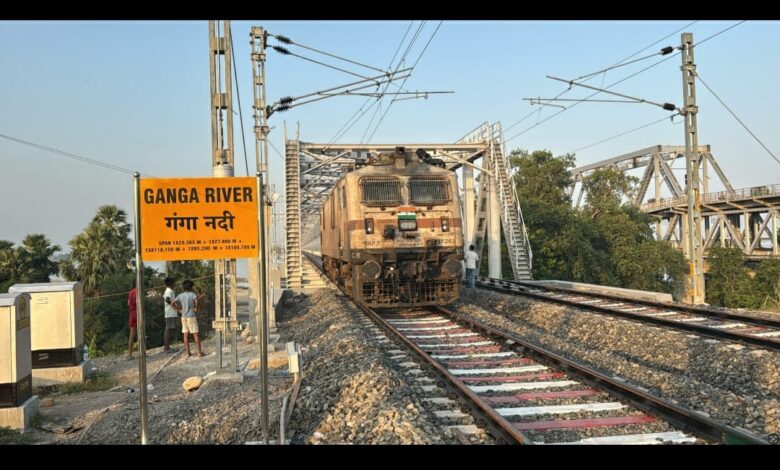
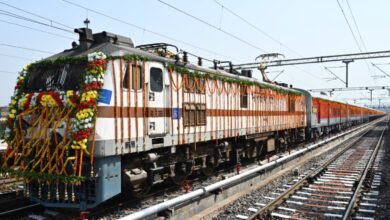
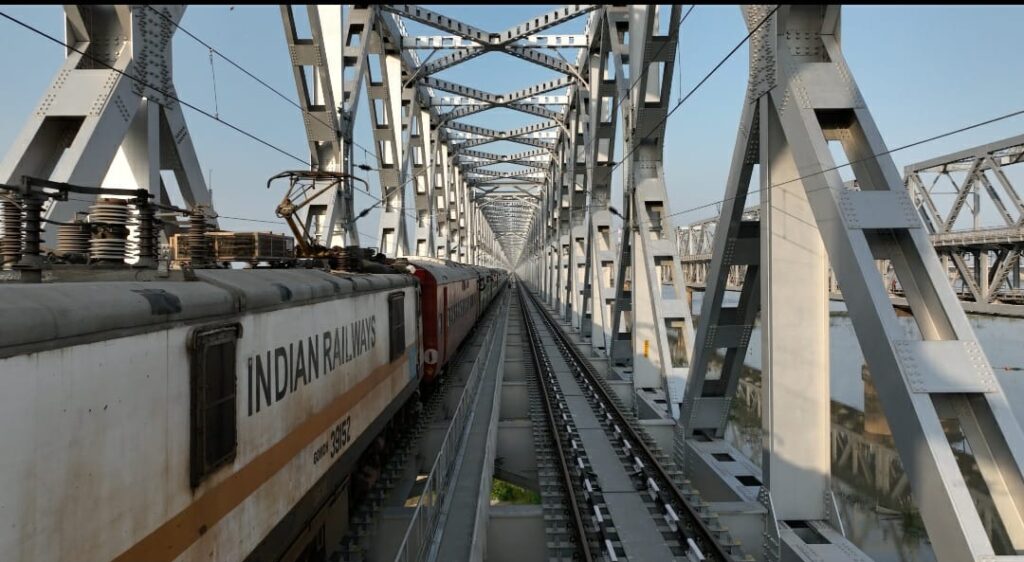
The newly constructed double-line railway bridge built parallel to the existing Rajendra Setu at Mokama in Bihar has completed its safety inspection by the Commissioner of Railway Safety (CRS), Eastern Circle, Kolkata. The inspection was conducted on October 3 and 4 by CRS Guru Prakash, covering the new Rajendra Pul–Hathidah Up bridge, associated doubling and electrification works, and the railway stations connected with the project.
According to the railway authorities, the new bridge is now available for train operations, subject to the required authorisation from the Commissioner of Railway Safety. Once the CRS authorisation is received, trains can be operated over the newly constructed bridge.
The project is expected to significantly improve railway connectivity between North and South Bihar, while also strengthening rail links between Bihar and the northeastern parts of the country.
₹2,400-Crore Project
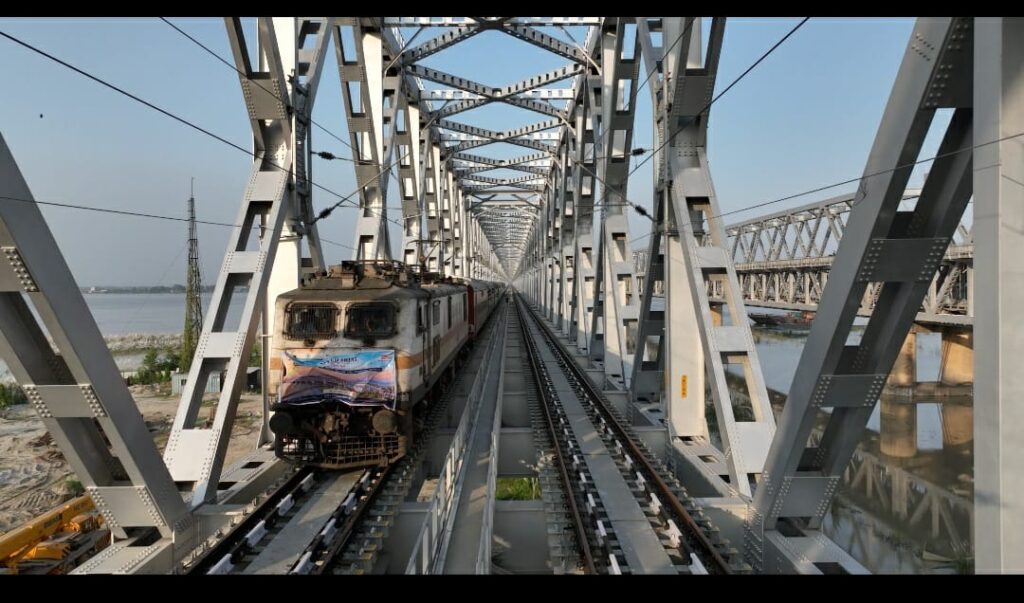
Constructed at an estimated cost of ₹2,400 crore, the new bridge has been built parallel to the existing Rajendra Setu, approximately 50 metres away from the old bridge towards the Patna end.
Unlike the existing single railway line arrangement, the new structure carries two railway lines, providing additional capacity for both passenger and freight trains.
The overall project extends for approximately 15.5 kilometres. Its most prominent component is the 1.9-kilometre main bridge across the Ganga River, which consists of 17 steel spans.
The project also includes around 3.6 kilometres of rail viaducts, along with eight minor bridges, two road overbridges and three rail-over-rail structures.
The alignment and construction plan was designed to minimise changes to the approaches of the existing Rajendra Setu, allowing the new infrastructure to integrate with the existing railway network while reducing disruption to current operations.
Connectivity with Existing Railway Stations
The new bridge has been integrated with the existing railway network and will connect with the stations already serving both ends of the Rajendra Setu.
On the northern side, the connectivity includes Hathidah, Tal and Rampur Dumra stations. On the southern side, the network connects with Rajendra Pul and Barauni stations.
This integration will allow the additional railway capacity created by the new bridge to be incorporated into the existing operational network without requiring a completely separate station infrastructure.
Three Railway Lines Across the Ganga
A major operational advantage of the project is that railway services will continue on the existing Rajendra Setu, even after the new double-line bridge becomes operational.
With two new railway lines on the parallel bridge and the existing line on Rajendra Setu, the crossing will effectively have three railway lines available for train operations.
The additional capacity is expected to ease congestion and provide greater flexibility for scheduling passenger and freight trains. Railway authorities anticipate that rail traffic in the area could increase by approximately 2.5 times following the development.
The additional infrastructure is particularly significant for freight movement, as increased line capacity can help improve train scheduling and reduce waiting time for goods trains.
Boost to Freight and Regional Economy
The new bridge is expected to play an important role in improving the movement of goods between northern and southern parts of Bihar and further towards northeastern India.
Improved freight connectivity could reduce both transportation time and logistics costs, benefiting businesses as well as the movement of essential commodities.
For passengers, the additional railway capacity is expected to support smoother train operations and create greater scope for handling growing demand on the route.
The bridge is therefore not only a major railway infrastructure project but also an important connectivity link for the wider region.
With the safety inspection now completed and the infrastructure made available for operations after the requisite CRS authorisation, the Mokama Ganga rail bridge represents a significant expansion of railway capacity across the Ganga.
The project is expected to strengthen the rail network between North and South Bihar, improve connectivity towards the Northeast, enhance passenger and freight movement, and create new opportunities for trade and economic growth in the region.