NCRTC Invites Bids for Co-Branding Rights at 21 Stations on Delhi–Meerut Namo Bharat Corridor

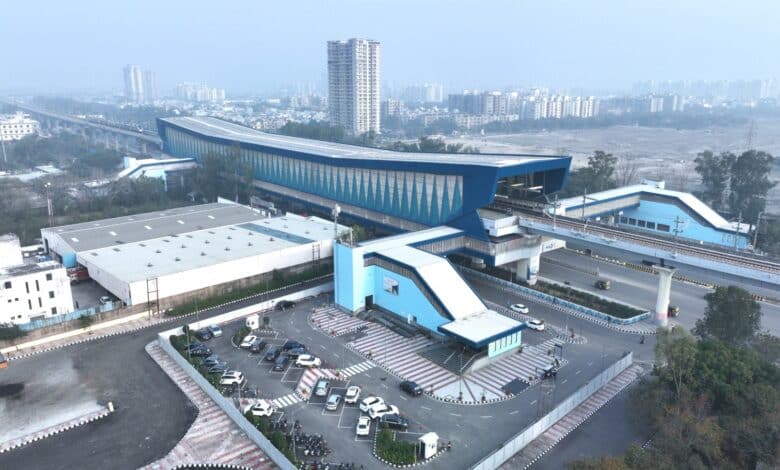
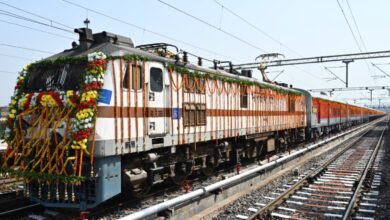
The National Capital Region Transport Corporation (NCRTC) has invited bids from companies and brands for exclusive semi-naming and co-branding rights at 21 stations on the Delhi–Ghaziabad–Meerut Namo Bharat corridor. The initiative is aimed at creating long-term brand partnerships while generating non-fare revenue opportunities through India’s first high-speed regional rail transit system.
Under the proposed arrangement, selected companies will be allowed to prefix or suffix their brand names with station names, giving them high visibility across one of the country’s most modern and rapidly growing public transport corridors. NCRTC officials said the initiative offers a unique opportunity for businesses to associate themselves with the Namo Bharat network, which has already emerged as a major commuter transit system in the National Capital Region.
The branding rights will cover multiple areas within and around stations, including station interiors, concourse areas, platforms, entry and exit gates, as well as important exterior structures such as piers located on both sides of the stations. This extensive visibility is expected to provide continuous brand exposure to both daily commuters and road users travelling along the corridor.
In addition to physical branding, co-branded station names will also be incorporated into onboard train announcements, creating direct engagement with passengers during travel. NCRTC said brand logos will be displayed prominently on station maps and signages, while dedicated kiosk spaces may also be provided to selected partners for experiential marketing activities and customer interaction.
The stations identified for exclusive semi-naming and co-branding rights include Sarai Kale Khan, New Ashok Nagar, Anand Vihar, Sahibabad, Ghaziabad, Duhai, Muradnagar, Modi Nagar South, Modi Nagar North, Meerut South, Partapur, Rithani, Shatabdi Nagar, Brahmpuri, Meerut Central, Bhaisali, Begumpul, MES Colony, Daurli, Meerut North and Modipuram.
The list includes both Namo Bharat stations and stations that are part of the Meerut Metro network, which operates on the same infrastructure. NCRTC officials stated that the stations are strategically located in densely populated areas and near key commercial centres, educational institutions, residential zones and marketplaces, making them highly valuable for brand visibility and outreach.
The initiative comes at a time when the Delhi–Meerut Namo Bharat corridor is witnessing rapidly increasing commuter traffic. Since operations began in phases on October 21, 2023, the corridor has already recorded nearly 3 crore commuter journeys. The rising passenger numbers are expected to further strengthen the commercial value of station branding opportunities.
Officials said semi-naming rights for Guldhar Namo Bharat station have already been awarded under the same initiative, indicating strong interest from the corporate sector in associating with the high-speed transit network.
Namo Bharat is India’s first regional rapid transit system and is currently the country’s fastest commuter rail network. Designed for high-speed, reliable and comfortable travel, the trains can operate at speeds of up to 160 kilometres per hour. The corridor has significantly reduced travel time between Delhi, Ghaziabad and Meerut, cutting journey durations to nearly one-third compared to road travel.
A major milestone for the project was achieved on February 22, 2026, when Prime Minister Narendra Modi dedicated the entire Delhi–Ghaziabad–Meerut Namo Bharat corridor to the nation and also inaugurated the Meerut Metro services. The integration of local metro operations with the Namo Bharat infrastructure in Meerut has been described as a first-of-its-kind initiative in India.
Through this integrated model, commuters can travel seamlessly from the National Capital Region to the heart of Meerut city using a unified transit infrastructure. NCRTC believes the project will play a transformative role in regional connectivity, urban mobility and economic growth across the NCR region.
Multi-modal integration remains one of the core planning principles of the Namo Bharat system. NCRTC has ensured connectivity between Namo Bharat stations and other modes of public transportation, including metro networks, Indian Railways stations, bus terminals and airports. This integrated approach is expected to boost commuter footfall further and enhance the value proposition for partner brands.
Officials said that by associating their names with major transit stations, brands can create stronger customer recall and establish a long-term public presence in high-traffic urban locations. The combination of physical branding, digital announcements and direct commuter interaction is expected to provide extensive marketing advantages to participating companies.
NCRTC has made the tender documents available through the Central Public Procurement Portal and on its official website. Interested companies and business groups can participate in the bidding process as part of NCRTC’s broader strategy to develop sustainable revenue models and enhance commuter experience through public-private partnerships.
With increasing ridership and expanding regional connectivity, the Delhi–Meerut Namo Bharat corridor is rapidly emerging not only as a transportation milestone but also as a major commercial and branding platform in India’s evolving urban transit ecosystem.