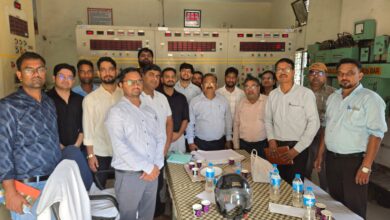
Ministry of Tribal Affairs, IIT Delhi Hold Seminar on AI-Driven Tribal Development Under Janjatiya Garima Utsav 2026

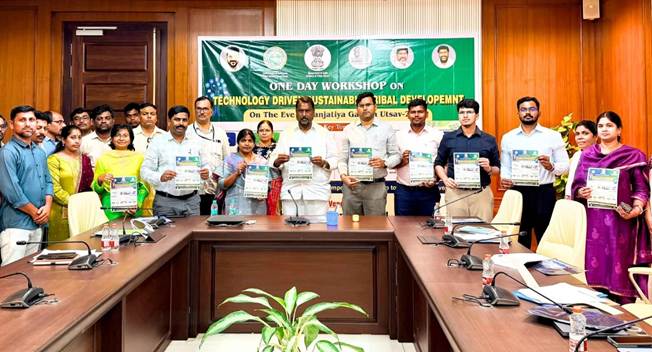
The Ministry of Tribal Affairs, in collaboration with the Bhagwan Birsa Munda Cell (BBMC) at Indian Institute of Technology Delhi, organised a high-level seminar on “Role of AI and Technology in Strengthening Sustainable Tribal Development” as part of the nationwide celebrations of Janjatiya Garima Utsav 2026. The event was held during the thematic week titled “Technology as a Development Driver”, being observed from May 11 to May 17, 2026.
The seminar brought together academicians, policymakers, researchers, technology experts and tribal development stakeholders to deliberate on the growing role of Artificial Intelligence (AI) and emerging technologies in promoting inclusive, community-centric and sustainable development among tribal populations across India.
Janjatiya Garima Utsav 2026 is being celebrated across the country from May 10 to June 9 to honour the heritage, dignity, achievements and contributions of tribal communities while also highlighting the impact of various welfare initiatives and schemes undertaken by the Ministry of Tribal Affairs for holistic tribal empowerment.
The event featured two major panel discussions titled “AI to Last Mile Roadmap: Voices from Tribal Communities” and “AI to Last Mile Roadmap: Social Perspective”. Experts discussed how technology can be used effectively to improve governance, education, healthcare, livelihoods and cultural preservation in tribal areas, especially in remote and underserved regions.
Addressing the gathering, Ganesh Nagarajan reiterated the Ministry’s commitment towards inclusive development guided by the principle of “Sabse Door, Sabse Pehle”, which focuses on reaching the most remote tribal communities first.
He highlighted the urgent need to preserve tribal languages and cultural identities, noting that India has more than 200 endangered tribal languages, many of which remain undocumented. He stressed that language preservation is closely linked to protecting tribal heritage and identity.
Speaking on the Ministry’s AI-driven initiatives, Nagarajan referred to “Adi Vaani”, an AI-powered multilingual platform developed to improve communication and service delivery for tribal communities. The platform currently supports languages such as Gondi, Mundari, Bhili and Santali and is helping expand access to education, healthcare information and government services in tribal regions.
Moderating the first panel discussion, Vivek Kumar emphasised the need to move beyond the traditional “last mile delivery” approach and instead adopt a “first mile” framework where tribal communities themselves become central to planning and implementation processes.
He stated that technology should not merely function as a delivery mechanism but should help institutions better understand the aspirations, concerns and lived experiences of tribal communities. He cautioned that development models disconnected from local traditions, values and social realities often fail to create sustainable impact.
During the second panel discussion, Anshu Singh highlighted the increasing role of AI in enabling data visualisation, evidence-based governance and informed decision-making across States and Ministries through platforms such as Adi Vaani.
She said future efforts should focus on transforming such initiatives into citizen-centric digital platforms supported by strong safeguards for AI testing, ethical use of data, accountability and institutional data-sharing frameworks. According to her, responsible use of AI will be critical in ensuring that technology benefits tribal populations without compromising privacy or cultural sensitivities.
Prakash Uikey underlined the importance of understanding tribal societies through their own linguistic and cultural frameworks instead of imposing external developmental perspectives. He stressed that AI and digital tools could play a transformative role in improving access to quality education in tribal and rural regions, helping reduce long-standing educational disparities.
Meanwhile, Sandeep Kumar elaborated on the Adi Vaani initiative and reflected on the rapidly growing influence of AI in modern society. He observed that while AI possesses immense transformative potential and has become an integral part of daily life, its expansion must be accompanied by ethical safeguards and responsible governance mechanisms.
He also called for stronger collaboration between technology experts, policymakers and grassroots communities to ensure that AI-based interventions remain practical, inclusive and socially relevant.
Throughout the discussions, experts repeatedly stressed the need for institutional convergence, decentralised preservation of tribal languages and stronger integration of indigenous knowledge systems into education, governance and policy frameworks.
Speakers observed that technology must go beyond administrative utility and actively contribute towards preserving tribal heritage, oral traditions, indigenous healing systems and community-led development models. They emphasised that AI-based solutions designed for tribal communities should remain assistive, inclusive and rooted in indigenous datasets and local realities to ensure meaningful and sustainable outcomes.
Concluding the seminar, officials from the Ministry of Tribal Affairs said that future discourse on AI and tribal development must remain firmly anchored in sustainability, ethics and community participation. They noted that technological solutions should be developed not only for tribal communities, but increasingly with and by tribal communities themselves.
The seminar also featured presentations on initiatives being undertaken under the Bhagwan Birsa Munda Cell at IIT Delhi, showcasing efforts to integrate traditional wisdom with modern technology for sustainable tribal development.
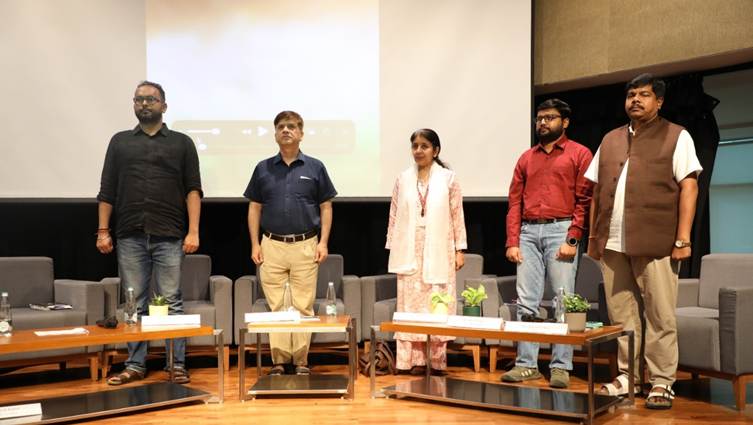
As part of the broader nationwide celebrations of Janjatiya Garima Utsav 2026, workshops and deliberative sessions on AI-enabled tribal development were also organised across 10 States and Tribal Research Institutes (TRIs) on May 15.
These sessions explored the role of Artificial Intelligence and emerging technologies in governance, healthcare, education, nutrition, livelihood generation and preservation of tribal culture through digital platforms and innovation-driven approaches.
States including Odisha, Gujarat, Maharashtra, Mizoram, Rajasthan, Sikkim, Tamil Nadu, Tripura and Uttar Pradesh showcased region-specific innovations and models aimed at strengthening inclusive tribal development through technology.
The workshops highlighted the importance of community participation, digital accessibility and preservation of indigenous knowledge systems while promoting culturally sensitive technological interventions.
Officials said the nationwide participation in the thematic events reflected growing momentum towards integrating advanced technology with grassroots tribal empowerment and participatory development as part of India’s broader vision of an inclusive and technology-driven Viksit Bharat.