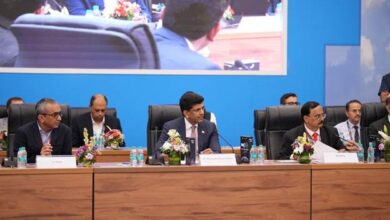
Lok Sabha Speaker Rejects Motion to Remove CEC Gyanesh Kumar
Notice signed by 130 MPs declined after preliminary scrutiny under constitutional provisions


The Speaker of the Lok Sabha, Om Birla, has rejected a notice of motion seeking the removal of Chief Election Commissioner Gyanesh Kumar, bringing an end to the proposed parliamentary action at the initial stage.
According to an official communication issued by Lok Sabha Secretary-General Utpal Kumar Singh, the notice of motion was submitted on March 12, 2026, and was signed by 130 Members of Parliament. The motion invoked provisions under Article 324(5) of the Constitution of India, read with Article 124(4) of the Constitution of India, along with Section 11(2) of the Chief Election Commissioner and Other Election Commissioners (Appointment, Conditions of Service and Term of Office) Act, 2023, and the Judges Inquiry Act, 1968.
The motion sought the removal of the Chief Election Commissioner, citing provisions that align the removal process of Election Commissioners with that of Supreme Court judges, requiring a rigorous parliamentary procedure.
However, after what was described as a “careful and objective assessment” of all relevant aspects and issues, the Speaker declined to admit the motion. The decision was taken under the powers conferred by Section 3 of the Judges Inquiry Act, 1968, which allows the presiding officer to either admit or refuse such motions after preliminary scrutiny.
The rejection of the motion means that no further inquiry or proceedings will be initiated in the matter. Had the motion been admitted, it would have led to the constitution of an inquiry committee to examine the charges against the Chief Election Commissioner, followed by a detailed investigation and potential debate in Parliament.
The development underscores the high threshold required for initiating removal proceedings against constitutional authorities such as the Chief Election Commissioner. The process is designed to ensure institutional stability and protect the independence of key democratic offices, including the Election Commission of India.
While the specific grounds cited in the motion have not been publicly detailed in the official communication, the Speaker’s decision effectively closes the matter at the preliminary stage, without advancing it to a formal inquiry.
The move comes amid ongoing discussions on electoral reforms and institutional accountability, with the Election Commission playing a critical role in overseeing free and fair elections in the country. The constitutional framework provides stringent safeguards to ensure that removal proceedings are not initiated without substantial grounds and due diligence.
Legal experts note that the Speaker’s discretion at the admission stage is crucial in filtering motions that may not meet the required legal and procedural standards. The reliance on constitutional provisions and statutory laws in this case highlights the layered framework governing such high-level appointments and their accountability mechanisms.
With the motion now rejected, Gyanesh Kumar will continue in office, and no further parliamentary action is expected on this issue unless a fresh notice meeting the necessary criteria is submitted in the future.
The decision has been formally communicated to Members of Parliament, reaffirming the procedural safeguards embedded in India’s parliamentary and constitutional system.