
India Unveils World’s First Nuclear Heat-Based Copper–Chlorine Hydrogen Production Facility at Kalpakkam

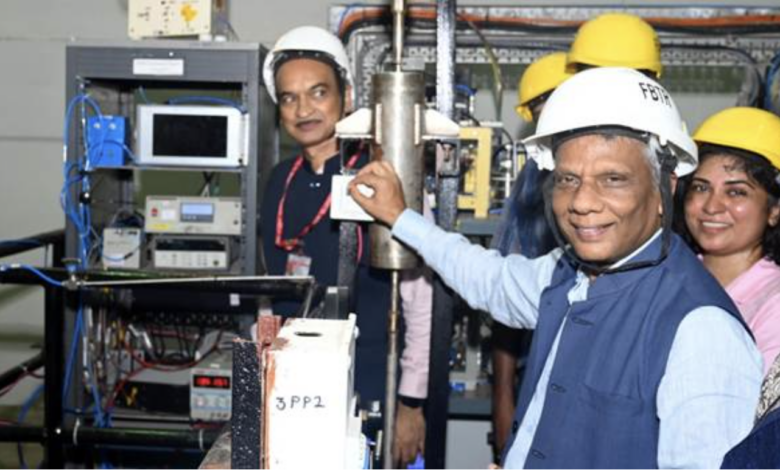
In a major technological breakthrough that could redefine the future of clean energy production, the Department of Atomic Energy (DAE) on Thursday inaugurated the world’s first hydrogen production facility based on the Copper–Chlorine (Cu-Cl) Thermochemical Cycle using nuclear process heat generated from the Fast Breeder Test Reactor (FBTR) at the Indira Gandhi Centre for Atomic Research (IGCAR), Kalpakkam.
The pioneering facility was inaugurated by Dr. Ajit Kumar Mohanty, Secretary, Department of Atomic Energy and Chairman of the Atomic Energy Commission (AEC), in the presence of Shri Sreekumar G. Pillai, Director, IGCAR, and senior scientists and engineers associated with the project.
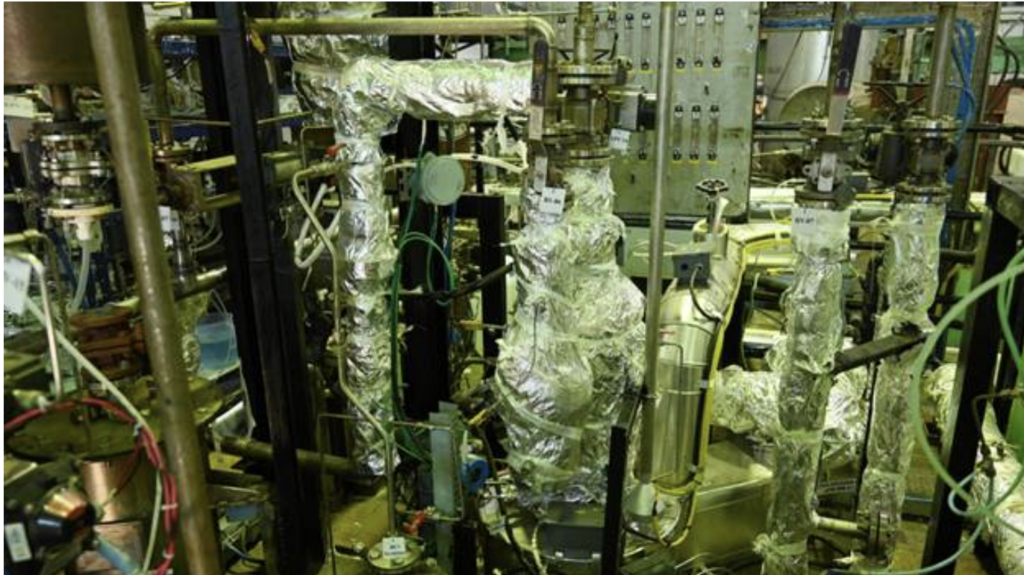
The landmark achievement places India at the forefront of advanced nuclear and clean hydrogen technologies, making it the first country in the world to successfully demonstrate hydrogen production through the Copper–Chlorine thermochemical process using nuclear heat from a fast reactor.
Major Milestone for Clean Energy
The newly commissioned plant has been established as a technology demonstrator to validate hydrogen production using the indigenously developed Copper–Chlorine thermochemical process created by scientists at the Bhabha Atomic Research Centre (BARC), Mumbai.
The successful integration of nuclear process heat with hydrogen generation is considered a major scientific and engineering achievement. It opens the door to large-scale, carbon-free hydrogen production and demonstrates the vast potential of nuclear energy beyond electricity generation.
The initiative is also seen as a major step towards achieving India’s long-term clean energy and decarbonisation goals while reducing dependence on fossil fuels.
Why Hydrogen Matters
Hydrogen is widely regarded as the fuel of the future and is expected to play a critical role in the global transition towards clean and sustainable energy systems.
Green hydrogen has emerged as one of the most promising alternatives to fossil fuels because it can be used in sectors that are difficult to decarbonise, including:
- Steel manufacturing
- Fertilizer production
- Heavy transportation
- Shipping and aviation
- Power generation and energy storage
However, producing hydrogen in an environmentally sustainable and economically viable manner remains one of the biggest challenges.
Most hydrogen produced globally today comes from fossil fuels, particularly natural gas and coal, resulting in significant carbon emissions.
The newly inaugurated facility at Kalpakkam offers an innovative solution by using nuclear process heat to produce hydrogen without emitting greenhouse gases.
Advantages of the Copper–Chlorine Process
Among the various hydrogen production technologies under development worldwide, the Copper–Chlorine thermochemical cycle is considered one of the most promising.
The technology offers several advantages:
- Lower operating temperatures compared to many other thermochemical cycles.
- Higher thermodynamic efficiency.
- Reduced dependence on electricity for hydrogen generation.
- Carbon-free production process.
- Better compatibility with advanced nuclear reactors.
Scientists believe the process can significantly reduce the cost of hydrogen production once deployed on a commercial scale.
By utilizing heat generated from nuclear reactors, the technology can produce hydrogen continuously, unlike renewable energy-based systems that depend on weather conditions.
Technology Developed Entirely in India
The project is another example of India’s growing technological self-reliance in advanced energy systems.
The Copper–Chlorine thermochemical process was developed indigenously by BARC, while the integration with the Fast Breeder Test Reactor and the establishment of the demonstration facility were carried out jointly by BARC and IGCAR.
The commissioning of the plant marks the culmination of years of scientific research and engineering efforts, including:
- Process development;
- Engineering design;
- Equipment fabrication;
- Installation and integration;
- Safety studies;
- Testing and commissioning.
The facility is expected to provide valuable operational experience and generate data that will help scientists further optimise the process and scale it up for commercial deployment.
A New Role for Nuclear Energy
The project significantly expands the role of nuclear energy in India’s energy landscape.
Traditionally, nuclear reactors have been viewed primarily as sources of electricity generation. However, advanced reactors are increasingly being seen as providers of high-temperature process heat that can be used in a wide range of industrial applications.
The successful demonstration at Kalpakkam shows that nuclear reactors can also become major producers of clean hydrogen.
Addressing the gathering during the inauguration ceremony, Dr. Ajit Kumar Mohanty said that integrating nuclear energy with emerging clean technologies such as hydrogen production represents a strategic pathway towards a sustainable energy future.
“Nuclear power, with its unique ability to provide reliable carbon-free electricity as well as high-temperature process heat, is ideally suited to support large-scale hydrogen production while contributing to India’s energy security, decarbonization goals and long-term sustainable development objectives,” he said.
He congratulated the scientists, engineers and technical teams of BARC and IGCAR for transforming an advanced scientific concept into an operational reality.
According to him, the achievement is a testament to India’s growing capabilities in advanced nuclear technologies and clean energy systems.
Built on the Strength of the Fast Breeder Test Reactor
The world’s first nuclear heat-based hydrogen production facility has been built upon the unique capabilities of the Fast Breeder Test Reactor.
FBTR remains India’s only operating fast reactor research facility and has been a cornerstone of the country’s advanced nuclear research programme.
Established more than four decades ago, the reactor has served as a crucial platform for the development and validation of:
- Advanced nuclear fuels;
- Reactor materials;
- Sodium technology;
- Safety systems;
- High-temperature engineering.
The knowledge generated from the reactor has laid the foundation for India’s fast reactor programme and has played a vital role in the development of the 500 MWe Prototype Fast Breeder Reactor (PFBR), the flagship project of the second stage of India’s three-stage nuclear power programme.
IGCAR’s Contribution to Nuclear Technology
The Indira Gandhi Centre for Atomic Research has been at the forefront of India’s Fast Breeder Reactor programme since its establishment in 1971.
Over the years, the institution has built internationally recognised expertise in:
- Reactor physics;
- Thermal hydraulics;
- Advanced materials;
- Fuel cycle technologies;
- Instrumentation and control systems;
- Remote handling systems;
- Non-destructive evaluation techniques;
- High-temperature engineering.
Its contributions have significantly strengthened India’s technological self-reliance and established the country among the global leaders in advanced nuclear technologies.
Speaking on the occasion, IGCAR Director Shri Sreekumar G. Pillai said that the achievement builds upon more than four decades of operational experience and technological excellence gained through the Fast Breeder Test Reactor programme.
“The successful demonstration of hydrogen production using nuclear process heat showcases the versatility of advanced nuclear systems and underscores IGCAR’s commitment to developing innovative technologies that contribute to India’s clean energy transition and long-term energy security,” he said.
Strengthening India’s Three-Stage Nuclear Programme
The new facility also advances India’s ambitious three-stage nuclear power programme by broadening the application of nuclear energy beyond conventional electricity generation.
The successful demonstration of nuclear-assisted hydrogen production could eventually lead to the establishment of large-scale hydrogen production units integrated with future advanced nuclear reactors.
Experts believe this could provide a stable and reliable source of clean hydrogen for India’s rapidly growing industrial and energy sectors.
The initiative is also expected to support the country’s National Green Hydrogen Mission and accelerate the transition towards a low-carbon economy.
Towards an AtmaNirbhar and Viksit Bharat
The inauguration of the world’s first Copper–Chlorine thermochemical hydrogen production facility represents a significant step towards the vision of AtmaNirbhar Bharat.
The project demonstrates the successful convergence of advanced nuclear technologies and clean energy innovation developed entirely through indigenous capabilities.
As nations around the world search for sustainable and scalable solutions for hydrogen production, India’s achievement at Kalpakkam has positioned the country as a global pioneer in nuclear-assisted clean hydrogen technologies.
The facility not only showcases India’s scientific and technological capabilities but also reinforces the Department of Atomic Energy’s commitment to building a secure, sustainable and low-carbon energy future for Viksit Bharat.