IMD Warns of Heatwave Across North India, Heavy Rainfall in Northeast
Temperatures soar past 47°C as storms, lightning and gusty winds to impact eastern and northeastern regions over the coming week

The India Meteorological Department on April 26 issued a comprehensive nationwide weather bulletin warning of persistent heatwave conditions across northwest and central India over the next three days, alongside widespread rainfall, thunderstorms, and gusty winds expected in eastern and northeastern parts of the country through the coming week.
According to the Ministry of Earth Sciences, heatwave to severe heatwave conditions are likely to continue in isolated to scattered pockets of northwestern and central regions before gradually subsiding after April 28. At the same time, fairly widespread to widespread rainfall accompanied by thunderstorms, lightning, and winds reaching speeds of 40–50 kmph is forecast over Sub-Himalayan West Bengal, Sikkim, and the northeastern states.
Heatwave grips large parts of India
The IMD said maximum temperatures across most parts of India—barring the Western Himalayan region, Northeast, west coast, and southern peninsular areas—remained in the range of 40°C to 45°C over the past 24 hours. The highest temperature recorded in the country was 47.4°C at Banda in Uttar Pradesh, highlighting the severity of the heat conditions.
Temperatures were markedly above normal in several states, including Punjab, Haryana, Delhi, Rajasthan, and Himachal Pradesh, while appreciably above normal conditions prevailed across Uttar Pradesh, Bihar, Madhya Pradesh, Gujarat, and parts of peninsular India.
Below is a snapshot of temperature conditions:
| Region | Temperature Status | Key Observations |
|---|---|---|
| Northwest India | Markedly above normal | Severe heatwave in parts of Delhi, Punjab, Haryana |
| Central India | Above normal | Rising heat stress in Madhya Pradesh, Vidarbha |
| East India | Above normal | High temperatures in Bihar, Jharkhand |
| Northeast India | Near/Below normal | Cooler conditions due to rainfall |
| Southern India | Above normal | Humid heat conditions in coastal areas |
Night temperatures have also remained unusually high, with “warm night” conditions reported in parts of Uttar Pradesh, Punjab, Haryana, and Rajasthan, increasing health risks for vulnerable populations.
Rainfall and thunderstorms to intensify in East and Northeast
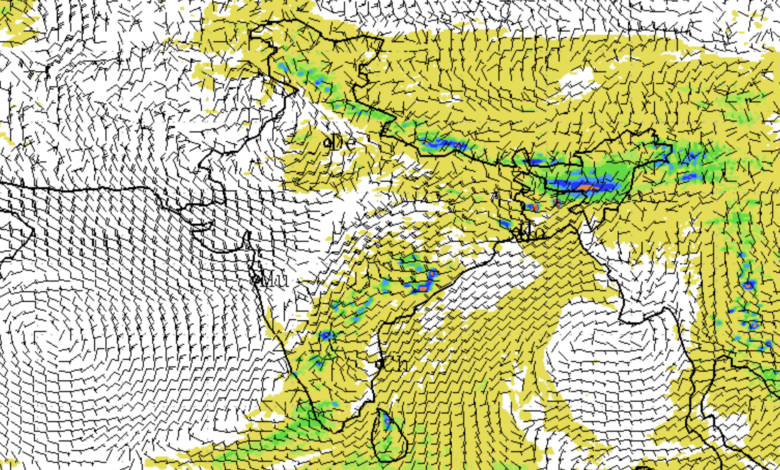
While northern and central India grapple with heat, the IMD has forecast active weather over eastern and northeastern regions. Heavy to very heavy rainfall is likely over Arunachal Pradesh, Assam, Meghalaya, and Sub-Himalayan West Bengal and Sikkim over the next several days.
Thunderstorms accompanied by squally winds, with speeds reaching up to 70 kmph in some areas, are expected to impact eastern states including Bihar, Jharkhand, and Odisha. Hailstorm activity has also been forecast in isolated areas.
Regional Weather Forecast Overview
| Region | Forecast |
|---|---|
| Northwest India | Rain, thunderstorms, gusty winds from April 27; heatwave till April 28 |
| Northeast India | Widespread rainfall, heavy to very heavy showers till May 2 |
| East India | Thunderstorms, heavy rainfall, thundersqualls till May 2 |
| Central India | Light to moderate rain with thunderstorms between April 27–30 |
| South India | Rain and thunderstorms; heavy rainfall in Kerala from April 29 |
| West India | Isolated rain and thunderstorms |
Weather systems driving current conditions
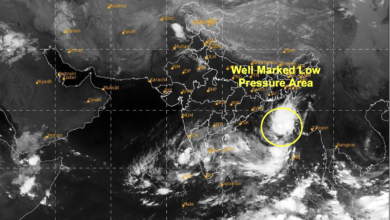
Meteorologists attribute the current weather pattern to multiple interacting systems, including a western disturbance over northern India, cyclonic circulations over Uttar Pradesh, Jharkhand, and Madhya Pradesh, and a trough extending from Karnataka to Tamil Nadu. An anti-cyclonic circulation over Maharashtra is also contributing to rising temperatures in central regions.
Delhi-NCR: Heatwave with brief relief expected
In the national capital region, heatwave conditions have been recorded at several locations, with maximum temperatures ranging between 43°C and 45°C. The IMD has forecast continued heatwave conditions on April 26 and 27, with a possibility of light rain and thunderstorms offering slight relief from April 28 onward.
| Date | Forecast | Temperature Range |
|---|---|---|
| April 26 | Clear to partly cloudy, heatwave | 43–45°C |
| April 27 | Heatwave, possible light rain | 43–45°C |
| April 28 | Thunderstorm, light rain | 40–42°C |
| April 29 | Cloudy with drizzle, cooler | 39–41°C |
Impact and advisories
The IMD has issued advisories highlighting the risks associated with extreme weather conditions. Heatwaves could pose moderate to high health risks, particularly for children, the elderly, and individuals with pre-existing illnesses. People have been advised to avoid prolonged exposure to the sun, stay hydrated, and wear light clothing.
Thunderstorms and strong winds may cause damage to crops, power lines, and weak structures. Hailstorms could harm horticulture and standing crops, while heavy rainfall may lead to waterlogging, traffic disruptions, and localized flooding in urban areas.
Fishermen warning
Fishermen have been advised not to venture into parts of the Bay of Bengal along and off the coasts of Odisha, West Bengal, and Bangladesh between April 26 and May 1 due to adverse weather conditions. No warnings have been issued for the Arabian Sea.
Agricultural and livestock advisories
Farmers across affected regions have been urged to take precautionary measures, including ensuring proper drainage in fields, protecting crops with nets or covers, and postponing irrigation or sowing where heavy rainfall is expected. In heatwave-prone areas, light and frequent irrigation has been recommended to protect crops.
Livestock owners have been advised to provide adequate shelter, water, and feed to animals, particularly during periods of extreme heat or heavy rainfall.
Outlook
The IMD expects temperatures to gradually decline across most regions after April 28, with a drop of 2–5°C likely in northern, central, and eastern India. However, weather activity including thunderstorms and rainfall is expected to remain active across several parts of the country through early May.
Officials emphasized that while heatwave conditions may ease slightly, the combination of high temperatures and intermittent storms could continue to pose challenges, requiring close monitoring and timely precautionary measures by both authorities and the public.