Government Exempts Excise Duty on Ethanol-Blended Petrol (22% to 30%) to Boost Ethanol Programme

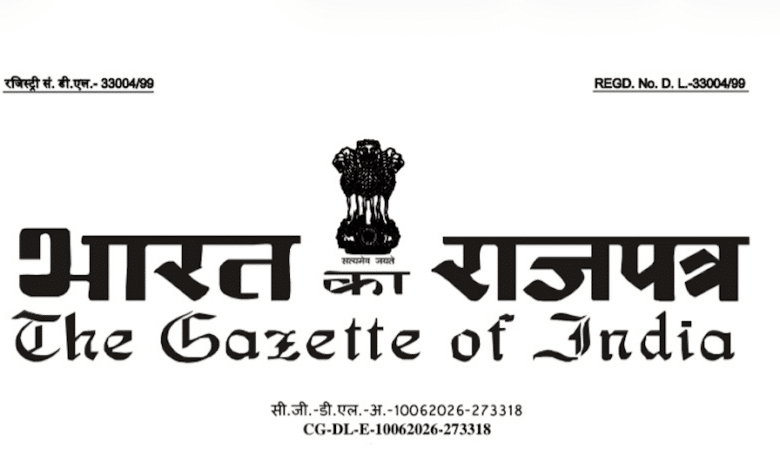
In a significant move to accelerate India’s ethanol blending programme, the Union Ministry of Finance has notified the complete exemption of Central Excise Duty on petrol blended with 22% to 30% ethanol. The decision, published in the Extraordinary Gazette of India today, is expected to give a major push to domestic ethanol production, reduce the country’s dependence on imported crude oil, and support farmers and the sugar industry.
The notification (No. 26/2026-Central Excise), issued under the Central Excise Act, 1944, amends earlier notifications and sets the excise duty at zero (“Shunya”) for four categories of ethanol-blended petrol. These include:
- Petrol with 22% ethanol
- Petrol with 25% ethanol
- Petrol with 27% ethanol
- Petrol with 30% ethanol
The exemption applies only to blends meeting specific quality standards under the Bureau of Indian Standards (BIS) and other prescribed conditions regarding motor spirit content and compliance with relevant rules. The move builds upon previous ethanol blending targets and comes at a time when the government has been steadily raising the ethanol blending percentage in petrol to achieve energy security and environmental goals.
Strategic Push for Energy Security
India currently imports a significant portion of its crude oil requirements. Ethanol blending helps substitute a part of this imported fuel with domestically produced ethanol, primarily derived from sugarcane molasses, rice, maize, and other agricultural feedstocks. By removing the excise duty burden on higher ethanol blends, the government aims to make E22 to E30 petrol more competitive in the market, encouraging oil marketing companies (OMCs) to procure and blend more ethanol.
Experts believe this fiscal incentive will boost ethanol demand, leading to higher procurement prices for ethanol producers and, consequently, better returns for farmers. The sugar industry, which supplies a large share of ethanol in India, is also expected to benefit significantly from increased offtake.
According to government estimates, every 1% increase in ethanol blending can save thousands of crores in foreign exchange by reducing crude imports. Higher blending also leads to lower carbon emissions, supporting India’s climate commitments under the Paris Agreement.
Background and Previous Efforts
The government had earlier set an ambitious target of achieving 20% ethanol blending (E20) by 2025, which was advanced from the original 2030 timeline. In recent years, blending percentages have steadily increased from around 5% to over 12-15% in several states. The latest notification takes this momentum forward by incentivizing even higher blends up to 30%.
The Finance Ministry’s notification explicitly references previous orders, including the one issued on June 30, 2017, and subsequent amendments. It states that the Central Government, after being satisfied that it is necessary in the public interest, has decided to exempt the specified blends from excise duty.
The notification will come into effect immediately and includes detailed descriptions of the eligible blended fuels, ensuring only compliant products benefit from the duty exemption. It also provides for amendments in tariff schedules where the specific serial numbers corresponding to these blends will now reflect zero duty.
Expected Impact on Economy and Environment
This policy intervention is likely to have multiple positive effects:
- Economic Benefits: Reduced import bill, savings in foreign exchange, and additional revenue streams for the agriculture sector.
- Environmental Gains: Lower greenhouse gas emissions compared to pure petrol.
- Employment Generation: Expansion of ethanol production capacity will create jobs in rural areas, including in distilleries and allied sectors.
- Energy Diversification: Decreased reliance on fossil fuels and greater use of renewable fuels.
Industry stakeholders have welcomed the decision. Oil companies are now expected to ramp up procurement of ethanol for higher blending ratios. Automobile manufacturers will also need to ensure compatibility of vehicles with higher ethanol blends, though most modern vehicles in India are already E20 compliant, with work underway for higher blends.
Way Forward
With this notification, the government has sent a clear signal of its commitment to the Ethanol Blending Programme (EBP). As India moves towards higher blending targets, further policy support in the form of infrastructure development for ethanol storage and dispensing, along with continued research into second-generation ethanol from agricultural waste, will be crucial.
The Ministry of Petroleum and Natural Gas, in coordination with the Finance Ministry and NITI Aayog, is expected to monitor the implementation closely and address any supply-chain or pricing challenges that may arise.
This bold fiscal step on June 10, 2026, marks another important milestone in India’s journey towards Atmanirbhar Bharat in the energy sector and reinforces the government’s focus on sustainable development, farmer welfare, and energy independence.