India Plans Wider High-Speed Rail Network; Mumbai–Ahmedabad Project Moves Ahead for 2027 Operations

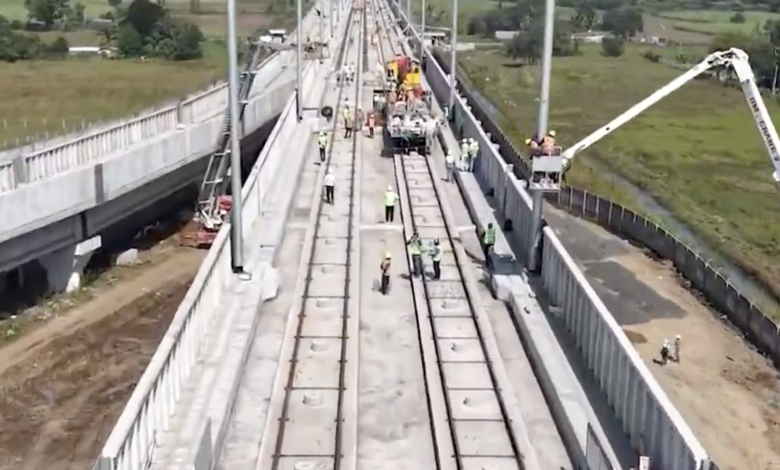
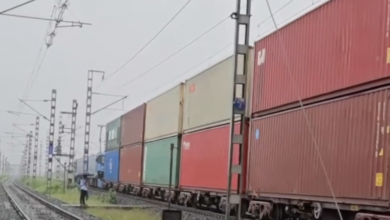
India is moving ahead with plans to expand its high-speed rail network, with the 508-km Mumbai–Ahmedabad High Speed Rail (MAHSR) project progressing rapidly and seven new High-Speed Rail (HSR) corridors announced in the Union Budget 2026–27.
The Standing Committee on Railways has welcomed the progress of the Mumbai–Ahmedabad project while calling for faster indigenisation of high-speed rail technology, stronger inter-agency coordination and comprehensive studies of successful high-speed rail systems operating in other countries.
The Mumbai–Ahmedabad High Speed Rail project, approved in 2015 at an estimated cost of ₹97,636 crore, has witnessed an increase in its cost. According to the Committee, the rise has primarily been attributed to taxes and cess, rolling stock and signalling requirements, inflation, and higher land acquisition and rehabilitation costs. A revised cost estimate is currently under consideration for sanction.
The project is based on Japanese Shinkansen technology, and development of the E10 series of Shinkansen is also underway.
Bharat-Made Bullet Trainset for Initial Operations
The Committee appreciated the decision to initiate operations using the B28 Bharat-made Bullet Trainset, with efforts underway to commence operations on the 97-km Surat–Vapi section in August 2027.
The proposed Bharat-made trainset is designed for a speed of 280 kmph, marking an important step towards increasing indigenous capabilities in high-speed rail technology.
The Committee has, however, called for a robust project execution framework to ensure effective coordination among multiple agencies. It stressed the need for early identification and resolution of bottlenecks and speedy completion of utility shifting works to prevent delays.
Entire MAHSR Land Acquired
The Ministry of Railways informed the Committee that the entire 1,389.5 hectares of land required for the Mumbai–Ahmedabad High Speed Rail project has been acquired.
It also stated that all statutory clearances have been obtained and all 1,651 identified utilities have been shifted.
The project had faced delays because of land acquisition issues in Maharashtra. According to the Ministry, land acquisition gained momentum in the state from 2022 onwards, and construction activity is now progressing at full speed.
The Committee has taken note of these developments and emphasised the importance of completing preparatory activities at the earliest to avoid delays and additional costs.
Push for Indigenous High-Speed Rail Technology
The Committee has also stressed the need to accelerate the indigenisation of high-speed rail components, covering both technological capabilities and specialised skills.
While appreciating the steps being taken under the Make in India initiative, the panel recommended institutionalised capacity-building programmes through expansion of training at the High Speed Rail Training Institute, Vadodara.
It also called for leveraging international expertise to strengthen India’s high-speed rail workforce and technical capabilities.
The Committee wants the Railways to develop domestic expertise across different areas of high-speed rail technology so that future projects increasingly benefit from indigenous components, knowledge and skilled manpower.
Seven New High-Speed Rail Corridors
The government has announced seven new HSR corridors in the Union Budget 2026–27 with the broader objective of strengthening national transport infrastructure, improving regional connectivity and supporting economic growth, tourism, investment and employment.
The seven proposed corridors are:
| No. | High-Speed Rail Corridor |
|---|---|
| 1 | Mumbai–Pune |
| 2 | Pune–Hyderabad |
| 3 | Hyderabad–Bengaluru |
| 4 | Hyderabad–Chennai |
| 5 | Chennai–Bengaluru |
| 6 | Delhi–Varanasi |
| 7 | Varanasi–Siliguri |
The Ministry informed the Committee that DPR-related work is progressing for all seven corridors. Cost and alignment updates in the Detailed Project Reports for four corridors are underway, while DPRs for the remaining three corridors are under preparation.
However, the Railways has pointed out that HSR projects are highly capital intensive. The decision to sanction individual corridors will depend on the outcome of DPRs, techno-economic feasibility studies and availability of financial resources, including appropriate financing options.
Land and Clearances Before Project Sanction
The Committee has emphasised that land acquisition and statutory clearances should ideally be completed before sanctioning new high-speed rail projects.
According to the panel, completing these critical preparatory activities in advance would help ensure time-bound implementation and protect the financial viability of capital-intensive HSR projects.
The Committee also recommended a comprehensive study of successful high-speed rail networks in countries where such systems are operating efficiently.
The objective would be to understand international best practices in project execution, technology, operations, financing, maintenance, passenger services and capacity building and apply relevant lessons to India’s future HSR corridors.
Shift from Road and Air to Rail
The expansion of the high-speed rail network is being positioned as part of a broader effort to strengthen national transport infrastructure and encourage a shift from road and air travel to rail.
The government expects high-speed rail corridors to improve regional connectivity while supporting economic activity, tourism, investment and employment generation.
The Committee has welcomed this forward-looking approach but has stressed that India’s future HSR expansion must be supported by careful planning, robust execution systems, adequate financing and greater domestic technological capability.
With the Mumbai–Ahmedabad corridor serving as the foundation for India’s high-speed rail programme and seven additional corridors now under planning, the country is preparing for a significant expansion of high-speed connectivity.
The Committee’s recommendations indicate that the next phase will need to focus not only on building high-speed corridors but also on developing a strong domestic ecosystem for high-speed rail technology, specialised manpower, manufacturing and maintenance.
The proposed Surat–Vapi operations using the Bharat-made B28 trainset in August 2027 could therefore become an important milestone in India’s journey towards indigenous high-speed rail capabilities, while the experience gained from the Mumbai–Ahmedabad project is expected to inform planning and execution of the country’s future HSR network.