Railway Panel Calls for Faster New Line Projects, Scientific Project Selection and Stronger Monitoring

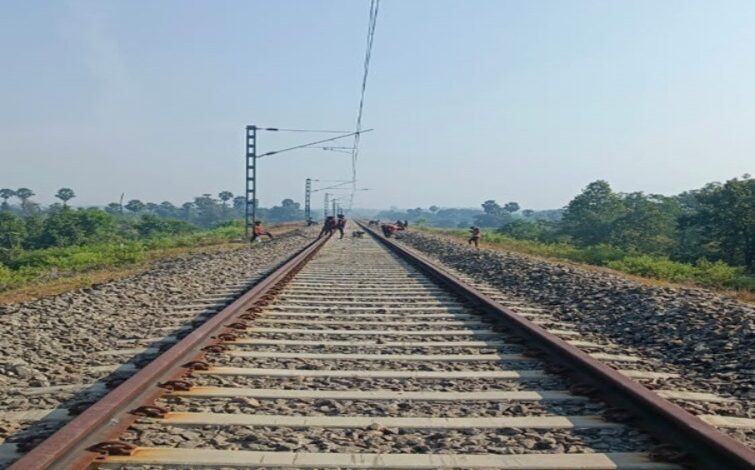
The Standing Committee on Railways has called for a more structured and scientific approach to planning and executing new railway line projects, with greater emphasis on faster clearances, seamless financing, high-impact connectivity and systematic monitoring of projects facing persistent bottlenecks.
The Committee commended Indian Railways for the successful completion of two strategically important railway projects — the 272-km Udhampur–Srinagar–Baramulla Rail Link (USBRL) and the 51.38-km Bhairabi–Sairang railway line connecting Aizawl in Mizoram.
According to the Committee, the USBRL has provided seamless, all-weather rail connectivity to the Kashmir Valley, while the Bhairabi–Sairang line has strengthened connectivity to Mizoram and improved access to remote regions. The projects were also described as important milestones in strengthening national integration.
While appreciating the progress, the Committee noted that railway projects are executed zone-wise and their timely completion depends on several factors beyond the Railways’ direct control. These include land acquisition by State Governments, forest and wildlife clearances, statutory approvals, shifting of utilities, geological and topographical conditions and the law-and-order situation at project sites.
Call for Structured Mechanism to Speed Up Projects
The Committee recommended establishing a structured mechanism for improving project planning and monitoring. It called for parallel processing of approvals and clearances, prioritisation of high-impact connectivity projects and focused execution of corridors having significant economic impact.
The panel also stressed the importance of ensuring seamless financing so that projects do not face delays because of funding constraints after other preparatory work has been completed.
The Committee suggested that the Ministry of Railways could study the applicability of the National Highways Authority of India (NHAI) model for execution and PPP-based development of key railway projects, particularly new railway tracks, Dedicated Freight Corridors and High-Speed Rail corridors.
Such an approach, according to the Committee, could provide a more structured framework for planning, financing and executing strategically important railway infrastructure.
New Railway Lines to Be Selected Scientifically
The Committee also called for a targeted and scientific approach towards proposals for new railway lines received from State Governments, Central Ministries, public representatives and those generated from the Railways’ own operational requirements.
It recommended that proposals should be assessed using objective parameters rather than being considered solely on the basis of regional demand.
Factors such as traffic projections, bridging of missing rail links, creation of alternative routes and capacity augmentation of congested or saturated corridors should receive due weightage while deciding the priority of projects.
The Committee’s approach seeks to ensure that limited resources are directed towards railway projects capable of generating significant economic, operational and connectivity benefits.
New Track Construction More Than Doubled
The Ministry of Railways informed the Committee that railway network capacity enhancement has received a major push over the past 11 years.
Between 2009 and 2014, 7,599 km of new track were commissioned, representing an average commissioning rate of 4.2 km per day.
In comparison, between 2014 and 2025, 34,428 km of new track were commissioned, taking the average rate to 8.6 km per day — more than twice the earlier daily commissioning rate.
The Ministry said that as of April 1, 2025, a total of 431 railway infrastructure projects covering 35,966 km had been sanctioned across Indian Railways, with an estimated total cost of approximately ₹6.75 lakh crore.
These projects comprise 154 new line projects, 33 gauge conversion projects and 244 doubling or multitracking projects.
| Project Category | No. of Projects | Total Length | Length Commissioned up to March 2025 | Expenditure up to March 2025 |
|---|---|---|---|---|
| New Lines | 154 | 16,142 km | 3,036 km | ₹1,45,318 crore |
| Gauge Conversion | 33 | 4,180 km | 2,997 km | ₹22,753 crore |
| Doubling/Multitracking | 244 | 15,644 km | 6,736 km | ₹1,22,858 crore |
| Total | 431 | 35,966 km | 12,769 km | ₹2,90,929 crore |
The figures indicate the scale of ongoing railway infrastructure expansion, with thousands of kilometres of new and additional tracks under different stages of execution.
IRPSM Portal at Centre of Project Monitoring
To improve monitoring of sanctioned railway projects, Indian Railways has developed the Indian Railways Projects Sanctions & Management (IRPSM) portal.
The Ministry informed the Committee that regular data feeding into IRPSM is being ensured for close monitoring of projects. Integration of IRPSM with other government portals, including PMG and IIG, through application programming interfaces is also being undertaken.
The objective is to create a single source of project-related data, improve reliability and enable authorities to monitor progress more effectively.
The Committee welcomed the development of IRPSM but said that monitoring should go beyond simply tracking physical progress.
It recommended that every major railway project should be monitored against clearly defined parameters covering land acquisition, statutory and forest clearances, tendering, execution and commissioning.
Dedicated Monitoring for Stalled Projects
The Committee suggested using IRPSM to identify projects facing persistent bottlenecks and bringing such projects under a dedicated monitoring mechanism.
This mechanism could involve periodic coordination meetings with concerned State Governments and other authorities to resolve issues relating to land, clearances, utilities and other implementation challenges.
The Committee believes such targeted monitoring could help prevent prolonged delays and enable timely intervention when projects encounter problems.
Multiple Factors Affect Railway Project Completion
The Ministry told the Committee that completion timelines and project costs are influenced by several factors.
These include land acquisition by State Governments, forest clearances, shifting of infringing utilities, statutory approvals from different authorities, geological and topographical conditions, law-and-order situations and the number of workable months available at particular project sites.
The Ministry said these factors can significantly affect both the completion schedule and overall cost of railway projects.
To address such challenges, the government has increased budgetary allocations, delegated powers to field-level authorities and strengthened monitoring at different levels.
The Railways is also regularly coordinating with State Governments and concerned authorities to expedite land acquisition, forestry and wildlife clearances and resolve other project-related issues.
Post-Commissioning Review Proposed
The Committee has also recommended that major new line and multitracking projects should undergo post-commissioning evaluation.
Such assessments should examine whether the projected traffic materialised after commissioning, whether the expected revenue was generated and whether the project delivered the anticipated regional connectivity benefits.
The findings of these evaluations, the Committee said, should be used to improve the planning, prioritisation and execution of future railway projects.
This recommendation could bring greater emphasis on measuring outcomes rather than focusing only on the completion of physical infrastructure.
Focus on Strategic and Economic Corridors
The Committee’s recommendations indicate a broader shift towards prioritising railway projects based on their strategic, economic and operational importance.
While new lines remain critical for connecting remote and underserved regions, the Committee has emphasised the need to identify missing links, provide alternative routes and strengthen corridors that are already congested or saturated.
The successful completion of the USBRL and Bhairabi–Sairang projects has demonstrated the role railway infrastructure can play in improving connectivity to geographically challenging and strategically important regions.
Going forward, the Committee wants Indian Railways to combine accelerated construction with stronger planning, faster clearances, scientific project selection and outcome-based monitoring.
With 431 sanctioned projects covering nearly 36,000 km and an estimated cost of ₹6.75 lakh crore, the scale of railway infrastructure expansion remains substantial. The Committee has now emphasised that the next phase must focus not only on building more tracks but also on ensuring that projects are selected rationally, executed without avoidable delays and deliver their projected economic, operational and connectivity benefits.