Bank Subsidence Disrupts Rail Traffic Between Tildanga and New Farakka

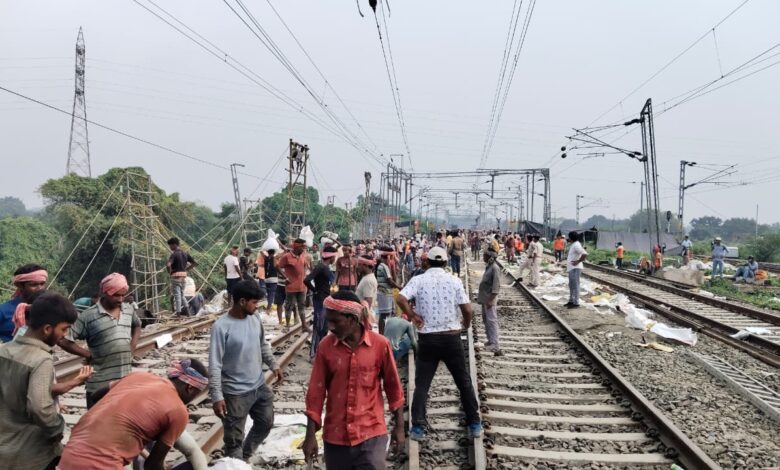
A major railway disruption has been reported in West Bengal’s Malda Division after bank and soil subsidence between Tildanga and New Farakka stations destabilised a section of the railway embankment. The incident, linked to prolonged heavy monsoon rainfall and erosion of the soil foundation, forced the suspension and diversion of several train services connecting southern Bengal with North Bengal and the Northeast.
Railway authorities launched a large-scale restoration operation immediately after the damage was detected during a routine monsoon patrol. Engineers, senior officials and ground staff have been working continuously to stabilise the affected stretch and restore normal train movement while maintaining strict safety standards.
Heavy Rainfall Triggers Soil Instability
The subsidence occurred after continuous monsoon rainfall in the Farakka-Murshidabad region. According to information available about the incident, rainwater seeped into the railway embankment between the Up and Down lines, weakening the underlying soil.
An adjacent pond reportedly overflowed, allowing water to erode the clay soil supporting the railway formation. As the foundation lost stability, the ground beneath a section of the tracks sank by several feet.
The affected stretch was initially estimated at around 20 to 50 metres, although subsequent observations indicated that the subsidence extended towards approximately 80 metres at certain locations.
The damage created an extremely hazardous situation. Sections of the railway track became unstable, with rails left without adequate support in portions of the affected area. Railway signalling and overhead equipment were also impacted, adding to the complexity of restoration.
Damage Detected During Night Patrol
The subsidence was detected at around 2:30 am on September 3, when railway gangmen carrying out monsoon patrol duties noticed abnormalities in the track and embankment.
The patrolling staff immediately alerted the station authorities, following which train movement through the affected section was stopped as a safety precaution.
The prompt detection was significant because monsoon patrols are specifically intended to identify hazards such as washouts, flooding, embankment erosion and soil subsidence during periods of intense rainfall.
Railway officials subsequently inspected the site and began emergency restoration work.
The incident therefore does not appear to have resulted from a failure to conduct monitoring. Instead, the hazard was detected during the ongoing monsoon surveillance, allowing railway authorities to halt traffic before a potentially more serious accident could occur.
Large Team Deployed for Restoration
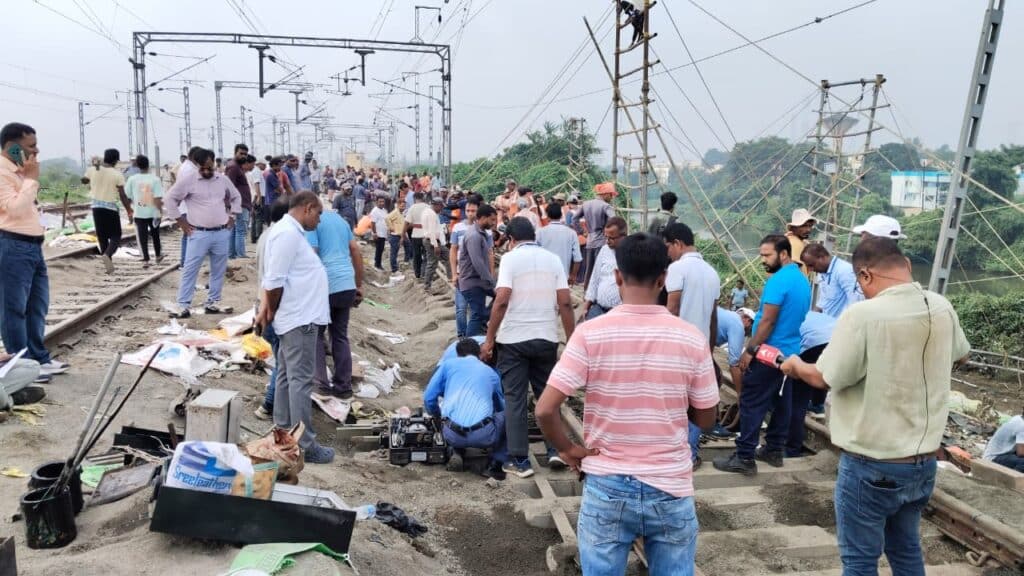
Eastern Railway mobilised a substantial workforce for the restoration operation. Around 150 workers, along with engineers, technical teams and senior railway officials, were deployed at the affected location.
Eastern Railway General Manager Ms. Gitika Pandey has been closely monitoring the restoration operation, while senior officials and engineering teams have remained at the site.
Restoration work has been conducted through the day and night, with teams working continuously to rebuild and strengthen the damaged formation.
Large quantities of ballast and stone chips have reportedly been brought from Jharkhand to support the repair operation. Engineers have been carefully filling and stabilising the affected section before carrying out permanent-way and signalling works.
The restoration became more challenging when a secondary subsidence occurred during the initial repair process, requiring additional precautions and strengthening measures.
Signalling and Track Restoration Underway
The restoration operation involves more than simply repairing the railway track.
Once the underlying embankment is stabilised, railway personnel must ensure that the track geometry, ballast support, signalling systems and overhead equipment are restored to prescribed standards.
Recent updates indicated that around 90 per cent of the restoration work had been completed, with signalling and Permanent Way, or P.Way, touch-up work continuing at the affected location near New Farakka.
Officials have emphasised that normal train movement will resume only after the affected infrastructure is inspected and certified safe.
The priority remains the safe restoration of the railway rather than reopening the route prematurely.
Major Impact on Train Services
The subsidence caused extensive disruption to train operations on one of eastern India’s important railway corridors.
Several long-distance, premium and passenger trains were cancelled, diverted, short-terminated or operated through alternative routes.
On September 3, multiple trains were cancelled or diverted as railway authorities responded to the emergency. Different advisories issued during the day contained varying numbers of affected services as operational plans were revised.
On September 4, around 14 train services were reported cancelled in key updates, while additional services were diverted or modified.
Among the major services affected by the disruption were trains such as the Shatabdi Express, Vande Bharat services, Darjeeling Mail, Padatik Express, Kanchankanya Express and Gour Express.
Several trains connecting Kolkata, Sealdah and Howrah with North Bengal and the Northeast were consequently affected.
Some services were subsequently restored through alternative routes, while others continued to face cancellations or diversions.
On September 5, further cancellations and route changes remained applicable to certain services, depending on the latest operational assessment.
Because railway advisories were being updated in multiple batches, the cumulative number of affected trains varied between individual reports. The disruption involved dozens of services when cancellations, diversions and partial cancellations are considered together.
Passengers Face Major Inconvenience
The disruption significantly affected passengers travelling between southern Bengal, North Bengal and destinations in the Northeast.
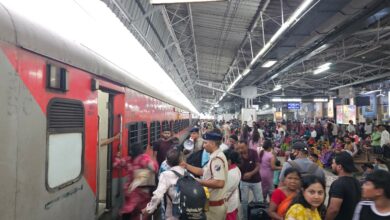
Passengers faced cancelled journeys, unexpected diversions, longer travel times and difficulty reaching their destinations. In some cases, passengers were stranded at railway stations as services were cancelled or rescheduled.
The state administration also arranged additional buses in response to the disruption, particularly as passengers sought alternative modes of transport.
For passengers planning journeys through the affected corridor, railway authorities advised checking the latest operational status before travelling because train schedules and routes were being modified as restoration work progressed.
Why Alternative Routes Were Necessary
With the direct route affected, several trains had to be diverted through alternative railway corridors.
Some services were routed through Azimganj, Nalhati and routes through Bihar, depending on their origin, destination and operational feasibility.
Although such diversions allowed some trains to continue running, they also resulted in longer journeys and additional operational requirements.
Railway authorities had to coordinate train paths, crew arrangements, locomotive requirements and signalling across alternative routes while simultaneously carrying out restoration work at New Farakka.
This created a complex operational challenge for Eastern Railway.
No Official Figure on Financial Loss
The disruption is also expected to have caused a financial impact on the Railways. However, Eastern Railway has not publicly released an official estimate of the total financial loss arising from the incident.
The financial impact could include refunds for cancelled journeys, loss of passenger revenue, additional expenditure on restoration materials and manpower, diversion-related fuel and crew costs, and other operational expenses.
Any specific monetary figure at this stage would therefore be speculative.
Based on the number of services affected and the involvement of several long-distance and premium trains, the combined direct and operational impact could potentially run into several crores of rupees. However, this should not be treated as an official estimate. Actual losses would depend on passenger occupancy, ticket revenue, refunds, duration of disruption, restoration expenses and the additional cost of operating diverted services.
Previous Subsidence Incidents
The affected railway corridor has reportedly experienced similar soil and embankment-related problems in the past, with incidents also reported in nearby stretches in 2011 and 2015.
The recurrence highlights the vulnerability of railway infrastructure in areas where heavy monsoon rainfall, waterlogging, overflowing water bodies and soil erosion can affect embankments.
For railway authorities, such incidents underline the importance of intensive monsoon patrolling and preventive measures around vulnerable stretches.
Restoration Work Continues Around the Clock
As restoration nears completion, railway officials and engineering teams continue to work round the clock at New Farakka.
The latest update indicated that nearly 90 per cent of the work had been completed, with final P.Way and signalling-related work underway.
Officials are maintaining close supervision of the site and carrying out necessary checks before permitting full normal train operations.
The incident has once again demonstrated the risks posed by extreme monsoon conditions to railway infrastructure, particularly where embankments are exposed to prolonged water saturation and erosion.
For Eastern Railway, the immediate objective is to complete the remaining restoration safely and reopen the route at the earliest possible time.
Until normal operations are fully certified, passengers are advised to rely on the latest official Eastern Railway, NTES and IRCTC updates for information about cancellations, diversions and revised train schedules.
The Railway’s stated priority throughout the operation remains clear: passenger safety first, followed by the restoration of normal train services as quickly as conditions permit.