Startup India and I-STEM Portals Integrated to Expand Access to National Research Infrastructure
API Integration Launched by Office of Principal Scientific Adviser and DPIIT to Help Recognised Startups Access Scientific Equipment, Testing and Prototyping Facilities

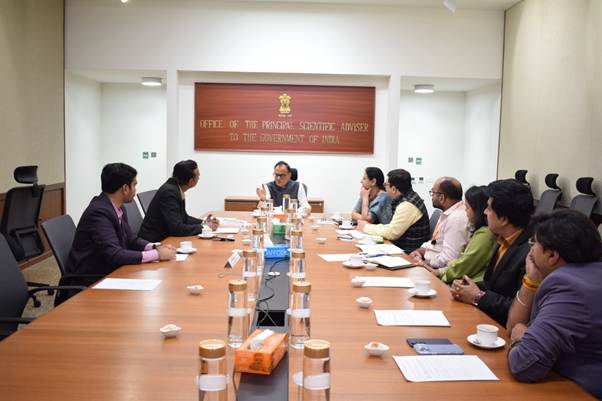
In a significant step towards strengthening India’s startup and innovation ecosystem, the Office of the Principal Scientific Adviser (PSA) to the Government of India and the Department for Promotion of Industry and Internal Trade (DPIIT), Ministry of Commerce and Industry, have launched an Application Programming Interface (API) integration between the Startup India Portal and the Indian Science, Technology and Engineering Facilities Map (I-STEM) Portal.
The integration was launched on November 6, 2026, under the chairmanship of Professor Ajay Kumar Sood, Principal Scientific Adviser to the Government of India. The initiative is aimed at improving access to the country’s existing scientific infrastructure for DPIIT-recognised startups, particularly those working in research-intensive and deep-technology sectors.
The new digital integration will enable startups to discover specialised scientific equipment, research facilities, testing infrastructure and prototyping capabilities available across academic and research institutions in the country through the Startup India Portal.
The initiative seeks to address one of the major challenges faced by technology-driven startups: access to expensive scientific equipment and specialised research infrastructure. By connecting startups with facilities already available in universities, research institutions and laboratories, the government aims to reduce the need for independent capital investment in costly equipment and improve the utilisation of publicly funded scientific resources.
The launch programme was attended by Dr. Parvinder Maini, Scientific Secretary, Office of the PSA, and Ateesh Kumar Singh, Additional Secretary, DPIIT. Dr. Vishal Choudhary, Scientist-F; Dr. Santhosh Nair, Scientist-D; Dr. Shefali Uttam, Technical Staff, Office of the PSA; and representatives from the DPIIT and I-STEM teams were also present.
During the programme, Dr. Vishal Choudhary delivered a presentation highlighting the current status and impact of the I-STEM initiative.
Connecting Startups with India’s Scientific Infrastructure
Addressing the gathering, Professor Ajay Kumar Sood said the integration represented more than a digital connection between two government portals. According to him, it marked an institutional convergence between the requirements of India’s startup ecosystem and the scientific infrastructure and technical capabilities available across the country.
He highlighted that the initiative could help reduce research and development expenditure, prevent duplication of capital-intensive facilities and ensure better utilisation of existing publicly funded infrastructure.
The Principal Scientific Adviser also emphasised the importance of strengthening industry-academia collaboration and making specialised scientific facilities more accessible to deep-tech startups.
Startups developing advanced technologies often require sophisticated equipment and laboratory infrastructure at different stages of product development. These requirements include research, design, prototyping, testing, performance evaluation and technology validation.
However, establishing independent facilities can involve substantial capital expenditure, maintenance costs and technical manpower requirements. Access to existing institutional infrastructure could help startups overcome these constraints and focus their resources on innovation and commercialisation.
The integration is expected to support this process by making it easier for startups to identify relevant facilities and explore opportunities for accessing them.
I-STEM to Improve Sharing of Research Facilities
Dr. Parvinder Maini highlighted the role of the I-STEM Portal in promoting the sharing and optimal utilisation of scientific infrastructure available across academic and research institutions.
She noted that the integration with Startup India would simplify the process through which DPIIT-recognised startups discover relevant scientific equipment and research facilities.
The initiative is expected to address infrastructure-related barriers that frequently affect technology development, particularly among early-stage companies and startups working in specialised technology domains.
The I-STEM platform provides information about scientific equipment and research facilities available at registered institutions, enabling researchers and innovators to identify resources that may otherwise remain difficult to locate.
By linking this platform with Startup India, the government intends to make the country’s distributed scientific infrastructure more accessible to the startup community.
DPIIT Highlights Benefits for Deep-Tech Startups
Ateesh Kumar Singh, Additional Secretary, DPIIT, highlighted the importance of the integration in strengthening the department’s efforts to create an enabling environment for startups, particularly in the deep-tech sector.
He said improved visibility of specialised research, testing and prototyping facilities would help DPIIT-recognised startups identify suitable infrastructure for their specific requirements.
The availability of institutional facilities could reduce the need for startups to independently invest in expensive scientific equipment. It would also allow them to utilise the technical capabilities of established research institutions for product development, experimentation and technology validation.
This is particularly relevant for startups operating in areas where product development requires specialised laboratories, advanced testing equipment and scientific expertise.
The integration is expected to strengthen the connection between academic research capabilities and entrepreneurial innovation, helping startups access resources required to convert research ideas into technology-based products and solutions.
API Integration to Simplify Access and Verification
The technical integration will establish API-enabled interoperability between the Startup India Portal and the I-STEM Portal.
One of the important features will be the automated verification of DPIIT recognition status, which is expected to simplify the onboarding process for eligible startups.
Through this arrangement, recognised startups will be able to discover scientific equipment and research facilities listed on I-STEM through the Startup India Portal. The initiative will also facilitate the process of identifying suitable infrastructure and submitting requests for access.
The government has proposed incorporating Single Sign-On (SSO) functionality in subsequent phases. This would further simplify the user experience by allowing startups to access connected services through a streamlined authentication process.
However, the integration does not mean automatic approval for the use of research facilities. Individual requests will continue to be assessed by the respective host institutions.
Approvals will depend on several factors, including technical suitability, availability of equipment, applicable charges, safety requirements and institutional permissions.
This arrangement will allow institutions to retain control over the use of their infrastructure while making the discovery and application process more accessible to startups.
I-STEM Portal Lists More Than 31,500 Equipment Items
The scale of scientific infrastructure available through the I-STEM platform highlights the potential of the initiative.
As of November 6, 2026, the portal listed:
- 31,540 scientific equipment items
- 4,044 registered institutions
- A nationwide network of research and scientific facilities available for discovery by researchers and innovators.
The integration is expected to improve the utilisation of this infrastructure by connecting it with a wider community of startups and technology developers.
Better access to existing equipment could also help reduce duplication of infrastructure investments, particularly where expensive scientific facilities are already available at academic and research institutions.
Strengthening India’s Innovation and Deep-Tech Ecosystem
The API integration brings together the complementary institutional capabilities of DPIIT and the Office of the Principal Scientific Adviser to strengthen India’s innovation ecosystem.
While DPIIT supports the development and growth of the startup ecosystem through initiatives such as Startup India, I-STEM focuses on improving access to scientific infrastructure and promoting resource sharing among research institutions.
Connecting these two platforms is expected to create stronger linkages between research, entrepreneurship and technology development.
The initiative could be particularly useful for startups working in advanced manufacturing, biotechnology, electronics, materials science, engineering, artificial intelligence-related hardware and other research-intensive fields, where access to specialised testing and laboratory infrastructure can be essential.
The government has also emphasised that the long-term effectiveness of the integration will depend on wider onboarding of research facilities, regular updating of equipment and infrastructure information, and sustained engagement with startups and host institutions.
By making existing scientific capabilities easier to discover and access, the initiative aims to improve the efficiency of India’s research ecosystem and support the translation of scientific knowledge into practical technology-based solutions.
The integration marks another step towards building a more connected innovation ecosystem in which startups can leverage national research infrastructure without having to independently establish every specialised facility required for their development.