Vande Bharat Empty Rake Travels 463 km Without Train Brakes; South Eastern Railway Flags Serious Safety Lapses
A South Eastern Railway inquiry report has highlighted multiple failures by railway staff after an empty Vande Bharat rake was operated from Hatia to DDU with ineffective train brakes on October 24. An inspection at DDU found the isolating cocks of all coaches' main reservoirs in the isolated position, preventing the application of train brakes. The rake reportedly travelled approximately 463 km, relying only on locomotive brakes and regenerative braking.

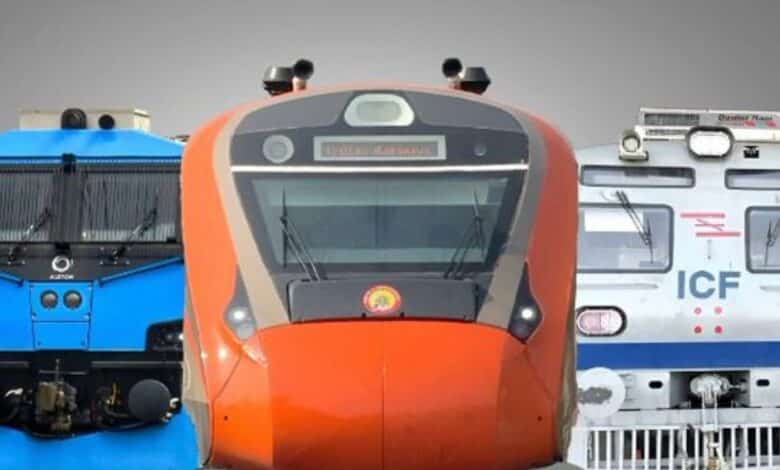
A serious railway safety lapse has come to light after an empty rake of a Vande Bharat train reportedly travelled approximately 463 km without effective train brakes, relying solely on locomotive brakes and regenerative braking. The incident occurred on October 24, 2026, during the movement of an empty Vande Bharat rake from Hatia (HTE) towards Deen Dayal Upadhyaya Junction (DDU).
South Eastern Railway has flagged multiple failures by railway staff in connection with the incident, raising serious questions about brake-power testing, safety inspections and the response of operating personnel to reports of defective brakes.
The matter has been highlighted in an official letter dated November 7, 2026, issued by the Office of the Principal Chief Electrical Engineer, South Eastern Railway, Garden Reach, Kolkata. The letter, addressed to the Divisional Railway Manager, Ranchi, seeks a detailed investigation into the lapses and appropriate corrective and preventive action against the staff concerned.
Vande Bharat Rake Operated Despite Poor Brake Power
According to the letter, on October 24, 2026, a train order was issued for operating an empty Vande Bharat rake hauled by locomotive No. 43728/WAG-9/ASN. The rake was provided with Brake Power Certificate (BPC) No. 700918, issued at Hatia on October 24 for its movement towards Jhansi (JHS).
As per the statement of the Loco Pilot (LP), the brake-feel and brake-power test was conducted after departure from Hatia in the Hatia-Ranchi section, in accordance with the existing instructions.
However, during the test, the Loco Pilot reportedly found that the brake power of the train was very poor and ineffective.
On reaching Ranchi (RNC), the Loco Pilot submitted a written memorandum to the Station Controller (SCR), highlighting the poor brake performance. He also informed the on-duty Train Loco Controller (TLC) about the problem over the mobile phone.
Despite receiving these reports, both the Station Controller and the Train Loco Controller reportedly allowed the train to continue in the same condition without arranging an inspection of the rake.
Warnings by Loco Pilots Allegedly Ignored
The South Eastern Railway communication also records that the locomotive pilot who operated the train from MURI informed the Station Controller and the on-duty Train Loco Controller about the poor brake performance.
The Loco Pilot specifically reported that the train brakes could not be applied by dropping the Brake Pipe (BP) pressure.
Despite these warnings, the train was reportedly permitted to continue without the necessary examination by the concerned Carriage and Wagon (C&W) staff and other railway personnel.
The outgoing Loco Pilot at DDU also reported that the brake power of the train was poor and ineffective when the rake arrived at the station.
Following this report, a joint inspection was conducted by the footplate Crew Lobby In-charge (CLI), Senior Section Engineer (Operating), DDU, and the on-duty Deputy Station Superintendent (Dy. SS), DDU.
Inspection Reveals Main Reservoir Isolating Cocks in Closed Position
The joint inspection at DDU revealed a serious technical problem affecting the entire rake.
According to the findings recorded in the South Eastern Railway letter, the Main Reservoir (MR) isolating cocks of all the coaches were found in the isolated position.
This condition resulted in the non-application of the train brakes, effectively rendering the braking system of the coaches inoperative.
The finding indicated that the problem was not merely a case of reduced brake efficiency but involved the failure of the train’s braking system to operate as intended.
The joint checking report conducted at DDU by East Central Railway has also been cited as a reference in the communication.
Multiple Staff Failures Identified
The letter issued by the Principal Chief Electrical Engineer identifies multiple instances of negligence and failure to perform prescribed safety responsibilities.
The following categories of railway personnel have been identified for their alleged lapses:
1. Carriage and Wagon Staff: The C&W staff allegedly failed to physically check the application of brakes and verify whether the braking system was functioning properly before allowing the empty rake to proceed.
2. Section Controller, Hatia: Despite receiving information about poor brake power, the Section Controller at Hatia reportedly failed to initiate appropriate action.
3. Loco Controller, Hatia: After receiving the information, the Loco Controller allegedly failed to arrange an examination of the train by C&W staff and the Crew Lobby In-charge at Muri.
4. Loco Pilots, Assistant Loco Pilots and Train Managers: The personnel who worked the train between Hatia and DDU allegedly failed to physically verify the application of brakes in the coaches, either before departure or after experiencing poor brake performance. The letter also refers to a lack of training concerning Vande Bharat trains.
Rake Travelled 463 km Without Effective Train Brakes
One of the most serious aspects highlighted in the official communication is the distance travelled by the empty Vande Bharat rake without the application of its train brakes.
According to the letter, multiple failures by railway staff resulted in the rake being operated without effective train brakes. The train travelled approximately 463 km, depending solely on the locomotive brakes and regenerative braking.
The communication describes operating a train without adequate brake power as a serious safety concern that could lead to a major accident, endangering the lives of railway staff and passengers and adversely affecting the safety of railway operations.
Although the rake was empty, the incident highlights the potential consequences of allowing a train with an ineffective braking system to continue its journey despite repeated warnings from Loco Pilots.
Detailed Investigation and Corrective Action Sought
In view of the seriousness of the matter, Chief Electrical Loco Engineer Atul Kumar has requested the Divisional Railway Manager, Ranchi, to ensure a detailed investigation into the incident and establish the lapses on the part of the staff concerned.
The letter also calls for necessary corrective and preventive measures to ensure that such incidents do not recur.
Copies of the communication have been marked to the Principal Chief Electrical Engineer (PCEE), Principal Chief Mechanical Engineer (PCME), Principal Chief Operating Manager (PCOM) and Principal Chief Safety Officer (PCSO) for information. The Senior Divisional Electrical Engineer (Operating), Ranchi, has also been requested to take necessary action.
The incident brings into focus the importance of strict adherence to brake-power testing procedures, physical verification of coach braking systems and immediate action whenever a Loco Pilot reports defective brakes.
It also raises important questions about the coordination between operating staff, locomotive controllers, station controllers and C&W personnel when a train develops a critical safety-related defect.
The official communication seeks accountability for the lapses and preventive measures to strengthen operational safety, particularly in the handling and movement of Vande Bharat trainsets.