
Why Are Young Indians Losing Hair? Dr. Kriti Lohia Explains Hair Fall, Baldness and Hair Transplant
From premature greying and dandruff to FUE, FUT, PRP and laser therapy, a dermatologist explains the causes of hair loss and the facts behind popular hair restoration treatments.

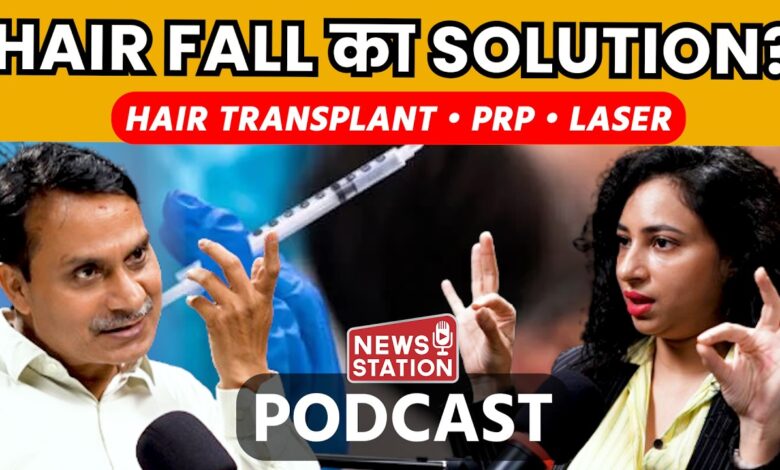
Why Are Young Indians Losing Their Hair? Dr. Kriti Lohia Explains Hair Loss, Baldness, Transplants and Advanced Treatments
Stress, pollution, hormonal imbalances and nutritional deficiencies are contributing to rising hair problems among young people. In an exclusive conversation with The News Station, Dr. Kriti Lohia, CEO and Medical Director of Aesthetics Redefined by Cocoona, explains the science behind hair loss, premature greying, dandruff, hair transplantation and emerging hair restoration technologies.
Hair loss and premature greying, once largely associated with ageing, are increasingly becoming concerns among young people in their 20s and 30s. Changing lifestyles, chronic stress, environmental pollution, hormonal imbalances and nutritional deficiencies are among the factors that may contribute to these problems.
With hair restoration clinics, cosmetic treatments and hair growth products becoming increasingly popular, people are also confronted with numerous claims about permanent cures for baldness. But how much of this information is supported by medical science? Do expensive hair oils and supplements actually work? Can a hair transplant permanently solve baldness?
To understand these issues, The News Station spoke with Dr. Kriti Lohia, CEO and Medical Director of Aesthetics Redefined by Cocoona. In an extensive conversation, she discussed the causes of hair loss, the importance of early diagnosis, modern hair transplantation techniques and the role of regenerative medicine and laser technology.
Interview conducted by Siddharatha, Editor, The News Station Network.
Q. Hair loss and baldness are increasingly common among young people. Why are people in their 20s and 30s experiencing these problems?
Dr. Kriti Lohia: Genetics plays an important role, but having a particular genetic predisposition does not necessarily mean that a person will develop baldness. The environment and lifestyle can influence how genes behave. This process is known as epigenetics.
Urban lifestyles, chronic stress, pollution, nutritional deficiencies and hormonal changes can act as triggers. Genetics, hormones and diet are all interconnected.
For example, nutritional deficiencies can contribute to hormonal dysfunction. Environmental pollution can increase oxidative stress, which affects different cells in the body.
Think of it as water filling a glass. When the final drop falls, the glass overflows. Similarly, environmental and lifestyle factors can trigger an underlying genetic predisposition.
Once the baldness process has been triggered, reversing it completely is difficult. However, appropriate treatment can help slow its progression. This is why lifestyle has become an important factor in understanding hair loss.
Q. What is the actual function of hair? Is hair a living part of the body?
Dr. Kriti Lohia: Hair has several important functions. When hair first evolved in mammals, it primarily helped protect the body against heat and cold.
Even today, eyelashes protect the eyes from foreign particles, while eyebrows help prevent sweat and other substances from entering the eyes.
Scalp hair is particularly important because the scalp receives considerable exposure to sunlight. Hair provides protection against environmental exposure and UV radiation.
Hair is also connected to stem cells and is part of the body’s living biological system. Like nails and other skin structures, hair develops through specialised cellular processes.
Of course, hair also contributes to physical appearance and beauty.
Q. Why do people have different hair colours, and why does hair turn grey?
Dr. Kriti Lohia: Hair colour is determined by pigment-producing cells called melanocytes.
These cells produce two major types of pigments. Eumelanin is responsible for black and brown shades, while pheomelanin contributes to yellow and reddish shades.
The combination and quantity of these pigments determine an individual’s hair colour.
Melanocytes are particularly sensitive to oxidative stress. As we age, the ability of stem cells to regenerate gradually declines. Consequently, pigment production decreases, and hair begins to turn grey or white.
This is a natural part of ageing, but environmental stress and lifestyle factors can influence the process.
Q. Why are even teenagers and young adults experiencing premature greying?
Dr. Kriti Lohia: This is again connected to epigenetics, nutrition and lifestyle.
Long-term nutritional deficiencies can affect metabolism and hormonal functions. Pollution, poor sleep and chronic stress also place the body under continuous stress.
Chronic inflammation can accelerate several ageing-related processes. Consequently, problems that were traditionally noticed at 40 or 50 may begin much earlier.
The body needs appropriate nutrients to produce hormones and maintain normal metabolic functions. When these nutrients are missing for extended periods, the consequences can become visible in different ways, including premature greying.
Q. What should people eat to prevent hair loss? Which vitamins and minerals are important?
Dr. Kriti Lohia: Hair health depends on overall nutrition. There is no single food or supplement that can solve every hair-related problem.
Iron is particularly important. Iron deficiency is a significant nutritional concern, especially among women. Vitamin C is also important because it helps the body absorb iron.
Other nutrients that need attention include vitamin B12, zinc, calcium and vitamin D.
There is considerable hype around biotin supplements. However, biotin is not something that should automatically be prescribed to everyone experiencing hair loss. Dermatologists generally recommend it only for specific indications and for a limited period where appropriate.
The first step should be identifying nutritional deficiencies through suitable blood investigations. Treatment should then be based on the actual deficiencies rather than taking multiple supplements without understanding the underlying problem.
Q. When should someone take hair fall seriously and consult a doctor?
Dr. Kriti Lohia: Hair fall should never be ignored.
An average human scalp has approximately 100,000 hair strands. By the time a person visibly recognises baldness, a substantial proportion of their hair may already have been lost.
If hair fall begins and does not settle within approximately two to six weeks, the person should seek medical advice rather than continuously experimenting with oils, shampoos and supplements.
The important thing is to identify the reason behind the hair fall. Is it nutritional? Is it stress-related? Is there an underlying hormonal or metabolic problem?
Early diagnosis allows better management. Once significant hair loss has occurred, treatment becomes more challenging and expectations need to be realistic.
Q. There are hundreds of hair growth oils in the market. Do coconut oil, mustard oil, castor oil and rosemary oil actually stop hair fall?
Dr. Kriti Lohia: Oils have their own role, but we should understand what they actually do.
Coconut oil, mustard oil, castor oil, rosemary oil and argan oil are frequently discussed in connection with hair care.
Oil primarily helps condition the hair and reduce dryness. It can also help reduce hair breakage, particularly when hair has been damaged by colouring, heat styling or other cosmetic treatments.
Scalp massage can improve local blood circulation. Gently massaging the scalp is useful, but it does not mean aggressively scratching or rubbing it with fingernails.
However, oil cannot independently correct hormonal imbalances, nutritional deficiencies or metabolic dysfunction. Therefore, it should not be presented as a permanent cure for baldness.
Hair generally grows around one centimetre per month. Applying an oil does not suddenly change the natural rate of hair growth.
People should understand the difference between conditioning hair, reducing breakage and treating hair loss from the roots.
Q. Dandruff is another common problem, even among children. What causes it, and can it lead to hair loss?
Dr. Kriti Lohia: Dandruff is essentially a condition involving irritation of the scalp.
The medical terminology commonly associated with dandruff is seborrheic dermatitis. Seborrhoea refers to excess oil production, while dermatitis means inflammation or irritation of the skin.
The scalp contains hair follicles and oil-producing sebaceous glands. When the scalp environment changes, excess oil production and irritation can contribute to dandruff.
Stress and metabolic dysfunction may influence this environment. Changes in the skin’s protective balance can also encourage the excessive growth of naturally occurring microorganisms, including fungi.
Continuous scratching can damage the scalp and contribute to hair breakage. Chronic inflammation may also affect the health of hair follicles.
Ketoconazole-based medicated shampoos are commonly used to manage dandruff. However, controlling symptoms with shampoo is not necessarily the complete solution. If an underlying metabolic or hormonal problem exists, it also needs attention.
Q. Many young people are opting for hair transplantation. Is it a permanent cure for baldness?
Dr. Kriti Lohia: Hair transplantation is a technique, not a permanent cure for baldness.
It involves taking hair follicles from an area where hair is available in greater quantity and transplanting them into areas where hair is absent or sparse.
Think of a garden where plants are concentrated in one location. If you want the garden to look evenly distributed, you move some plants from the densely populated area to places where plants are missing.
Hair transplantation works on a similar principle.
It improves the appearance of the scalp by redistributing existing hair. It does not stop the underlying process of baldness.
If the remaining natural hair continues to thin and the patient does not maintain it, the results may gradually become less satisfactory.
Therefore, transplantation must be accompanied by an appropriate long-term hair maintenance plan.
Q. What are FUE and FUT hair transplantation techniques? Which one is better?
Dr. Kriti Lohia: FUE stands for Follicular Unit Extraction, while FUT stands for Follicular Unit Transplantation.
FUT was among the earlier techniques developed for hair transplantation. In this procedure, a strip of scalp is taken from the donor area, and individual follicular units are separated for transplantation.
FUE involves extracting individual follicular units from the donor area. Depending on the patient’s suitability, donor hair may also be obtained from areas such as the beard.
Both techniques have their indications.
FUE generally involves less visible scarring and a relatively shorter recovery period. Patients may return to their routine activities within a few days.
FUT can be useful in selected cases, particularly when the donor area is limited or when a surgeon needs to manage specific requirements.
There is no universally superior technique. The decision should depend on the patient’s donor area, hair characteristics, extent of baldness and treatment requirements.
Q. Can someone else’s hair be transplanted onto a patient’s scalp?
Dr. Kriti Lohia: No. Hair transplantation is generally performed using the patient’s own hair.
If tissue or an organ from another individual is transplanted, the recipient’s immune system may recognise it as foreign and attack it.
This is why organ transplantation can require immunosuppressive medication.
Hair follicles are also biological structures. Transplanting another person’s hair would involve similar immune rejection concerns.
Therefore, hair transplantation uses the patient’s own donor hair. This also makes the condition and availability of the donor area extremely important.
Q. How much does a hair transplant cost, and how long do the results last?
Dr. Kriti Lohia: The cost depends on several factors, including the number of grafts, the condition of the donor area, the surgeon’s experience, the technology used and the quality of the procedure.
There can be considerable variation in pricing between clinics.
Some providers may offer procedures at relatively low prices, while premium clinics may charge substantially more for specialised treatment and facilities.
However, patients should not evaluate a transplant only on the basis of cost.
Natural-looking results depend on several technical considerations, including the direction of hair growth, distribution of grafts and maintenance of appropriate density.
Transplanted hair can last for many years when properly maintained. Initially, growth may be slow, but over the following six months to one year, the transplanted hair gradually develops.
The important point is that transplantation does not stop baldness in the remaining natural hair. Long-term maintenance is essential.
Q. What are PRP, stem cell therapy and exosome treatments? How do they help hair restoration?
Dr. Kriti Lohia: These treatments fall under the broader field of regenerative medicine.
The basic concept is that the human body has its own mechanisms for repairing and regenerating tissues. These mechanisms involve cells, growth factors and biological signalling.
PRP stands for Platelet-Rich Plasma. Blood contains red blood cells, white blood cells and platelets. Platelets contain growth factors that participate in the body’s natural healing processes.
PRP treatment uses these components to provide biological signals that may support tissue repair and regeneration.
Stem cell-based approaches and exosome technology are also being explored in regenerative medicine.
The effectiveness of these treatments depends on appropriate protocols, dosage and delivery. Simply using a particular treatment does not guarantee results.
Regenerative medicine is evolving, and these treatments should be considered in the context of the patient’s condition and appropriate medical guidance.
Q. How does low-level laser therapy help hair growth? Is it different from laser hair reduction?
Dr. Kriti Lohia: These are two very different technologies.
Low-Level Laser Therapy (LLLT) is used as a supportive approach for hair stimulation. It works through a mechanism known as photobiomodulation.
The basic principle is to stimulate cellular activity and support the energy-producing processes within cells. This may help improve the activity of hair follicle-related cells.
Laser hair reduction, on the other hand, works in the opposite direction. It targets pigment in hair follicles and uses heat to damage structures responsible for hair growth.
Laser hair reduction does not mean that every hair is permanently removed. It reduces hair growth, and multiple sessions are generally required.
Low-level laser therapy can be an additional tool in a broader hair treatment programme, but it should not be considered a standalone permanent cure for baldness.
Q. Can laser treatments also help with acne scars, pigmentation and wrinkles?
Dr. Kriti Lohia: Yes. Different laser technologies are used for different skin conditions.
Acne scars, for example, are not all identical. Some are deeper, some are superficial, and others involve different types of tissue damage.
Treatment needs to be selected according to the nature of the scar.
Carbon dioxide laser technology can be useful in treating certain acne scars. Other technologies, including Q-switch and Pico lasers, are used for selected pigmentation and skin-related concerns.
There are multiple laser technologies, and each has different applications.
The important thing is to understand the patient’s skin condition and select the appropriate technology rather than assuming that one laser can treat every problem.
Q. What precautions should patients take before undergoing laser treatment?
Dr. Kriti Lohia: Laser treatment requires a proper understanding of physics, human anatomy and skin biology.
It is not simply a cosmetic procedure that anyone can perform after purchasing a machine.
Different machines have different technical parameters, intensities and applications. Incorrect use can cause complications, including burns and skin damage.
The qualification and experience of the person operating the equipment are therefore extremely important.
Patients should understand what technology is being used, why it is being recommended and what risks are associated with the procedure.
Q. How can patients identify a qualified dermatologist or hair transplant specialist?
Dr. Kriti Lohia: Patients should first verify the doctor’s medical qualifications.
For dermatology, a doctor should have completed MBBS followed by recognised postgraduate training, such as MD, DVDL or DNB in Dermatology.
For hair transplantation and cosmetic surgery, patients may also consult appropriately qualified plastic surgeons.
Patients should avoid making decisions based entirely on social media promotions or advertisements.
It is also important to undergo appropriate investigations. Blood tests and nutritional assessments can help identify deficiencies and underlying problems.
A proper consultation should explain the cause of the condition, available treatment options, expected outcomes and possible limitations.
Q. Many clinics advertise guaranteed hair transplants and permanent cures for baldness. Should patients trust such claims?
Dr. Kriti Lohia: This should be treated as a major warning sign.
Medical science is not foolproof. Even evidence-based medicine cannot guarantee a 100 per cent outcome in every patient.
A qualified doctor understands that treatment results depend on several factors, including the patient’s condition, response to treatment and long-term maintenance.
If someone promises a permanent cure or guaranteed results through a hair transplant, patients should be cautious.
No hair transplant can guarantee that a person will never experience baldness again.
Patients should distinguish between scientifically supported treatment and marketing claims. It is always better to consult a qualified specialist before making a decision.
Q. Finally, what should someone do when they suddenly notice excessive hair fall?
Dr. Kriti Lohia: The first step is to observe the pattern of hair fall.
For approximately seven days, people should monitor how much hair they are losing. They may not need to count every strand, but they should try to understand whether the hair fall has increased significantly compared with their normal experience.
The next step is to consult a doctor and undergo appropriate investigations, including blood tests where recommended.
Sometimes hair fall can be associated with an immediate stressful event, surgery, an accident or a period of poor health. One condition associated with this is telogen effluvium.
However, if hair fall continues or does not settle, it is important to investigate the underlying cause rather than ignoring the problem.
Early diagnosis and treatment under a qualified dermatologist can make a significant difference.
Conclusion: Early Diagnosis and Medical Guidance Are Key to Hair Health
The conversation with Dr. Kriti Lohia highlights that hair loss is not simply a cosmetic concern. It can be associated with genetics, nutrition, hormonal changes, stress and environmental factors.
Hair oils, supplements, shampoos, laser treatments and transplantation may have specific roles, but none should be considered a universal solution.
The most important message is to avoid self-medication, misleading advertisements and unqualified treatment providers. Identifying the underlying cause and seeking timely advice from a qualified dermatologist are essential steps towards better hair health.
Interview by Siddharatha, Editor, The News Station Network
Watch the complete interview on The News Station’s YouTube channel.