PM Modi Distributes 51,000+ Appointment Letters Under 19th Rozgar Mela
Prime Minister says India’s youth and global partnerships in semiconductors, AI, green energy, and manufacturing will drive millions of new jobs and accelerate the vision of Viksit Bharat by 2047

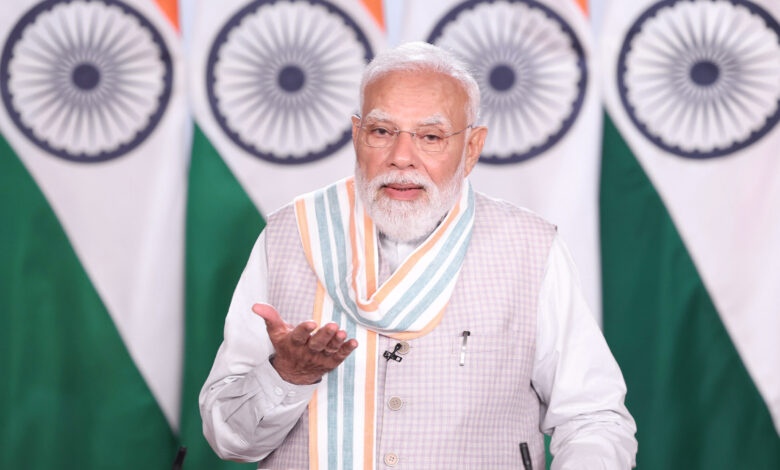
Prime Minister Narendra Modi on Saturday distributed more than 51,000 appointment letters to newly recruited youth under the 19th edition of the Rozgar Mela, reaffirming the Centre’s commitment to employment generation and youth empowerment as part of the vision for a “Viksit Bharat” by 2047.
Addressing the newly appointed candidates through video conferencing, the Prime Minister described the occasion as a significant milestone for thousands of young Indians beginning their careers in various government departments and organisations, including railways, banking, defence, education, and healthcare. He said the country’s youth would play a decisive role in shaping a developed India over the coming decades.
Highlighting the importance of the Rozgar Mela initiative, Modi said the programme reflected the government’s dedication to providing meaningful opportunities to the country’s young workforce. Congratulating the newly recruited employees and their families, he acknowledged the hard work and determination that enabled them to secure government jobs.
The Prime Minister underlined that India’s youth and technological progress are attracting increasing global attention. Referring to his recently concluded five-nation diplomatic visit, Modi said leaders of international corporations and governments had expressed strong confidence in India’s demographic strength and innovation capabilities. According to him, the global community is eager to partner with India in its development journey.
He elaborated on several strategic partnerships and agreements signed during the visit. Discussions with the Netherlands focused on semiconductors, water management, agriculture, and advanced manufacturing, while talks with Sweden centred on artificial intelligence and digital innovation. Norway and Italy engaged with India on green technology and sustainable manufacturing, and the UAE discussed cooperation in supercomputing, strategic energy, and maritime infrastructure.
Modi stressed that such international collaborations are directly linked to employment generation and skill development for Indian youth. He noted that every investment, technology transfer, and industrial partnership creates fresh opportunities for young professionals, engineers, researchers, and skilled workers across the country.
The Prime Minister cited the agreement between Dutch semiconductor giant ASML and Tata Electronics as an example of India’s growing role in the global semiconductor supply chain. He said the partnership alone is expected to generate thousands of jobs in India while strengthening the country’s technological ecosystem.
Emphasising the rise of future-oriented industries, Modi said sectors such as clean energy, green hydrogen, critical minerals, and sustainable manufacturing are expanding rapidly and opening doors to a “new economy.” Partnerships with countries like Sweden, Norway, and Italy, he said, would help India establish a strong position in clean manufacturing and green technology industries over the next 25 years.
He also highlighted growing investments in shipbuilding, port infrastructure, aviation maintenance, repair and overhaul (MRO), and electronics manufacturing. Referring to India’s semiconductor mission, Modi said a complete domestic semiconductor ecosystem is being developed and several large manufacturing units are expected to gain global recognition in the coming years.
The Prime Minister said the government’s Production Linked Incentive (PLI) scheme has significantly boosted electronics manufacturing and created employment opportunities for millions of young Indians. He added that India is rapidly emerging as a major global electronics manufacturing hub.
Modi further stressed the importance of infrastructure development in generating employment and ensuring inclusive growth. He pointed to massive investments in railways, highways, airports, logistics, digital infrastructure, and rural connectivity over the last twelve years. According to him, enhanced connectivity has transformed rural India by creating new opportunities for farmers, traders, students, and entrepreneurs.
The Prime Minister said the expansion of roads, electricity, internet access, tap water connections, and housing schemes has accelerated economic activity even in villages and remote regions. He noted that these initiatives have not only improved living standards but also contributed significantly to employment generation.
Speaking about entrepreneurship, Modi said India has emerged as the world’s third-largest startup ecosystem with over 2.3 lakh recognised startups. He noted that the startup movement is now expanding rapidly beyond metropolitan cities, with youth from Tier-2 and Tier-3 cities increasingly participating in innovation and enterprise.
The Prime Minister also praised the growing role of women entrepreneurs, highlighting schemes such as Mudra Yojana and PM SVANidhi, which have enabled financial independence and self-employment opportunities for millions of women across the country.
Addressing the newly appointed government employees directly, Modi reminded them that public service is a responsibility towards citizens and urged them to work with empathy, efficiency, and dedication. He encouraged them to embrace continuous learning and make full use of platforms such as iGOT Karmayogi and Karmayogi Prarambh for skill enhancement and professional development.
Concluding his address, the Prime Minister said India’s youth are making their mark globally in every field and expressed confidence that the same energy and commitment would strengthen public service and accelerate the country’s journey towards becoming a developed nation by 2047.