PM Modi to Launch ₹6,350 Crore Projects, Inaugurate Ganga Expressway in UP
Major boost to rail, road, healthcare and tourism; two Amrit Bharat trains flagged off, travel time from Meerut to Prayagraj to halve

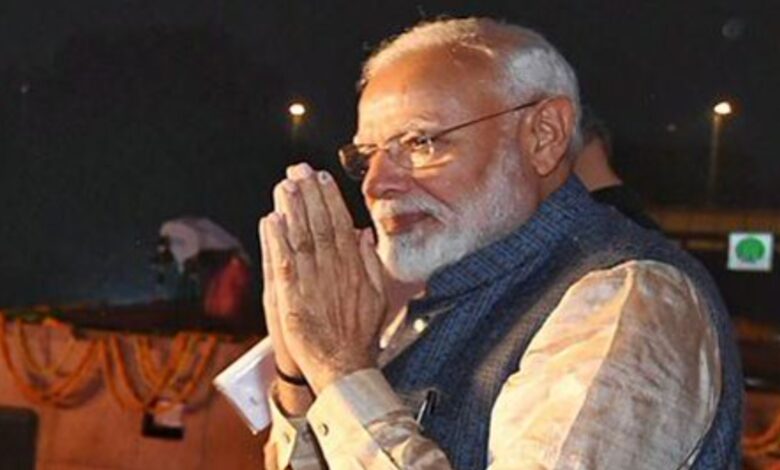
Prime Minister Narendra Modi is set to undertake a two-day visit to Uttar Pradesh on April 28–29, during which he will participate in a major Mahila Sammelan in Varanasi and inaugurate as well as lay the foundation stone for development projects worth around ₹6,350 crore. The projects span key sectors such as railways, roads, water supply, healthcare, tourism, and urban infrastructure, reflecting a comprehensive push toward regional development.
On April 28 at around 5 PM, the Prime Minister will attend the Mahila Sammelan in Varanasi, an event expected to witness participation of a large number of women from across the region. During the programme, he will dedicate more than 48 completed projects worth over ₹1,050 crore to the nation. These include major infrastructure upgrades such as the widening of the Varanasi–Azamgarh road, the opening of key Rail Over Bridges at Kazzakpura and Kadipur, and the inauguration of a 55 MLD sewage treatment plant at Bhagwanpur.
A range of community-centric initiatives will also be launched, including 30 rural drinking water schemes under the Jal Jeevan Mission, redevelopment of Chandrawati Ghat, tourism development at Sarangnath Temple near Sarnath, and beautification works at Sant Ravidas Park in Nagwa. Public service infrastructure will receive a boost with the inauguration of a synthetic hockey turf at UP College, a 100-bed old age home in Ramnagar, and a 1 MW solar power plant at the Bhelupur Water Treatment Plant. The Prime Minister will also inaugurate the Sowa Rigpa Bhawan and Hospital at the Central University of Tibetan Studies, highlighting the integration of traditional medicine systems into modern healthcare.
In addition, foundation stones for over 112 projects worth approximately ₹5,300 crore will be laid. These include sewerage and water supply schemes under AMRUT 2.0, construction of a 500-bed multi-super-specialty hospital at Shri Shiv Prasad Gupta Divisional District Hospital, and development of commercial infrastructure such as market complexes at Bhojuveer and Sigra. Projects related to tourism development at major ghats like Assi Ghat, Dashashwamedh Ghat, and Namo Ghat will also be initiated, alongside civic infrastructure such as an Integrated Divisional Office, a Nagar Nigam building, and a child shelter home in Ramnagar.
A key railway project—the third and fourth line between Varanasi Junction railway station and Pandit Deen Dayal Upadhyaya Junction—will also be launched. The project includes a rail-cum-road bridge over the Ganga River and is expected to ease congestion, improve logistics, and strengthen connectivity with eastern Uttar Pradesh and Bihar.
The Prime Minister will also flag off two new Amrit Bharat Express trains—Banaras to Pune (Hadapsar) and Ayodhya to Mumbai (Lokmanya Tilak Terminus). These services aim to provide affordable, modern travel options while improving connectivity between Uttar Pradesh, Madhya Pradesh, and Maharashtra, as well as enhancing access to key religious destinations like Kashi Vishwanath Dham and Shri Ram Mandir.
On April 29, the Prime Minister will begin the day with darshan and पूजा at the Kashi Vishwanath Temple before travelling to Hardoi, where he will inaugurate the landmark Ganga Expressway.
The 594-kilometre-long, access-controlled greenfield expressway has been constructed at a cost of approximately ₹36,230 crore. Stretching across 12 districts—from Meerut to Prayagraj—the six-lane (expandable to eight lanes) corridor will significantly reduce travel time between the two cities from the current 10–12 hours to nearly six hours.
One of the most notable features of the expressway is a 3.5-kilometre-long emergency landing facility in Shahjahanpur, designed to serve as an airstrip for defence and emergency operations, thereby adding strategic importance to the project.
The expressway is envisioned as a major economic corridor, with integrated manufacturing and logistics hubs planned over approximately 2,635 hectares along its route. It is expected to reduce logistics costs, improve supply chain efficiency, and boost industrial growth. Farmers are also likely to benefit from better access to markets, leading to improved price realisation and stronger rural incomes.
Additionally, the project will enhance tourism, generate employment, and form a critical backbone for Uttar Pradesh’s expanding expressway network. It will connect with other major corridors such as the Agra–Lucknow Expressway and proposed links extending toward Haridwar, facilitating seamless high-speed connectivity across the state.
Overall, the Prime Minister’s visit underscores a major push toward infrastructure development and economic growth in Uttar Pradesh, with projects aimed at improving connectivity, boosting investment, and enhancing quality of life for millions of residents.