IRFC’s Rs 13,527 Crore Hyderabad Metro Deal Marks Major Urban Transit Push
In an exclusive interview with News Station, IRFC CMD Manoj Kumar Dubey says the refinancing model will reduce metro financing costs, strengthen urban mobility and support future metro and RRTS expansion projects across India.

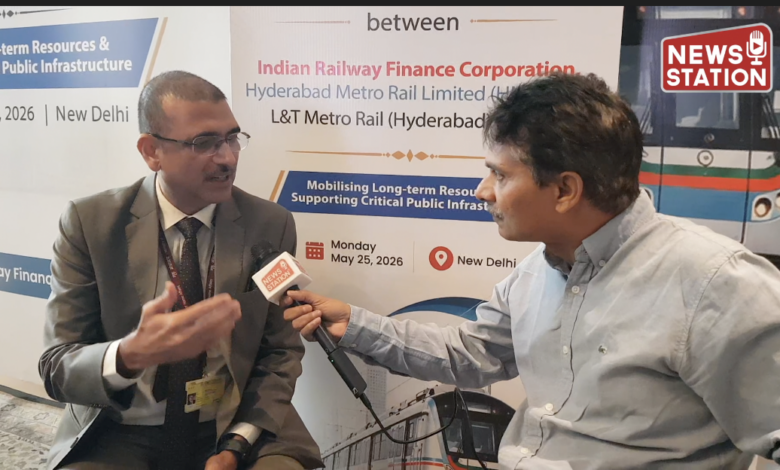
In an exclusive interaction with News Station Editor Siddharatha, Manoj Kumar Dubey highlighted the expanding role of Indian Railway Finance Corporation in financing India’s rapidly growing railway and metro infrastructure sector at affordable rates. Dubey said IRFC, a Navratna public sector undertaking under the Ministry of Railways, is focused on ensuring low-cost funding for strategic infrastructure projects that are critical for India’s long-term economic growth and urban development.
Speaking about the recently signed Rs 13,527 crore refinancing agreement for the Hyderabad Metro Rail project, Dubey described the deal as one of the largest urban transit refinancing transactions in India. The agreement was signed between IRFC, L&T Metro Rail Hyderabad Limited and Hyderabad Metro Railway Limited to refinance the existing debt of the Hyderabad Metro network, which spans 69.2 kilometres across three corridors with 57 stations. The metro system currently handles more than five lakh passenger journeys every day and is considered one of the largest metro rail projects developed under the Public-Private Partnership (PPP) model.
Dubey said the Hyderabad Metro refinancing marks a significant milestone for IRFC, as the company has emerged as the first major domestic financing institution to fund metro rail projects at this scale. He explained that after receiving Navratna status last year, IRFC was given a broader mandate to finance metro railway projects and other urban mobility infrastructure initiatives across the country.
According to Dubey, metro rail systems are becoming increasingly important as India continues to witness rapid urbanisation and rising demand for efficient public transportation. He said the refinancing model introduced by IRFC is expected to reduce the financing cost of the Hyderabad Metro project by nearly 30 to 40 percent, thereby improving the project’s long-term financial sustainability. Lower financing costs are expected to strengthen operations and support future expansion plans for the metro network.
Dubey emphasized that IRFC’s financial strength lies in its zero-NPA status, low borrowing costs and minimal overhead expenses. These advantages allow the company to raise funds at cheaper rates both domestically and internationally and pass those benefits on to government-backed infrastructure projects. He added that the entire refinancing amount for the Hyderabad Metro project is expected to be disbursed before June 2026.
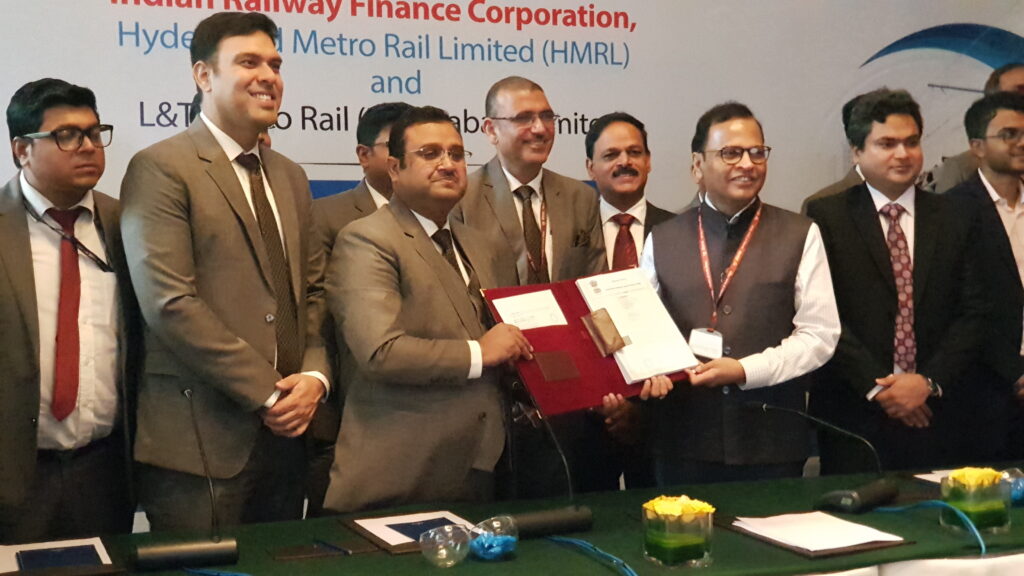
Addressing concerns regarding public sector financing of a project that was earlier developed and operated by private players, Dubey said infrastructure projects are designed with a long-term national development vision and require sustained collaboration between governments and private companies. He praised L&T for successfully constructing and operating the Hyderabad Metro network over the last decade, describing it as one of the world’s largest metro systems developed under the PPP framework.
Dubey also indicated that the Telangana Government and the Central Government are expected to jointly support future expansion plans under Hyderabad Metro Phase-II and Phase-III. He said large-scale infrastructure projects often evolve in stages, with both public and private sectors contributing at different phases of development.
Explaining the security structure adopted by IRFC for metro financing, Dubey said the institution has created a robust multi-layered risk protection mechanism. The model includes asset-backed security, escrow account control over revenue flows, debt service reserve accounts, state government guarantees and a Reserve Bank of India direct debit mechanism. According to him, these safeguards make the financing arrangement highly secure and help maintain IRFC’s zero-NPA track record.
On future plans, Dubey revealed that IRFC is already in discussions with several agencies regarding financing additional metro rail and Regional Rapid Transit System (RRTS) projects across India. He said the Hyderabad Metro refinancing model could become a template for future urban transit funding, including collaborations with multilateral agencies, bilateral lenders and domestic financial institutions.
The refinancing transaction is being viewed as a major boost for India’s urban mobility sector and aligns with the government’s broader vision of sustainable transport infrastructure and the goal of building a “Viksit Bharat” through modern connectivity and affordable public transport systems.