Indian Railways Expands Services: Over 1,000 New Trains, 4,600 Coaches Added in Five Years

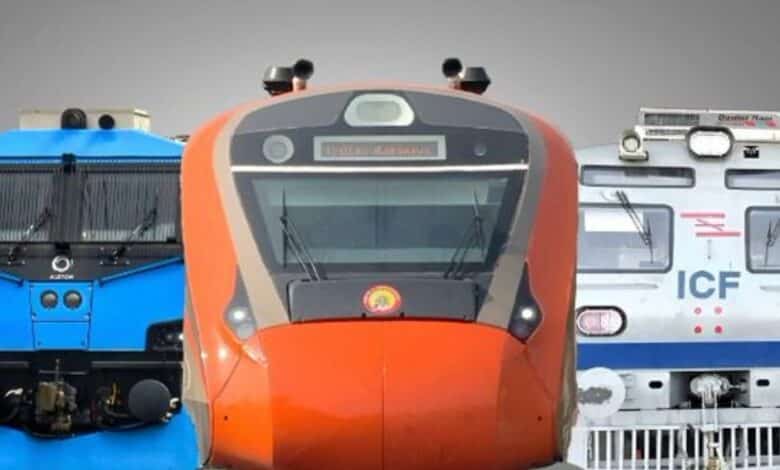
In a major move to meet the rising demand of passengers across the country, Indian Railways (IR) has significantly expanded its train services over the last five years. According to information provided by Union Minister for Railways, Information & Broadcasting and Electronics & Information Technology, Ashwini Vaishnaw, in a reply to a Lok Sabha question, the national transporter has introduced 1,024 new trains, extended 907 existing services, increased the frequency of 168 trains, and augmented 4,651 coaches between 2021-22 and February 2026.
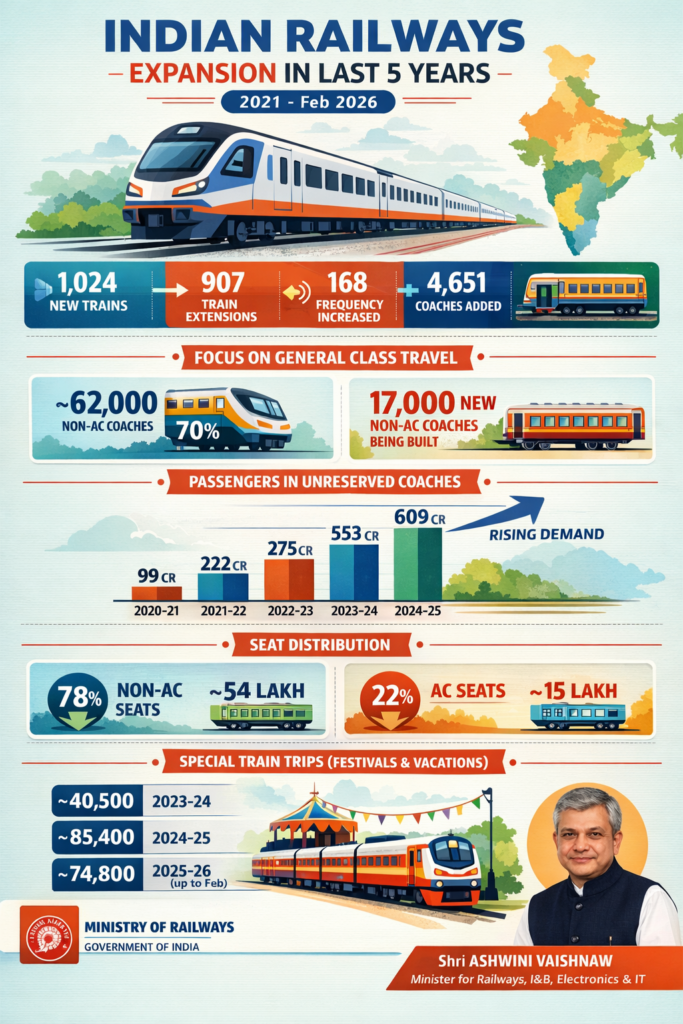
The expansion comes as part of a broader strategy to ensure better passenger accommodation and optimize utilization of the railway network, especially during peak travel periods such as festivals, holidays, and vacations.
Addressing Passenger Demand
Passenger occupancy on Indian Railways varies depending on lean and peak travel periods. During high-demand periods, such as festivals and school vacations, popular train routes are often fully booked, while less popular routes and off-peak periods show sub-optimal utilization.
To address these variations, Indian Railways continuously monitors waiting lists and adopts measures such as:
- Introducing new trains to meet rising demand.
- Increasing frequency or extending existing trains.
- Augmenting coach capacity permanently on busy trains.
- Rationalizing waiting list limits based on class accommodation availability.
Over the past five years, these measures have allowed Indian Railways to better manage the surge in travel demand while also improving travel options for low- and middle-income passengers.
Expansion Across the Network
From 2021-22 to February 2026, IR introduced 1,024 new trains, extended 907 existing trains, increased the frequency of 168 trains, and added 4,651 coaches to its rolling stock. Many of these train services cross state boundaries, reflecting the network’s nationwide reach.
On an originating and terminating station basis, 444 new train services were introduced in the Eastern and North Eastern regions during this period. Among these, 75 pairs of trains serve stations located in Bihar, catering to increasing passenger demand in this densely populated state.
Boosting General Class Travel
Recognizing the need to serve passengers traveling in unreserved and general class coaches, Indian Railways has significantly increased non-AC coach availability.
- In 2024-25 alone, 1,250 general coaches were deployed in various long-distance trains.
- In the current financial year up to February 2026, 860 additional coaches were permanently augmented for general travel.
To further accommodate low- and middle-income families, IR is manufacturing 17,000 non-AC coaches (general and sleeper class), ensuring affordable travel for a majority of passengers.
Coach Composition
The current composition of Indian Railways’ coaches emphasizes non-AC travel, with around 70% of the fleet dedicated to general and sleeper class coaches.
Table 1: Distribution of Coaches on Indian Railways
|
Coach Type |
Number of Coaches |
Percentage of Total |
|
Non-AC (General & Sleeper) |
~62,000 |
~70% |
|
AC Coaches |
~27,000 |
~30% |
|
Total |
~89,000 |
100% |
This significant proportion of non-AC coaches has contributed to a consistent rise in passenger travel in general/unreserved coaches over the years.
Table 2: Passenger Trend in General/Unreserved Coaches
|
Year |
No. of Passengers |
|
2020-21 |
99 Cr (Covid year) |
|
2021-22 |
275 Cr (Covid year) |
|
2022-23 |
553 Cr |
|
2023-24 |
609 Cr |
|
2024-25 |
651 Cr |
The increase in non-AC seats has also provided more seating options for passengers who prefer affordable travel.
Table 3: Distribution of Seats
|
Seat Type |
Number of Seats |
Percentage |
|
Non-AC |
~54 lakhs |
~78% |
|
AC |
~15 lakhs |
~22% |
|
Total |
~69 lakhs |
100% |
To further enhance passenger accommodation, Mail/Express trains are structured to include 12 general and sleeper class non-AC coaches and 8 AC coaches in a standard 22-coach configuration. This allows a greater proportion of affordable travel options while still providing AC facilities for premium passengers.
Unreserved Trains and MEMU/EMU Services
In addition to regular Mail/Express services, Indian Railways operates unreserved non-AC passenger trains, including MEMU and EMU services. These provide an affordable alternative for passengers who do not require reserved seating, particularly benefiting commuters and low-income travelers.
Special Trains for Peak Travel
During festivals, vacations, and other high-demand periods, Indian Railways supplements regular services with Special trains. These trains cater to extra passenger demand and help alleviate congestion on key routes.
Table 4: Special Train Trips (Festivals & Vacations)
|
Year |
No. of Trips |
|
2023-24 |
~40,500 |
|
2024-25 |
~85,400 |
|
2025-26 (up to Feb) |
~74,800 |
The operation of tens of thousands of special train trips over the last three years highlights the proactive measures taken by Indian Railways to ensure that passengers can travel safely and comfortably, even during peak rush periods.
Regional Focus: Eastern and North Eastern India
The Eastern and North Eastern regions have seen a targeted expansion of services. A total of 444 train services were introduced during 2021-22 to February 2026, with a focus on providing adequate connectivity for stations in Bihar and nearby states. This reflects Indian Railways’ commitment to connecting major population centers and ensuring equitable access to transportation.
Affordable Travel for All
By prioritizing non-AC coaches and increasing unreserved seating, Indian Railways has maintained a strong focus on affordability. The ongoing production of 17,000 non-AC coaches will further enhance travel options for low- and middle-income passengers, ensuring that the majority of travelers can access rail services at reasonable fares.
Strategic Planning and Passenger Welfare
The expansion in train services, coach augmentation, and special trains is part of a larger strategy to optimize utilization of the rail network while addressing fluctuating passenger demand. Key features of this strategy include:
- Monitoring waiting lists to identify high-demand routes.
- Rationalizing coach composition to ensure fair distribution of AC and non-AC coaches.
- Operating special trains during peak periods.
- Augmenting non-AC coaches to support growing general/unreserved travel.
- Increasing regional connectivity with new trains, especially in underserved regions.
By implementing these measures, Indian Railways is better equipped to handle millions of daily passengers while ensuring comfort, safety, and affordability.
Minister’s Statement
Ashwini Vaishnaw, while providing these details in the Lok Sabha, emphasized the importance of enhancing passenger accommodation and maintaining affordability. He noted that the railways’ continued investment in new trains, coach augmentation, and special train services reflects a commitment to passengers across all income levels and regions.
Conclusion
Over the last five years, Indian Railways has made substantial strides in expanding its train services, increasing coach capacity, and catering to growing passenger demand. With 1,024 new trains, 4,651 augmented coaches, and tens of thousands of special train trips, the railways continue to remain the backbone of India’s transport network.
The sustained focus on affordable travel, increased non-AC seating, and regional connectivity demonstrates Indian Railways’ commitment to passenger welfare while strategically managing network efficiency. The integration of these measures ensures that millions of passengers across India can enjoy safe, convenient, and economical travel options.