Ashwini Vaishnaw Flags Off Bengaluru–Mumbai Express Train, Announces Upcoming Vande Bharat Sleeper Service

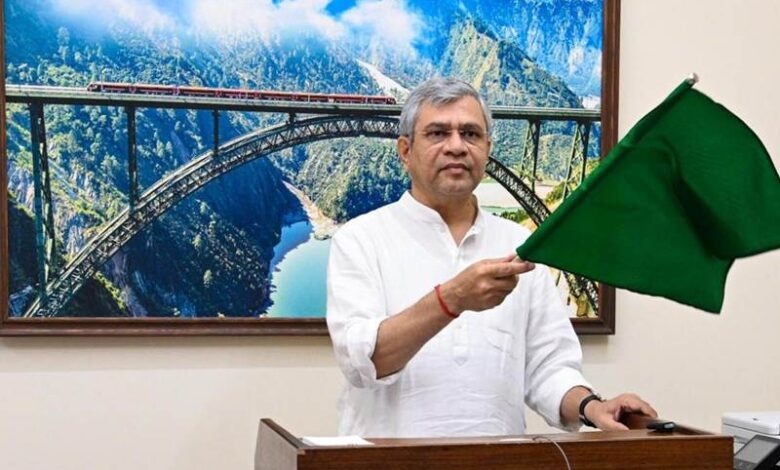
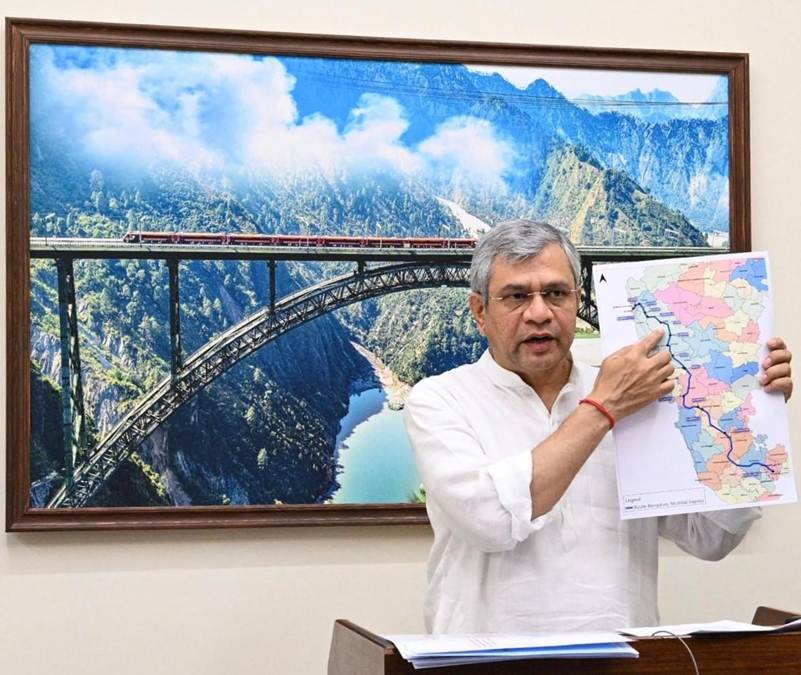
Union Railway Minister Ashwini Vaishnaw virtually flagged off the new Bengaluru–Mumbai Express train, marking a significant milestone in strengthening railway connectivity between Karnataka and Maharashtra. The launch of the new service is expected to improve passenger convenience on one of southern India’s busiest rail corridors while supporting economic and regional development across both states.
During the event, the Railway Minister announced that the much-awaited Bengaluru–Mumbai Vande Bharat Sleeper service is also expected to begin operations soon. The announcement has generated excitement among passengers and railway enthusiasts, as the upcoming sleeper version of the Vande Bharat train is expected to drastically reduce travel time while offering modern amenities and enhanced comfort for overnight travel.
Addressing the gathering virtually, Vaishnaw said that several long-pending railway demands of South Karnataka and North Karnataka are now being fulfilled through accelerated infrastructure development and increased railway investment in the state. He highlighted that railway funding for Karnataka has increased substantially over the past few years, leading to faster execution of key railway projects.
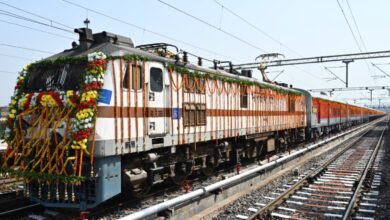
The newly flagged-off train, numbered 16553/54 SMVT Bengaluru – Lokmanya Tilak Terminus Express, will improve connectivity between Bengaluru and Mumbai, benefiting thousands of passengers who travel frequently between the two major metropolitan cities for business, education, tourism, and employment.
The Railway Minister also highlighted the ongoing redevelopment of railway stations under the ambitious Amrit Bharat Station Scheme. According to him, 61 railway stations across Karnataka are being redeveloped at a cost of nearly ₹2,160 crore, out of which work on nine stations has already been completed.
Among the major station redevelopment projects, Bengaluru Cantonment railway station is being modernized at a cost of ₹485 crore, while Yeshwantpur station is being redeveloped at ₹367 crore. These projects aim to transform railway stations into modern transport hubs equipped with world-class passenger amenities and improved infrastructure.
Vaishnaw further stated that since 2014, nearly 1,750 kilometres of new railway lines have been constructed in Karnataka. He also noted that complex railway electrification works on the Hassan–Mangaluru section have been completed, and testing is currently underway. The electrification project is expected to improve rail efficiency and connectivity in the coastal region.
Speaking about the Bengaluru Suburban Railway Project, the Railway Minister said work is progressing steadily across all four corridors of the ambitious urban transport network. Land acquisition has already been completed for the Baiyappanahalli–Chikkabanavara and Heelalige–Rajanukunte corridors, while station construction activities are currently underway.
He added that the alignment for the KSR Bengaluru–Devanahalli corridor has been jointly approved by the Railways and the Karnataka government, and geotechnical surveys have already been completed. The Kengeri–Whitefield corridor alignment has also received approval, and survey work is expected to begin shortly.
According to Vaishnaw, the suburban railway network will play a crucial role in easing traffic congestion in Bengaluru by integrating major hubs such as Kempegowda International Airport, Electronic City, Marathahalli, and Hebbal through modern rail connectivity.
The Railway Minister further informed that Karnataka currently operates 12 pairs of Vande Bharat trains, enhancing high-speed rail connectivity across multiple districts in the state. He said testing on the Bengaluru–Mangaluru route is underway and will soon improve coastal connectivity up to Madgaon in Goa.
In another major announcement, Vaishnaw revealed that bullet train corridors connecting Bengaluru with Hyderabad and Chennai have been approved. He stated that the long-term vision is to create a high-speed rail network connecting major Indian cities including Mumbai and Bengaluru, with the proposed network expected to eventually expand to around 7,000 kilometres.
Union Minister of State for Railways V. Somanna also addressed the event and thanked Ashwini Vaishnaw for sanctioning the Bengaluru–Mumbai Express train. He said the new service would greatly benefit passengers travelling on one of India’s busiest rail routes and further contribute to Karnataka’s economic growth.
Somanna highlighted that Karnataka currently has 12 pairs of Vande Bharat trains covering 14 districts. He also announced that a Vande Bharat Sleeper maintenance depot will be established at Thanisandra at a cost of ₹270 crore. Additionally, a chair car maintenance facility will be developed at Sir M. Visvesvaraya Terminal (SMVT) Bengaluru at a cost of ₹52.73 crore.
To improve railway capacity around Bengaluru, doubling works on the Baiyappanahalli–Hosur section costing ₹1,116 crore and the Bettahalasuru–Rajanukunte section costing ₹248 crore are underway. Quadrupling projects worth ₹1,347 crore are also being executed around the city.
Somanna further stated that automatic signalling systems are being introduced across major railway sections including Yesvantpur, KSR Bengaluru, Lottegollahalli, Baiyappanahalli, Penukonda, Mysuru, and Jolarpettai at a total cost of ₹6,396 crore.
Highlighting Karnataka’s railway growth, he noted that the state has received a record railway budget allocation of ₹7,748 crore. Since 2014, around 3,840 kilometres of railway lines have been developed, while 3,742 kilometres have been electrified, bringing Karnataka close to achieving 100 percent railway electrification.
He also stated that the number of Road Over Bridges (ROBs) and Road Under Bridges (RUBs) in the state has increased significantly from around 150 before 2014 to 707 currently. Another 146 ROBs and RUBs are expected to be completed within the next year, with Indian Railways aiming to eliminate all level crossings in Karnataka within the next three years.
Several dignitaries and senior railway officials attended the event, including P. C. Mohan, Lehar Singh Siroya, and Tejasvi Surya, who joined the programme through video conference.