CEC Grants Conditional Approval for Felling 8,645 Trees in Delhi Railway Expansion Project

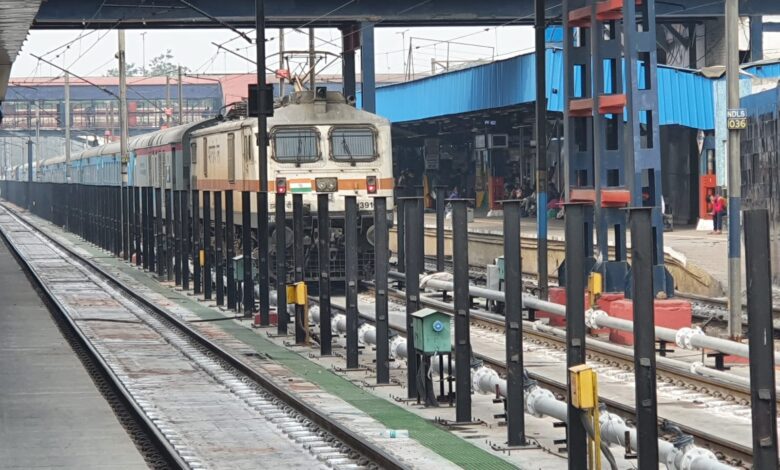
In a significant development for Delhi’s rail infrastructure, the Supreme Court-appointed Central Empowered Committee (CEC) has conditionally permitted Northern Railways to fell 8,645 trees for constructing the third and fourth broad-gauge lines between Tilak Bridge and Anand Vihar stations.
The decision, outlined in an Office Memorandum dated November 27, 2025, follows an application by Northern Railways seeking permission to remove 10,459 trees across 21.1732 hectares of deemed forest land in East and Central Delhi districts. This project aims to alleviate severe capacity constraints on the congested section, which currently has only two lines compared to four beyond Anand Vihar towards Sahibabad.
The Tilak Bridge-Anand Vihar corridor is critical for train movements towards Saharanpur, Moradabad, and Kanpur routes from Delhi. With rising passenger and freight demand, the existing infrastructure causes frequent delays, halting trains and slowing operations. The new lines, including a parallel Yamuna bridge (Bridge No. 31), two road-under-bridges (RUBs), two road-over-bridges (ROBs), yard modifications at Mandawali Chandra Vihar, and new stations/platforms/service buildings, are expected to enhance traffic fluidity and safety.
The proposal received Stage-I approval from the Ministry of Environment, Forest and Climate Change (MoEFCC) Regional Office in Lucknow on December 2, 2024, with a key condition requiring Delhi High Court nod for tree felling. However, following Supreme Court directives in December 2024 and April 2025 (in M.C. Mehta vs Union of India), cases involving 50+ trees shifted to CEC oversight under the Delhi Preservation of Trees Act, 1994. The High Court, in its April 25, 2025 order, redirected the matter to CEC, disposing of related applications.
Initially, Railways and Delhi Forest Department identified 11,542 trees in the project area, sparing 1,083. Railways then sought CEC approval for the remaining 10,459.
A CEC site visit on October 28, 2025, emphasized minimizing impacts: advanced technology for transplantation, track realignment to save trees, retaining walls to reduce land needs, and fresh plantations with 2-3-year-old local saplings post-construction.
Post-visit, Railways proposed saving an additional 1,164 trees (via realignment and walls) and transplanting 650 to adjoining 1.25 hectares of railway land. CEC accepted this, reducing felling to 8,645, with lists annexed for demarcation.
Key CEC conditions include:
- Compliance with MoEFCC’s Stage-I approval and all stipulations.
- No felling/transplantation without competent authority (Tree Officer) permission post-MoEFCC compliance.
- Work under Delhi Forest Department’s supervision.
- Trees to be color-banded (30 cm wide) with individual numbers painted: different colors for felled, transplanted, and saved.
- Railways’ affidavit imposing ₹5 lakh penalty per unauthorized tree affected, plus action under DPTA.
- Compensatory afforestation as per norms over equivalent non-forest/degraded land.
CEC noted the project’s public interest and safety imperatives for running trains, deeming felling unavoidable while mandating mitigation.
Environmentalists express concern over Delhi’s shrinking green cover, already strained by pollution and urban sprawl. The capital’s tree census (ordered by Supreme Court in 2024) is underway, highlighting preservation needs. Activists argue large-scale felling exacerbates heat islands and air quality issues, though Railways commits to translocation success and dense replantation.
The project aligns with Indian Railways’ broader modernization under Amrit Bharat and capacity augmentation drives. Similar Yamuna bridges are progressing to decongest routes.
With approvals in place, construction acceleration is anticipated, promising smoother commutes for millions relying on Delhi’s rail network. Implementation monitoring by CEC and Forest Department will ensure compliance.
This balanced approach reflects ongoing tensions between infrastructure growth and environmental safeguards in urban India.