PM Modi’s 80th Independence Day Address: Gen Z, ‘Saptdhara’ and ‘Dimaagi Naxal’ Take Centre Stage

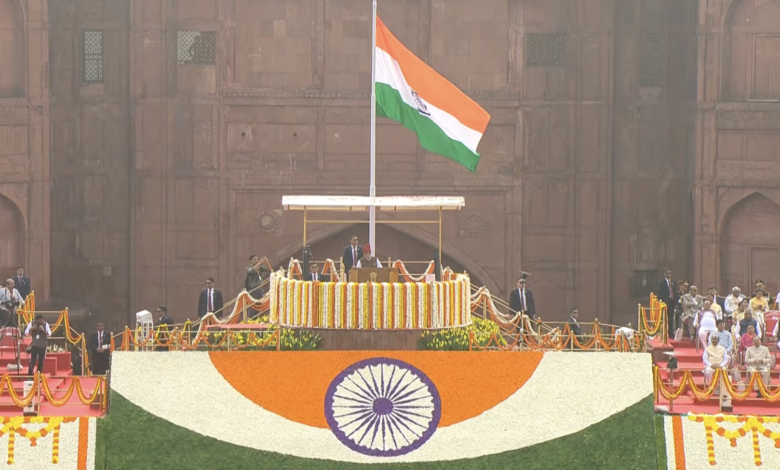
Prime Minister Narendra Modi, in his 80th Independence Day address from the Red Fort on Saturday, placed Yuva Shakti, next-generation reforms, Atmanirbhar Bharat and the goal of Viksit Bharat by 2047 at the centre of his message, while also warning against what he described as a new threat of “dimaagi Naxal”.
Delivering his 13th consecutive Independence Day address, Modi highlighted the aspirations of Gen Z and the country’s youth, linking their potential with India’s long-term development ambitions. He also unveiled the seven-point ‘Shakti Ki Saptdhara’ framework, which he presented as the foundation for the next generation of reforms.
The Prime Minister began by paying tribute to India’s freedom fighters, saying Independence Day serves as a reminder of their courage, sacrifice and dedication. He said their dreams continue to inspire the nation as citizens work collectively towards building a Viksit Bharat.
Warning against ‘Dimaagi Naxal’
A significant political message in the address was Modi’s reference to “dimaagi Naxal”, or what he described as a new form of ideological or mental threat. The warning was presented alongside his broader emphasis on national strength, unity and the need for India to move forward with confidence and determination.
The reference came as the Prime Minister spoke about the challenges facing the country and the importance of protecting India’s development trajectory from forces or mindsets that could undermine national progress.
Seven pillars of ‘Shakti Ki Saptdhara’
Modi outlined seven key areas for India’s next phase of development. The first is manufacturing, with a focus on making Indian products competitive in terms of cost, quality and scale.
The second pillar is agriculture and food processing, with the Prime Minister calling for Indian agricultural products to become globally recognised brands.
The third is technology and innovation, with particular emphasis on digital and communication technologies. The fourth is Gati Shakti, aimed at faster and seamless connectivity and improved movement of people and goods.
The remaining pillars include Raksha Shakti, focusing on defence self-reliance; the green and blue economy; and India’s soft power, including areas such as Yoga, Ayurveda, tourism and creative industries.
Atmanirbhar Bharat and semiconductor ambitions
The Prime Minister reiterated his call for an Atmanirbhar Bharat, saying India must strengthen its domestic capabilities and protect its interests instead of remaining dependent on other countries.
He highlighted Make in India, Swadeshi and Vocal for Local as part of this effort.
Semiconductors also featured prominently in the address. Modi said chips had become indispensable to electronics, medical equipment and transportation systems. He said three semiconductor plants had already been established and that production had begun for exports, while additional facilities were expected to become operational in the coming years.
Energy security becomes a priority
Modi described energy security as essential to India’s future, particularly as artificial intelligence, semiconductor manufacturing and data centres require growing amounts of electricity.
He reiterated the target of taking India’s nuclear power capacity to 100 GW by 2047, while aiming to commission five new nuclear reactors during the current decade. He also highlighted progress in fast-breeder nuclear technology as a step towards greater self-reliance in nuclear fuel.
The Prime Minister also spoke about expanding offshore exploration, saying areas earlier designated as “no-go” zones were being opened for exploration and the search for new reserves.
From ‘Fragile Five’ to a new momentum
Looking back at India’s economic journey, Modi recalled the period when India was grouped among the “Fragile Five” economies. He said the country had since gained new momentum and was advancing with the determination of its 1.4 billion citizens.
He cited growth in defence production, electronics manufacturing, digital transactions and modern railway coach production as examples of the changes achieved over the past 12 years.
The Prime Minister also stressed that India must think beyond small ambitions. He said the country’s vision was to become a developed nation by 2047, when India marks 100 years of Independence.
The address concluded with a strong message of national pride and collective resolve, with Modi saying “Vande Mataram” was resonating in every heart and the Tricolour was present in every home and every mind.