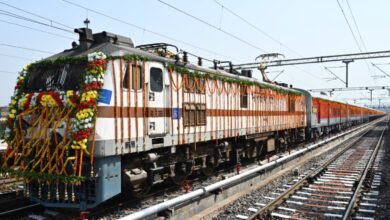
PM to Flag Off Two New Amrit Bharat Express Trains; One Daily and One Weekly Service to Link UP, MP and Maharashtra

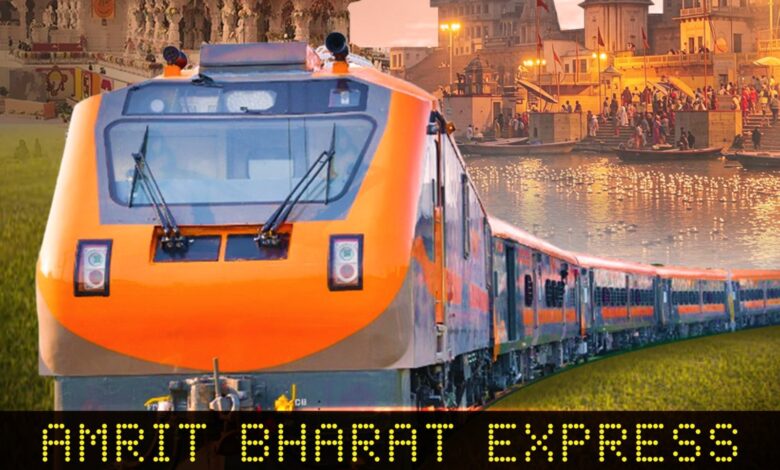
In a major boost to affordable long-distance rail travel, Indian Railways is set to introduce one daily and one weekly Amrit Bharat Express train connecting Uttar Pradesh with Maharashtra via Madhya Pradesh. Prime Minister Narendra Modi will flag off the two new services — Banaras-Hadapsar (Pune) Amrit Bharat Express and Ayodhya-Mumbai (Lokmanya Tilak Terminus) Amrit Bharat Express — on April 28, 2026.
The launch is expected to significantly improve connectivity between major spiritual centres of North India and economic hubs of Maharashtra, while benefiting pilgrims, migrant workers, students and middle-income travellers.
The Banaras-Hadapsar service will run daily, while the Ayodhya-Mumbai service will operate weekly.
With these additions, the total number of operational Amrit Bharat Express trains in the country will rise to 66.
Modern Trains for Common Passengers
Amrit Bharat Express trains were introduced for low- and middle-income families as modern non-AC services with upgraded passenger amenities at economical fares.
These trains include General and Sleeper class coaches, pantry facilities and Divyangjan-friendly features. Passenger comfort has been enhanced with modern berths inspired by Vande Bharat Sleeper trains.
Other key features include:
| Amenities in Amrit Bharat Express |
|---|
| CCTV surveillance |
| Emergency talk-back systems |
| Fire suppression system |
| Fully sealed gangways |
| Better lighting |
| Improved toilets |
| USB Type-A and Type-C charging points |
| Ergonomic ladders |
| Push-pull locomotive technology |
| Enhanced ride quality |
Both trains use locomotives at both ends for faster acceleration and better operational efficiency.
Banaras-Hadapsar (Pune) Amrit Bharat Express – Daily Service
The Banaras-Hadapsar (Pune) Amrit Bharat Express will directly connect Kashi, one of the world’s oldest living cities, with Pune, one of India’s leading education, IT and industrial centres.
Banaras is globally renowned for:
- Kashi Vishwanath Dham
- Ganga Ghats
- Banarasi silk industry
- Religious tourism
The daily train is expected to help pilgrims, traders, students and migrant workers travelling regularly between Uttar Pradesh, Madhya Pradesh and Maharashtra.
Pune, whose suburban terminal Hadapsar will serve as the endpoint, has emerged as a key IT, automobile and defence hub.
Major Stops on Banaras-Pune Route
| Major Stations |
|---|
| Banaras |
| Gyanpur Road |
| Prayagraj |
| Fatehpur |
| Govindpuri |
| Orai |
| Virangana Lakshmibai Jhansi |
| Bina |
| Rani Kamlapati |
| Narmadapuram |
| Itarsi |
| Harda |
| Khandwa |
| Bhusaval |
| Jalgaon |
| Manmad |
| Kopargaon |
| Ahilyanagar |
| Daund |
| Hadapsar |
The journey is expected to take around 30 hours.
Economic and Religious Importance
The route connects eastern Uttar Pradesh to western India through important cities in Madhya Pradesh and Maharashtra.
Passengers from Jhansi, Bhopal, Itarsi, Jalgaon and Bhusaval are expected to benefit from easier travel and trade movement.
The train will also provide easier access to Shirdi, through Manmad and Kopargaon, helping religious tourism.
Ayodhya-Mumbai (LTT) Amrit Bharat Express – Weekly Service
The second train, Ayodhya-Mumbai (Lokmanya Tilak Terminus) Amrit Bharat Express, will connect the holy city of Ayodhya with Mumbai, India’s financial capital.
Ayodhya has emerged as one of India’s fastest-growing pilgrimage centres following the development of the Shri Ram Mandir Teerth Kshetra. Millions of devotees now visit the city annually.
The new weekly train is expected to provide affordable direct travel for pilgrims from Maharashtra and working-class passengers travelling between Mumbai and eastern Uttar Pradesh.
Mumbai has a large migrant population from Uttar Pradesh and Bihar, making this train especially important for workers and families.
Major Stops on Ayodhya-Mumbai Route
| Major Stations |
|---|
| Ayodhya Cantt |
| Sultanpur |
| M B D Pratapgarh |
| Prayagraj Jn |
| Manikpur Jn |
| Satna |
| Jabalpur |
| Itarsi Jn |
| Bhusaval Jn |
| Jalgaon Jn |
| Nasik Road |
| Kalyan Jn |
| Thane |
| Lokmanya Tilak Terminus |
The train is expected to complete the journey in around 28 hours.
Relief for Migrant Workers
The route serves migrant-heavy districts such as:
- Ayodhya
- Sultanpur
- Pratapgarh
- Prayagraj
For thousands of passengers travelling to Mumbai for jobs, business or family visits, the direct weekly train is expected to reduce travel cost and inconvenience.
Railways’ Inclusive Growth Model
The introduction of these two trains highlights Indian Railways’ broader vision of combining:
| Key Goals |
|---|
| Religious tourism |
| Affordable mobility |
| Economic integration |
| Better migrant connectivity |
| Regional development |
Banaras and Ayodhya represent India’s spiritual heritage, while Pune and Mumbai symbolize employment, industry and economic opportunity.
Amrit Bharat Becoming People’s Choice
While Vande Bharat Express trains have transformed premium travel, Amrit Bharat Express trains are emerging as the affordable alternative for common passengers.
| Feature | Vande Bharat | Amrit Bharat |
|---|---|---|
| Category | Premium | Affordable |
| AC Coaches | Yes | No |
| Main Users | Business/Premium | Common passengers |
| Fare Level | Higher | Economical |
| Coach Type | Chair Car/AC | Sleeper + General |
Major Relief for Long-Distance Travellers
The launch of the daily Banaras-Pune and weekly Ayodhya-Mumbai services is expected to bring major relief to passengers who often struggle for confirmed tickets or direct train options.
By offering safer, modern and economical travel, Amrit Bharat Express trains are steadily building a new identity in Indian Railways — one centred on comfort and dignity for millions of ordinary Indians.