Indian Railways Embarks on Historic Expansion: ₹1.53 Lakh Crore Investment Approved for Over 6,000 km of New Network in FY 2025-26

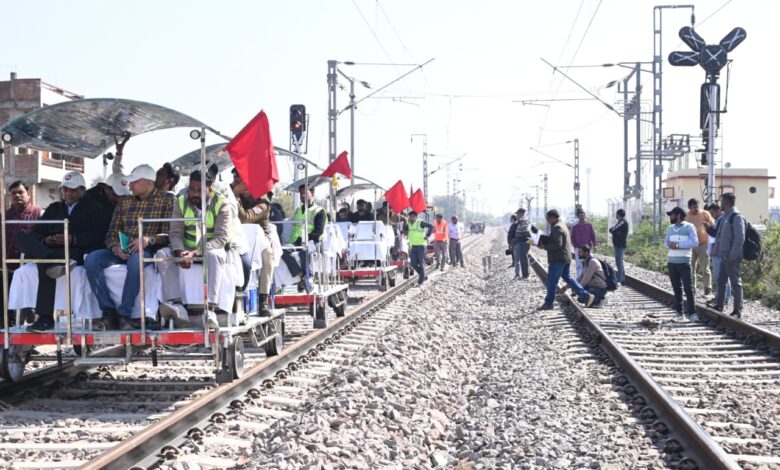
In a landmark move aimed at transforming India’s transportation landscape, Indian Railways has sanctioned 100 major railway projects covering more than 6,000 kilometres with a massive investment of ₹1.53 lakh crore for the financial year 2025-26. This ambitious push, aligned with the PM Gati Shakti National Master Plan, represents a significant leap forward in connecting the last mile, serving the poorest and unserved regions, and uniting the nation’s diverse population through enhanced rail connectivity.
The approvals mark a record-breaking year for railway expansion. Compared to the previous financial year (FY 2024-25), when 64 projects worth ₹72,869 crore covering over 2,800 kilometres were sanctioned, the current year’s figures show dramatic growth: a 56% increase in the number of projects, over 114% surge in route coverage, and more than 110% jump in financial commitment. This surge underscores the government’s commitment to building a world-class, high-capacity rail network that supports inclusive growth and economic development.
Focus on Inclusive Connectivity and National Integration
The theme “Connecting the Last Mile, Serving the Poorest and Unserved” aptly captures the spirit of these initiatives. A substantial portion of the projects targets tribal and remote areas, ensuring that marginalized communities gain better access to markets, healthcare, education, and job opportunities. By expanding rail links into underserved regions, Indian Railways is not just laying tracks but also forging pathways for social and economic empowerment.
The projects encompass a wide range of works, including new lines, doubling and multitracking of existing routes, bypass lines, flyovers, and chord lines. These interventions are strategically designed to decongest heavily saturated corridors, improve punctuality, reduce travel times, and enhance the overall passenger experience. Beyond passenger services, the expansion will significantly boost freight movement, which is critical for India’s logistics sector.
State-Wise Focus and Strategic Priorities
The 100 projects are spread across nearly all major states, ensuring balanced regional development. However, certain high-density and industrially significant states have received special attention:
- Maharashtra leads with 17 projects
- Bihar follows with 11
- Jharkhand with 10
- Madhya Pradesh with 9
These states are pivotal for strengthening freight corridors, industrial connectivity, and passenger movement. Enhanced rail infrastructure in these regions is expected to create a multiplier effect on the economy by facilitating smoother movement of goods and people.
Maharashtra, Bihar, Jharkhand, and Madhya Pradesh form the backbone of India’s logistics and industrial network. The new investments will bolster freight corridors, improve linkages to manufacturing hubs, and support passenger services in densely populated areas. This targeted approach will help reduce congestion on critical routes while opening up new avenues for trade and commerce.
Major High-Value Projects Driving the Expansion
More than 35 projects carry an individual investment exceeding ₹1,000 crore, forming the core of this transformative initiative. Some of the flagship undertakings include:
- Kasara–Manmad 3rd and 4th line (131 km) — estimated at around ₹10,150 crore
- Kharsia–Naya Raipur–Parmalkasa 5th & 6th line (278 km) — over ₹8,740 crore
- Itarsi–Nagpur 4th line (297 km) — over ₹5,450 crore
- Secunderabad (Sanathnagar)–Wadi 3rd and 4th line (173 km) — more than ₹5,000 crore
These four projects alone account for over ₹28,000 crore and focus on upgrading high-density trunk routes that handle heavy traffic. Additional notable initiatives include the Rowghat–Jagdalpur line in Chhattisgarh and several corridors in Jharkhand and Odisha, which will directly benefit tribal populations by improving connectivity to resource-rich but remote areas.
Alignment with Mission 3000 MT and Economic Objectives
The expansion is closely aligned with Indian Railways’ Mission 3000 MT for cargo, which aims to substantially increase freight capacity. A large number of projects are dedicated to energy corridors, enabling faster movement of coal and minerals — vital for the country’s energy security. Other key components include high-density network upgrades to tackle congestion and the Rail Sagar Corridor to enhance port connectivity and coastal trade.
By improving network efficiency, these projects are expected to lower logistics costs across the economy, a critical factor in making Indian industries more competitive globally. Faster coal transportation will support power plants, while better port linkages will boost coastal and international trade.
Economically, the ₹1.53 lakh crore investment is poised to generate substantial direct and indirect employment opportunities. It will also stimulate demand in core sectors such as steel, cement, and construction materials. As construction progresses, local economies along the project routes are likely to receive a significant boost.
Broader Impact on Passengers and Freight
For ordinary citizens, the benefits will be tangible. Decongested routes will lead to improved punctuality and more reliable services. Reduced travel times on key corridors will make rail travel more attractive compared to road or air options. Passengers in remote areas will gain access to faster and safer connectivity, bridging the urban-rural divide.
On the freight side, the enhanced capacity will support the movement of essential commodities more efficiently. This is particularly important for industries reliant on bulk transport, including mining, power, and manufacturing. Lower logistics costs will eventually translate into more affordable goods for consumers.
A Step Towards Viksit Bharat
This massive railway expansion is more than an infrastructure project — it is a strategic investment in India’s future. Under the PM Gati Shakti framework, which emphasizes integrated planning and multimodal connectivity, these initiatives will help integrate remote regions into the national mainstream.
By serving the poorest and unserved populations, Indian Railways is reinforcing the principle of “Sabka Saath, Sabka Vikas.” The projects will bring people closer, foster national unity, and lay the foundation for sustained economic growth.
As India aims for developed nation status, a robust, high-capacity railway network will serve as a critical backbone. The record approvals in FY 2025-26 signal a clear intent: to build not just tracks, but a more connected, inclusive, and prosperous India.
With implementation now moving into high gear, these projects are expected to deliver visible outcomes in the coming years — shorter journey times, more reliable services, stronger industrial linkages, and greater opportunities for millions of citizens. Indian Railways is indeed taking big strides towards uniting the nation and powering its economic ambitions.