Nepal Flood Victims Honoured as Yogi Adityanath, Ashwini Vaishnaw Launch Upgraded Rail Link to Nepal Border

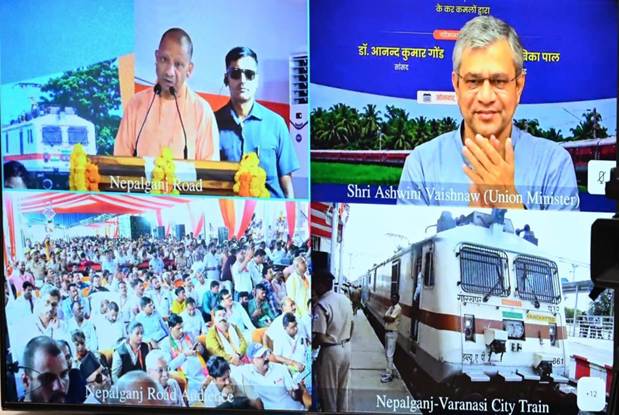
Uttar Pradesh Chief Minister Yogi Adityanath and Union Railway Minister Ashwini Vaishnaw on Monday inaugurated the gauge-converted and electrified Nepalganj Road–Nanpara–Bahraich railway section, strengthening rail connectivity in the strategically important border region while beginning the programme with a solemn tribute to victims of the recent flash floods in Nepal.
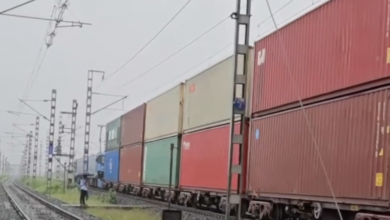
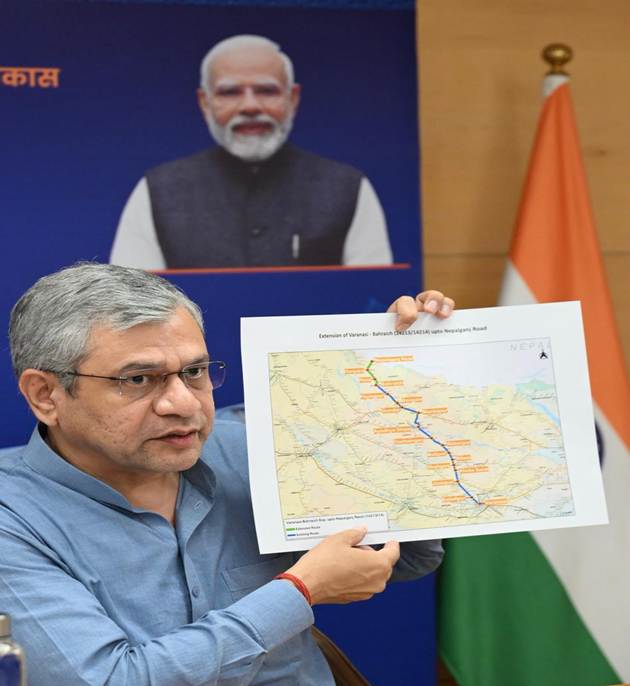
The 56.15-kilometre railway section has been converted from metre gauge to broad gauge and electrified at a cost of approximately ₹730 crore. Four existing train services have also been extended up to Nepalganj Road, providing passengers in the border region with direct rail connectivity to Gonda, Gorakhpur, Varanasi and other important destinations.
The inauguration ceremony was deliberately kept simple in view of the tragedy in neighbouring Nepal. Yogi Adityanath, Ashwini Vaishnaw and other dignitaries observed two minutes of silence in memory of those who lost their lives in the devastating floods.
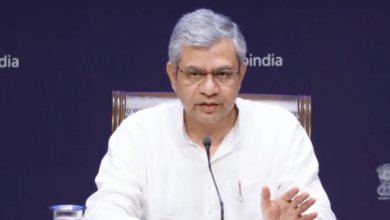
Vaishnaw expressed condolences to the families affected by the disaster and underlined the close cultural and social ties between India and Nepal. He said the Government of India was making every possible effort to extend assistance to people affected by the natural disaster.
The Railway Minister also highlighted the role of Indian Railways in helping passengers rescued from affected areas in Nepal. According to him, the Railways has arranged special coaches and other facilities to help such passengers reach their destinations safely. The Railway Board is coordinating with railway zones, district and state administrations and the Ministry of External Affairs to facilitate the movement and return of people affected by the situation.
Yogi Adityanath also expressed his condolences, saying the disaster had affected not only Nepal but people in several countries, including India. He conveyed his sympathies to families who lost their members in the natural calamity.
138-Year-Old Railway Route Gets Broad Gauge Connectivity
The Nepalganj Road–Nanpara–Bahraich railway section has historical significance. The metre-gauge line was originally constructed in 1886. Its conversion to broad gauge and electrification now integrates the route into the wider Indian Railways broad-gauge network.
The upgraded section improves connectivity to important stations including Bahraich, Risiya, Matera, Nanpara, Babaganj and Nepalganj Road. The project is expected to improve both passenger and freight movement across the region.
The completion of the work is particularly significant for Bahraich, an aspirational district located close to the India-Nepal border. Better rail connectivity is expected to support economic activity, improve access to major markets and create opportunities in trade, employment, tourism and other sectors.
For communities living along the border, the railway is also expected to make travel easier for education, healthcare, employment and business. The improved connection could benefit people on both sides of the India-Nepal border, particularly those travelling between the border towns and major cities of Uttar Pradesh.
Four Train Services Extended to Nepalganj Road
As part of the connectivity push, the Railway Ministry has approved the extension of four existing train services up to Nepalganj Road.
These include the 14213/14214 Varanasi–Bahraich Express, 15132/15131 Varanasi City–Gorakhpur Express, and the two pairs of 75109/75110 and 75111/75112 Gonda–Bahraich trains.
The extensions will give passengers from Nepalganj Road and surrounding areas direct access to Gonda, Gorakhpur and Varanasi, reducing the need for intermediate road journeys.
The move also addresses a long-standing demand from residents of the region. Yogi Adityanath said the inauguration represented the fulfilment of a decades-old aspiration of people living in the border area.
The Chief Minister said the enhanced railway connectivity would strengthen links among Bahraich, Rupaidiha and Nepalganj and improve movement between communities on both sides of the international border.
Boost Expected for Bahraich Economy
The broad-gauge connection is expected to provide a significant boost to the socio-economic development of Bahraich and adjoining areas.
Improved rail infrastructure can facilitate the movement of agricultural and local products to larger markets while enabling businesses to access customers and suppliers in major urban centres. The region could also see increased tourism and commercial activity as travel becomes faster and more convenient.
The project is particularly important because Bahraich is among the aspirational districts targeted for accelerated socio-economic development. Improved transport infrastructure is considered a key enabler for employment, investment and access to essential services.
Electrification of the route will allow electric locomotive-hauled trains to operate on the section, reducing reliance on diesel traction. It is also expected to contribute to Indian Railways’ broader efforts to improve energy efficiency and reduce carbon emissions.
Rail Expansion Planned Across Uttar Pradesh
Vaishnaw said the latest project is part of a wider plan to strengthen railway infrastructure across Uttar Pradesh, particularly in the Purvanchal region.
According to the Railway Minister, seven major railway networks in the state are being strengthened through the addition of third and fourth lines on routes where double-line infrastructure already exists. He specifically highlighted the Delhi–Ghaziabad–Moradabad–Sitapur–Burhwal–Gonda–Gorakhpur network serving Purvanchal.
He said the Delhi–Gonda section has already been approved as part of this expansion strategy.
The Railway Minister also pointed towards a broader transformation of passenger connectivity through high-speed rail infrastructure.
Faster Travel to Major Uttar Pradesh Cities
Vaishnaw said proposed high-speed rail connectivity would substantially reduce travel times between Delhi and major cities in Uttar Pradesh.
According to the timelines outlined by the Railway Minister, the proposed services could bring the journey from Delhi to Agra down to 58 minutes, while Delhi–Kanpur could take around 1 hour 45 minutes.
The projected journey time between Delhi and Lucknow is around 2 hours 12 minutes, while Delhi–Prayagraj could take approximately three hours. The proposed Delhi–Varanasi journey could be completed in around three and a half hours.
The high-speed connectivity plan is also envisaged to extend towards Patna. Vaishnaw said the approximately 1,170-kilometre Delhi–Patna journey could eventually be completed in around four and a half hours.
The proposed network would significantly improve connectivity between major economic, administrative and cultural centres of northern India.
Strategic Importance of Border Connectivity
The Nepalganj Road–Nanpara–Bahraich project goes beyond a conventional railway infrastructure upgrade. Its location gives the project strategic importance for India’s border connectivity and cross-border economic links with Nepal.
Nepalganj Road is located close to the India-Nepal border and serves communities and travellers moving through the region. Improved broad-gauge connectivity can strengthen access to the national railway network while facilitating movement towards major cities in Uttar Pradesh.
The project also comes at a sensitive moment, with India extending support to people affected by the recent floods in Nepal. The decision to begin the inauguration with a two-minute silence highlighted the close relationship between the two neighbouring countries.
With the 56.15-km route now broad-gauge and electrified and four train services extended to Nepalganj Road, the project marks a major upgrade to rail infrastructure in one of Uttar Pradesh’s important border regions.
The development is expected to improve passenger mobility, strengthen trade and tourism, support local economic activity and deepen connectivity between Bahraich, the wider Uttar Pradesh railway network and communities on the Nepal side of the border.