
Ladakh Saffron Farming Breakthrough: 22 Grams Harvested in Four Days, First Bloom in 30 Days

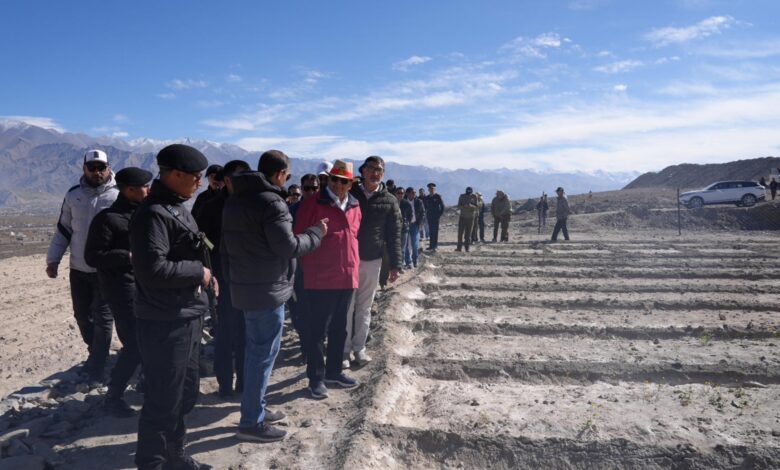
Lieutenant Governor of Ladakh Vinai Kumar Saxena announced the development on November 1, 2026, through a post on X after inspecting the experimental saffron cultivation field and witnessing the first bloom.
The project, undertaken as part of Project Him Sarovar, has recorded encouraging initial results, raising hopes of introducing commercial-scale saffron production in the cold desert region.
During his visit, Saxena was informed that the cultivation site was producing an average of 20 to 25 blooming flowers daily. As many as 72 flowers bloomed on the morning of November 1 alone. The initial flowering has also resulted in the collection of nearly 22 grams of pure saffron within just four days.
800 Kg of Iranian Saffron Corms Planted
According to details of the project, approximately 800 kg of premium Iranian saffron corms, comprising nearly 90,000 bulbs, were planted across around 4,000 square metres of previously barren land at Spituk Pharka in Leh.
The plantation was undertaken on October 1, 2026, following restoration and rejuvenation of the degraded land under Project Him Sarovar. The first flowers appeared in less than 30 days, ahead of the expected flowering period of approximately two months.
The experiment is aimed at exploring the potential of cultivating high-value agricultural crops in Ladakh’s challenging climatic and geographical conditions.
New Opportunities for Farmers and Agro-Based Entrepreneurship
Saffron is among the world’s most valuable spices and commands premium prices in domestic and international markets. Its successful cultivation in Ladakh could create additional income opportunities for farmers and encourage agricultural diversification.
The Lieutenant Governor said the early results demonstrate the immense potential of high-altitude farming in the region. He expressed confidence that the pilot project could establish a foundation for future commercial-scale saffron production, opening new avenues for cultivation and agro-based entrepreneurship.
The initiative could also support livelihood generation, encourage local entrepreneurship and contribute to building a stronger and more self-reliant economy in the Union Territory.
The Ladakh Administration has also been exploring high-value floriculture, including Lilium and Gladiolus cultivation, to diversify agricultural activities and create employment opportunities for farmers, Self-Help Groups and local entrepreneurs.
While the initial flowering and saffron collection are encouraging, further monitoring across growing seasons will be important to establish the crop’s long-term productivity and commercial viability in Ladakh.
The experiment marks a new step in efforts to transform restored barren land into productive agricultural areas while exploring new livelihood opportunities in the high-altitude region