Yogi Adityanath, Ashwini Vaishnaw Flag Off Vande Bharat Sleeper Between Varanasi and Delhi
New overnight service to strengthen connectivity between Varanasi and the national capital; 10 MEMU services launched to improve regional rail connectivity around Varanasi

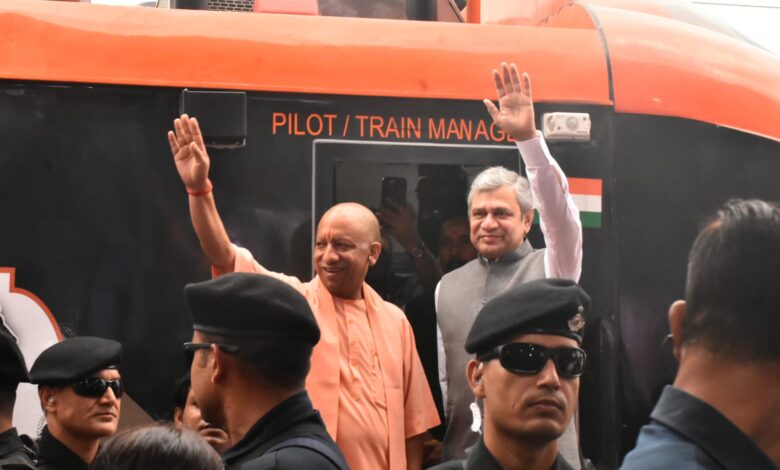
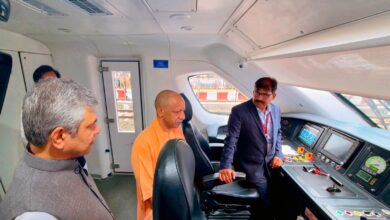
Uttar Pradesh Chief Minister Yogi Adityanath and Union Minister for Railways, Information and Broadcasting, and Electronics and Information Technology Ashwini Vaishnaw jointly flagged off the Vande Bharat Sleeper Express between Varanasi and New Delhi from Banaras Railway Station on Saturday. The launch marks an important development in the expansion of overnight rail connectivity between one of India’s major spiritual and cultural centres and the national capital.
Alongside the new long-distance service, the two leaders also inaugurated 10 MEMU train services connecting Banaras with Prayagraj Rambag and Banaras City with Rajatalab. The new services are expected to improve local and regional railway connectivity, particularly benefiting daily commuters, students, working professionals, traders, farmers and other passengers travelling between Varanasi and neighbouring areas.
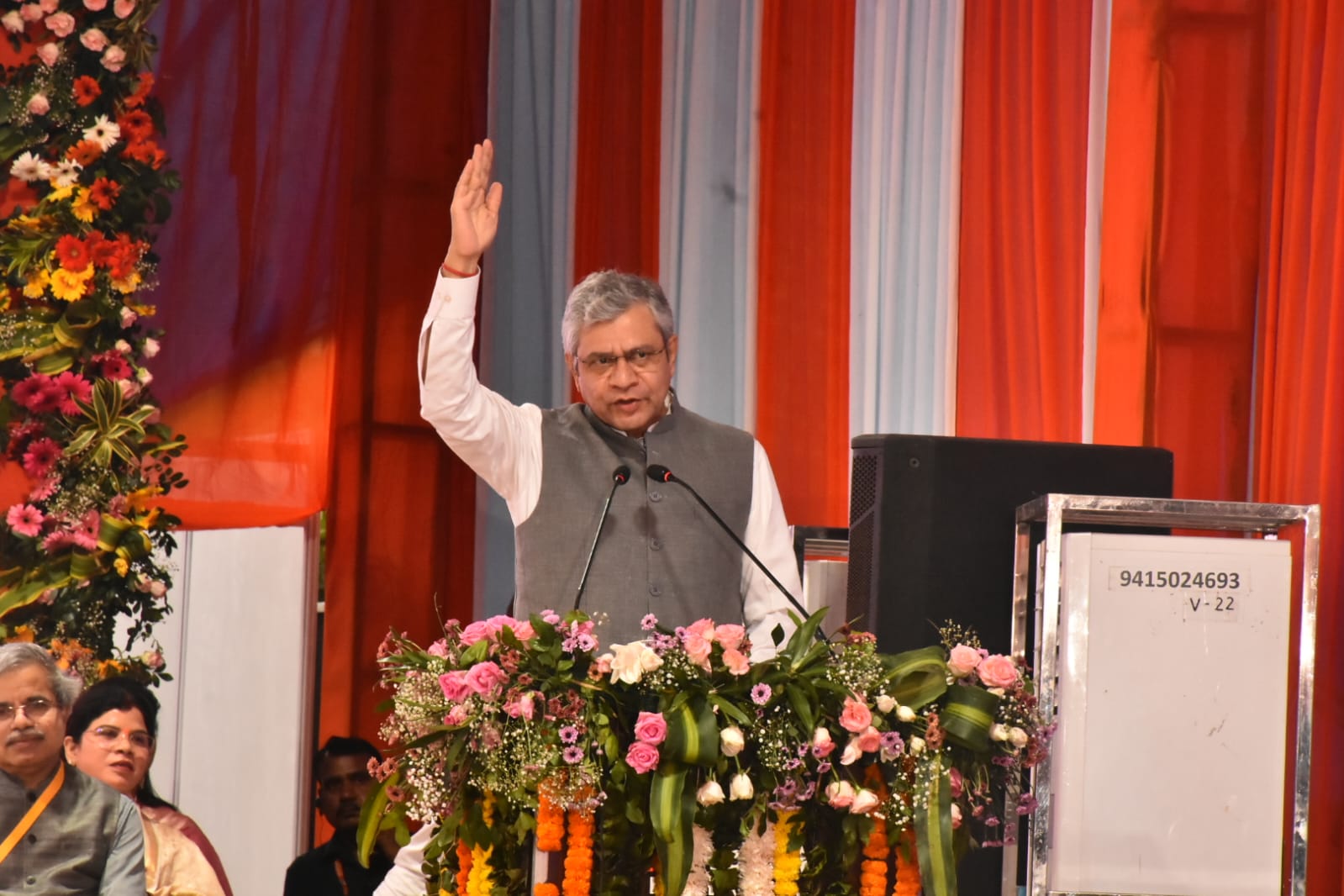
Addressing the gathering, Railway Minister Ashwini Vaishnaw said that under the leadership of Prime Minister Narendra Modi, Indian Railways was continuously prioritising modernisation, infrastructure development and improvement of passenger amenities. He described the introduction of the Vande Bharat Sleeper service and 10 MEMU services as an important addition to the railway facilities available in the Varanasi region.
He said the Vande Bharat Sleeper train would provide passengers with a modern, comfortable and convenient overnight travel option between Varanasi and Delhi. The service would enable passengers to undertake their journey at night and reach their destination the following morning, helping them save valuable time.
Vaishnaw added that the expansion of MEMU services would strengthen short-distance connectivity within Varanasi and between the city and Prayagraj. The new services would make daily travel more convenient and affordable for people who depend on the railway network for education, employment, business and other essential activities.
10 MEMU Services to Strengthen Regional Connectivity
The Railway Minister highlighted the importance of expanding MEMU services to facilitate affordable and convenient short-distance journeys. He said the initiative was aimed at connecting different parts of Varanasi while also improving railway access to Prayagraj.
The additional services are expected to provide greater mobility to people living in the surrounding areas. Students, farmers, employees, traders, advocates and women commuters are among those expected to benefit from the improved local rail network.
Emphasising affordability, Vaishnaw said monthly season ticket (MST) facilities had been provided for students travelling in the region. The monthly season ticket fare has been fixed at Rs 95 for travel within the Varanasi area and Rs 220 for journeys between Varanasi and Prayagraj.
He said the government was focusing on strengthening railway services for ordinary passengers, particularly those belonging to the economically weaker and middle-income sections of society. The new services would help reduce dependence on road transport for regular short-distance journeys and provide an economical commuting alternative.
The minister also pointed out that passenger convenience and operational safety had been considered while developing the Vande Bharat Sleeper train. Special attention had been given not only to passenger facilities but also to the working conditions and safety requirements of locomotive pilots and other railway employees.
North Bullet Train Corridor to Connect Major Cities
Outlining India’s future high-speed rail development plans, Vaishnaw said work was progressing towards expanding the country’s high-speed railway network. He referred to the proposed North Bullet Train Corridor, which is planned to connect several major cities, including Delhi, Agra, Kanpur, Lucknow, Patna and Guwahati.
The minister shared indicative travel times for various sections under the proposed high-speed connectivity plan. According to the details presented by him:
-
Delhi to Agra: Approximately 59 minutes.
-
Delhi to Kanpur: Approximately 1 hour 45 minutes.
-
Delhi to Lucknow: Approximately 2 hours 12 minutes.
-
Varanasi to Lucknow: Approximately 1 hour 21 minutes.
-
Varanasi to Patna: Approximately 1 hour.
-
Varanasi to Delhi: Approximately 3 hours 33 minutes.
He said the project was being pursued with a focus on the Make in India initiative and would represent a major infrastructure development for future generations. The proposed network is expected to reduce travel times between important economic, administrative and cultural centres.
The Railway Minister also highlighted the increase in railway budgetary allocations for Uttar Pradesh and the expansion of railway infrastructure across the state.
Yogi Adityanath Highlights Benefits for Passengers
Addressing the gathering, Chief Minister Yogi Adityanath thanked Prime Minister Narendra Modi and Railway Minister Ashwini Vaishnaw for providing the Vande Bharat Sleeper service and additional MEMU train services to Varanasi.
He said the new services would make railway travel more convenient and affordable for ordinary citizens. The MEMU trains, in particular, would benefit farmers, young people, advocates, traders and women by providing economical transport facilities for regular journeys.
The Chief Minister said Indian Railways was undergoing rapid transformation through modern infrastructure development, improved passenger facilities and enhanced operational efficiency.
Referring to railway safety improvements, Yogi Adityanath said the removal of unmanned railway level crossings and the construction of railway overbridges and underpasses had helped reduce accident risks and improve public safety.
He noted that these infrastructure improvements had not only helped protect lives and property but had also reduced delays and made movement across railway corridors more convenient.
The Chief Minister also highlighted the importance of dedicated freight corridors in improving goods transportation. He said separate railway lines for freight trains had helped enhance freight movement efficiency while creating better operational conditions for passenger trains.
According to him, improvements in railway infrastructure and train speeds were helping reduce journey times between cities and making railway travel more efficient and reliable.
Vande Bharat Sleeper to Improve Overnight Connectivity Between Varanasi and Delhi
The introduction of the Vande Bharat Sleeper Express is expected to strengthen connectivity between Varanasi, a major spiritual and cultural destination, and New Delhi, the national capital.
Varanasi attracts pilgrims, domestic and international tourists, students, business travellers and professionals throughout the year. The new overnight train service is intended to provide improved travel convenience for passengers undertaking religious, educational, professional, administrative and tourism-related journeys.
The train will operate through Prayagraj, Kanpur Central, Aligarh and Ghaziabad before reaching New Delhi. The route will connect several important urban centres and provide improved rail access to passengers from adjoining regions.
The scheduled timings of the service are as follows:
| Particulars | Timings |
|---|---|
| Departure from Varanasi | 8:50 PM |
| Arrival at New Delhi | 6:10 AM (next day) |
| Departure from New Delhi | 9:40 PM |
| Arrival at Varanasi | 7:10 AM (next day) |
The train will operate six days a week. The service departing from Varanasi will not operate on Fridays, while the service departing from New Delhi will remain cancelled on Saturdays.
The overnight schedule is designed to allow passengers to utilise daytime hours more effectively. Travellers can board the train in the evening and reach their destination the following morning, making it suitable for business trips, family visits, tourism and other long-distance travel requirements.
The improved connectivity is also expected to support tourism and economic activities by facilitating easier movement between Varanasi and the national capital.
Vande Bharat Sleeper Equipped with Advanced Technology and Safety Features
Designed specifically for long-distance overnight journeys, the Vande Bharat Sleeper train incorporates modern technology, advanced safety systems and passenger-friendly amenities.
The train has been developed with a focus on providing a comfortable environment for overnight travel while improving energy efficiency, operational performance and passenger safety.
1. Energy Efficiency and Performance
The train incorporates several technologies aimed at improving energy efficiency and operational performance, including:
-
Regenerative braking system to improve energy utilisation.
-
Under-slung modern propulsion equipment.
-
Advanced aerodynamic design for improved operational performance and passenger comfort.
2. Modern Coach Design and Passenger Facilities
The train features advanced coach construction and interior design elements intended to improve passenger comfort and safety.
Major features include:
-
Coaches manufactured using austenitic stainless steel.
-
Compliance with EN 15227 crashworthiness standards.
-
Fully sealed flexible gangways between coaches.
-
Centrally controlled automatic sliding plug doors.
-
Special arrangements for noise reduction and acoustic insulation inside coaches.
-
Direct and indirect LED lighting systems.
-
Sensor-based intercommunication doors.
3. Advanced Safety and Fire Protection Systems
Passenger safety has been given particular importance in the design of the Vande Bharat Sleeper train.
The safety provisions include:
-
Fire safety arrangements compliant with EN 45545 HL3 standards.
-
Fire-resistant doors at the end sections of coaches.
-
Train Collision Avoidance System (TCAS).
-
Smoke and fire detection systems.
-
CCTV cameras for passenger security and monitoring.
-
Emergency alarm push buttons for passengers.
-
Special lighting arrangements for emergency and disaster management situations.
These systems are intended to improve emergency preparedness and enhance safety during long-distance operations.
4. Enhanced Passenger Comfort and Convenience
The Vande Bharat Sleeper train also offers several amenities designed to make overnight journeys more comfortable.
These include:
-
Modern, hygienic toilets equipped with vacuum evacuation systems.
-
Special berths and toilet facilities for Divyangjan passengers.
-
Adequate luggage storage space.
-
Three-pin charging sockets and switches.
-
Type-A and Type-C USB charging ports.
-
Passenger and crew communication through the Public Address and Passenger Information System (PAPIS).
-
Shower facilities with hot water in the First AC class.
-
Wi-Fi routers with access point networking.
-
Air-conditioning in the driver’s cabin.
-
Dedicated toilet facilities for railway staff.
The combination of modern interiors, advanced safety systems and improved passenger amenities is intended to provide a more convenient overnight travel experience.
Indian Railways’ Modernisation Drive Gains Momentum
The launch of the Vande Bharat Sleeper Express and 10 additional MEMU services represents two complementary aspects of Indian Railways’ modernisation strategy: improving long-distance premium passenger services and strengthening affordable regional connectivity.
While the Vande Bharat Sleeper is expected to provide a modern overnight travel option between Varanasi and Delhi, the MEMU services will expand commuting options for passengers travelling shorter distances within the Varanasi region and towards Prayagraj.
The launch also highlights the importance of railway infrastructure development in Uttar Pradesh, where improved connectivity is expected to support tourism, education, employment and regional economic activities.
With the expansion of modern train services, dedicated freight infrastructure and proposed high-speed rail corridors, Indian Railways is seeking to improve passenger mobility and operational efficiency across the country.
The joint flag-off by Chief Minister Yogi Adityanath and Railway Minister Ashwini Vaishnaw at Banaras Railway Station marked an important addition to the rail connectivity available to Varanasi and its surrounding regions.