Indian Railways Operates First Double-Stack Long-Haul Container Train from JNPT

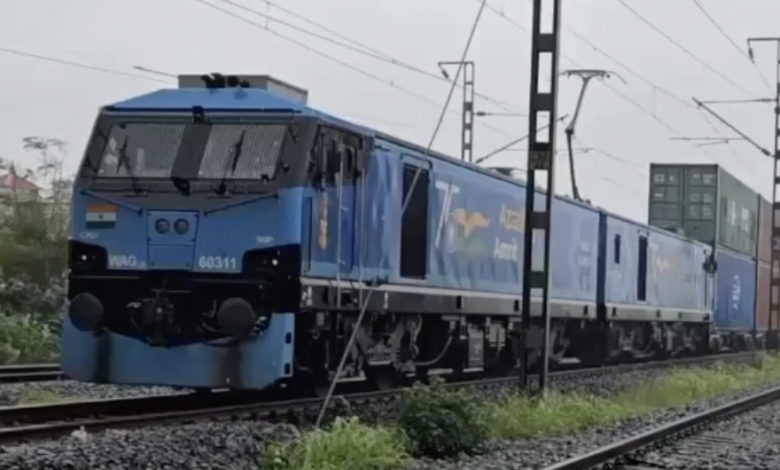
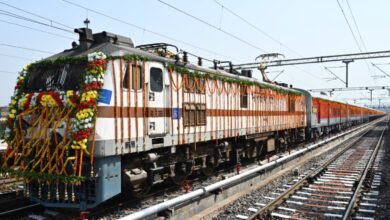
Indian Railways has achieved a significant milestone in freight transportation with the successful operation of its first double-stack long-haul container train from Jawaharlal Nehru Port Trust (JNPT) in Mumbai to CONCOR’s Goods Container Terminal (GCT) at Varnama in Vadodara Division.
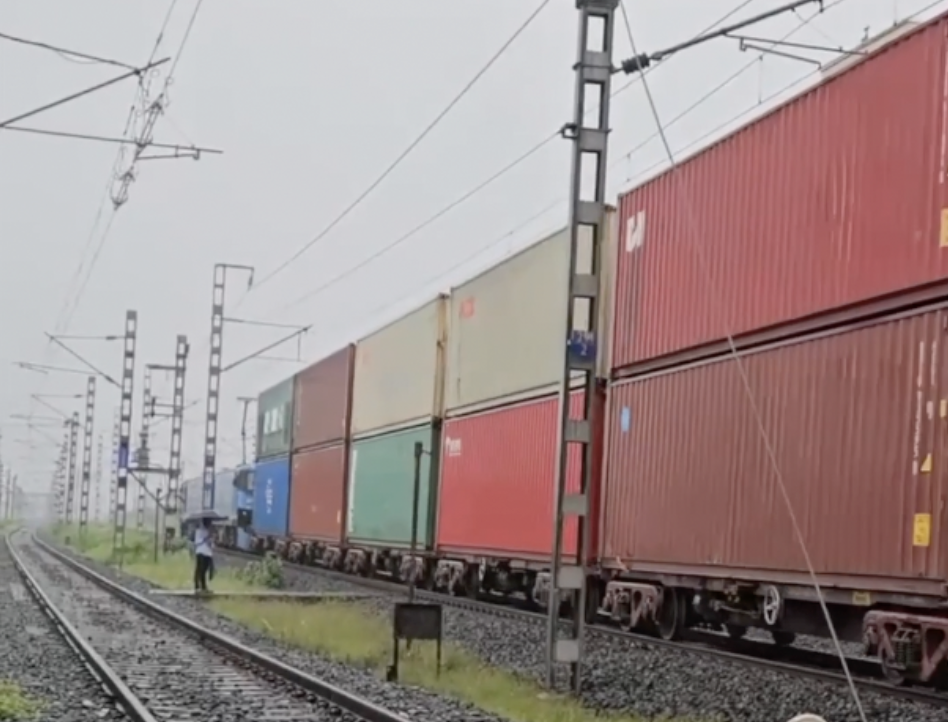
The train was dispatched from JNPT at 7 PM on August 21, 2026, carrying a total of 360 TEUs (Twenty-foot Equivalent Units) over an approximately 422-kilometre route. The operation demonstrates the national transporter’s growing capability to move a larger volume of containerised freight in a single train movement while improving the efficiency of freight evacuation from major ports.
The long-haul formation comprised two double-stack rakes operating together. The leading rake on the JNPT-Vadodara route had a load formation of 45+1 and was hauled by locomotive number 60311. It carried a total tonnage of 1,817 tonnes.
The trailing rake also operated between JNPT and Vadodara with a 45+1 load formation and was hauled by locomotive number 24690. The rake carried 2,105 tonnes. Together, the two rakes transported 360 TEUs, significantly increasing the volume of containerised cargo that could be moved through a single long-haul operation.
Improving Freight Evacuation
The operation is expected to help improve the evacuation of containers from JNPT and facilitate faster movement of cargo towards inland freight terminals. Transporting a larger number of containers in a single train can reduce the dwelling time of containers at ports and terminals and help ease congestion.
By consolidating a higher volume of freight into a single long-haul movement, double-stack container trains can also reduce the number of individual train movements required to transport an equivalent quantity of cargo. This can contribute to more efficient utilisation of available railway route capacity.
The model also reduces the requirement for rolling stock. Since double-stack trains can carry more containers in one movement, fewer container flat wagons and locomotives may be required to handle the same overall volume of freight compared with multiple conventional train movements.
Potential Reduction in Transit Time
Long-haul container operations can contribute to faster evacuation and movement of cargo from ports to inland destinations. Reduced handling and fewer train movements for transporting large volumes of freight can help lower overall transit time.
For logistics operators and industries dependent on containerised cargo, improved rail connectivity between ports and inland terminals can provide a more efficient freight transportation option. The movement from JNPT to Varnama represents an important step towards strengthening such rail-based logistics chains.
Higher Freight Carrying Capacity
The ability to transport 360 TEUs in a single double-stack long-haul formation highlights the higher freight-carrying potential of the operation. Moving larger quantities of cargo in one train can support faster evacuation of containers from JNPT and other freight terminals while potentially helping reduce transportation costs.
The initiative is particularly relevant for strengthening rail freight operations on routes connecting major ports with inland logistics hubs. Efficient evacuation is critical for maintaining smooth port operations and ensuring that containers do not remain at terminals for extended periods.
Supporting Green Freight Transportation
The operation also underlines Indian Railways’ focus on sustainable freight transportation. As an electrically hauled train, the movement reduces dependence on diesel-powered road transportation for carrying an equivalent volume of cargo.
A single long-haul double-stack container train can transport cargo that would otherwise require a large number of trucks on the road. Greater use of rail for containerised freight can therefore help reduce diesel consumption, road congestion and vehicular emissions.
The movement is consequently positioned as both an operational and environmental initiative, combining higher freight capacity with more efficient use of railway infrastructure.
The successful operation of the first double-stack long-haul container train from JNPT to Varnama marks another step in Indian Railways’ efforts to enhance freight capacity, improve port connectivity and promote efficient and sustainable transportation of goods across the country.