
Government Removes 12-Minute Advertisement Cap for TV Channels
Move aims to promote fair competition, boost ease of doing business and level the field with digital media

The Government has decided to remove the existing 12-minute advertisement duration cap for television channels, marking a significant change in the regulatory framework governing television broadcasting in India.
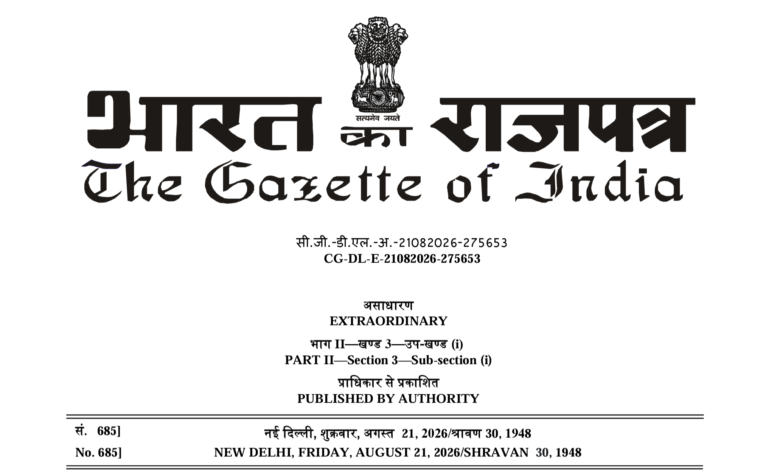
The decision has been taken with the objective of promoting fair competition in the broadcasting sector and improving ease of doing business for television channels. The change will come into effect once the amendment to the Cable Television Networks Rules, 1994, is notified in the Gazette.
The 12-minute advertisement duration cap was introduced in 2006 under the Cable Television Networks Rules, 1994. However, the television broadcasting sector has undergone substantial transformation over the past two decades, with major changes in the number of channels, distribution technologies, consumer choices and competition from digital media.
When the advertisement duration restriction was introduced in 2006, India had only around 62 television channels. The broadcasting landscape has since expanded dramatically, with more than 900 television channels currently operating in the country.
The Government noted that the distribution ecosystem has also changed considerably. In 2006, Cable TV was predominantly an analogue service with limited carriage capacity. As a result, viewers had relatively few choices and the market had different competitive dynamics.
The complete digitisation of the Cable TV sector has significantly altered this situation. Today, television channels are distributed through multiple digital platforms, including Direct-to-Home (DTH), Cable TV, Headend-in-the-Sky (HITS) and Internet Protocol Television (IPTV).
These digital distribution platforms can currently carry hundreds of channels. Depending on the platform, consumers can access 300, 500 or more television channels, providing them with a much wider range of programming and greater choice than was available when the advertisement cap was introduced.
The Government has therefore concluded that the television broadcasting market now has adequate competition and that the circumstances that existed when the 12-minute restriction was introduced have changed significantly.
Advertising remains a critical source of revenue for India’s television broadcasting industry. The sector depends heavily on advertising revenue across both pay television and free-to-air channels. The Government’s decision to remove the cap is expected to provide broadcasters with greater flexibility in managing their advertising inventory and commercial operations.
Another important factor considered by the Ministry of Information and Broadcasting was the competitive environment between traditional television and digital media.
Digital platforms have expanded rapidly in recent years and operate without a comparable statutory restriction on advertisement duration. According to the Government, this created a non-level playing field between traditional television broadcasters and digital media platforms.
Television broadcasters remained subject to the prescribed advertisement duration limit, while digital media did not face an equivalent restriction. The removal of the cap is aimed at addressing this disparity and allowing television broadcasters greater flexibility to compete in an increasingly digital media environment.
The Ministry of Information and Broadcasting has assessed that sufficient competition exists both within the television industry and between television broadcasting and digital media. Based on this assessment, the Government has decided that maintaining a fixed advertisement duration ceiling is no longer necessary.
The move is also being positioned as part of the Government’s broader efforts to promote ease of doing business. By removing the prescribed limit, broadcasters will have greater freedom to determine their advertising strategies based on market conditions, audience preferences and their individual business models.
The change represents a shift from a fixed regulatory limit on advertisement duration towards a more market-driven approach in the television broadcasting sector.
However, the decision will not take effect immediately. The Government has specified that the removal of the 12-minute advertisement duration cap will become effective only from the date on which the amendment to the Cable Television Networks Rules, 1994, is formally notified in the Gazette.
The move comes at a time when India’s media consumption landscape is rapidly evolving, with traditional television, streaming services, social media and other digital platforms competing for audiences and advertising revenue.
With more than 900 television channels and multiple digital distribution platforms now operating in the country, the Government’s decision reflects the significant changes that have taken place in India’s broadcasting ecosystem since the advertisement cap was first introduced nearly two decades ago.
The removal of the 12-minute cap is expected to give television broadcasters greater commercial flexibility while allowing them to compete more directly with digital media platforms. The Government has described the decision as a step towards ensuring fair competition and facilitating ease of doing business in the television broadcasting sector.