Katra-Banihal Rail Section Speed Limit Raised to 100 km/h, Vande Bharat Completes Successful Trial

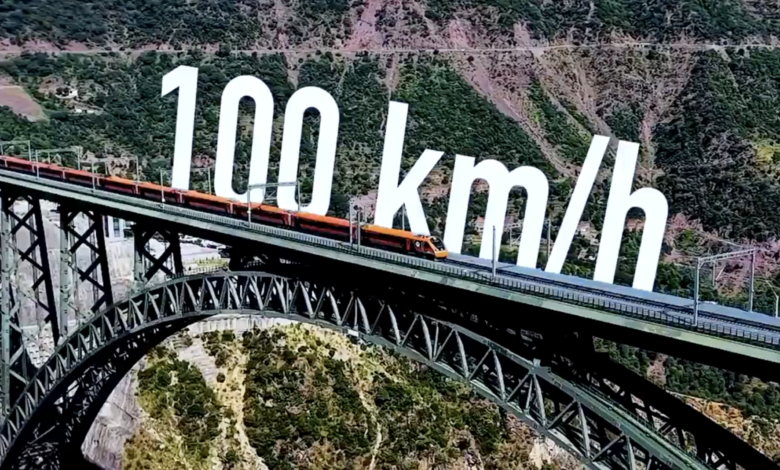
The maximum permissible speed on the 111-km Shri Mata Vaishno Devi Katra–Banihal railway section of the Udhampur–Srinagar–Baramulla Rail Link (USBRL) has been increased from 75 km/h to 100 km/h, Railway Minister Ashwini Vaishnaw said in a social media post.
The enhanced speed limit was successfully tested on the section, marking another operational milestone for the railway infrastructure connecting the Kashmir Valley with the rest of the country.
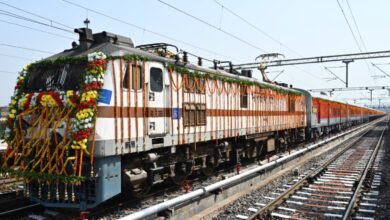
According to Vaishnaw, the Vande Bharat Express, Train Nos. 26401/26404, operated at the increased speed during the successful test. The train crossed two major engineering landmarks on the route — the Chenab Bridge, described as the world’s highest railway arch bridge, and the Anji Bridge, India’s first cable-stayed railway bridge — while travelling at 100 km/h.
Speed Enhancement on Key USBRL Section
The increase in the permissible speed from 75 km/h to 100 km/h represents a significant improvement in operational capability on the Katra–Banihal section.
| Parameter | Earlier | Revised |
|---|---|---|
| Section | Shri Mata Vaishno Devi Katra–Banihal | Shri Mata Vaishno Devi Katra–Banihal |
| Length | 111 km | 111 km |
| Maximum permissible speed | 75 km/h | 100 km/h |
| Speed increase | — | 25 km/h |
| Train used for test | — | Vande Bharat Express |
| Train numbers | — | 26401/26404 |
The successful trial demonstrates the readiness of the section to support faster train operations while maintaining the required operational and safety standards.
Vande Bharat Crosses Chenab and Anji Bridges at 100 km/h
One of the highlights of the speed trial was the Vande Bharat Express crossing the Chenab Rail Bridge and Anji Rail Bridge at the enhanced speed.
The Chenab Bridge is one of the most prominent structures of the USBRL project and is known for its exceptional height and challenging Himalayan terrain. The Anji Bridge, meanwhile, is India’s first cable-stayed railway bridge and forms another important component of the rail link through the mountainous region.
The ability of the Vande Bharat train to negotiate these major structures at 100 km/h marks an important operational development for the Katra–Banihal section.
Expected Benefits for Passengers
According to the Railway Minister, the increase in speed is expected to make train operations on the USBRL project smoother and more efficient. It is also expected to contribute to a reduction in travel time on the route.
The higher permissible speed will enable trains to cover the section more quickly, potentially improving journey times for passengers travelling between Katra and destinations in the Kashmir Valley.
The Railways said the enhanced speed will also support faster, safer and more comfortable journeys for passengers as train services on the USBRL network are expanded and operational performance is improved.
Another Milestone for USBRL
The Katra–Banihal section is a critical part of the USBRL project, which has been developed through some of the most challenging Himalayan terrain in Jammu and Kashmir. The project incorporates several major bridges, tunnels and other engineering structures designed to provide an all-weather rail connection to the Kashmir Valley.
The latest speed enhancement comes as the Railways continues to focus on improving train speeds and operational efficiency across the USBRL corridor.
The successful 100-km/h trial of the Vande Bharat Express, including its passage over the Chenab and Anji bridges, is therefore being viewed as an important step in strengthening rail connectivity and reducing journey times between Katra and Banihal.
With the permissible speed now raised to 100 km/h, passengers are expected to benefit from quicker and more efficient train operations on this strategically important section of the Kashmir rail network.