
NHRC Reviews 86 Alleged Bonded Labour Cases in Haryana Brick Kilns, Calls for Stronger Monitoring and Labour Helpline


The National Human Rights Commission (NHRC) of India has reviewed 86 cases of alleged bonded labour involving brick kiln workers across several districts of Haryana during an online hearing. The Commission stressed the need for stricter implementation of laws, better documentation of workers, and the establishment of a dedicated helpline to enable labourers to report exploitation and seek timely assistance.
The hearing was chaired by NHRC Chairperson Justice V. Ramasubramanian and attended by senior officials of the Commission, including Joint Secretary Samir Kumar, Joint Registrar (Law) Indrajeet Kumar, and other senior officers. Representing the Haryana Government were Chief Secretary Anurag Rastogi, Labour Commissioner Vijaykumar Bhavikatti, and District Magistrates from all districts of the state.
The Commission reviewed Action Taken Reports (ATRs) submitted by the District Magistrates in connection with complaints of alleged bonded labour. These cases primarily concern workers employed in brick kilns, a sector where allegations of debt bondage, exploitation, and forced labour have frequently been reported.
During the hearing, Justice V. Ramasubramanian expressed concern over the quality of investigations carried out by government authorities in many of the cases. He observed that official records had often not been examined thoroughly, resulting in a lack of credible evidence to determine whether the affected workers qualified as bonded labourers under the law.
He said that proper scrutiny of employment records and other relevant documents is essential for identifying genuine cases of bonded labour and ensuring that victims receive the legal protection and rehabilitation they are entitled to. The Chairperson urged all concerned government officials to remain vigilant and adopt a more systematic approach while handling such complaints.
Justice Ramasubramanian also directed officials to strictly follow the Standard Operating Procedure (SOP) for Identification and Rescue of Bonded Labourers and Prosecution of Offenders, issued by the Ministry of Labour and Employment through its letter dated 14 May 2026. He said inquiry teams constituted to investigate complaints must adhere to the procedures laid down in the SOP to ensure fair, transparent, and effective investigations.
Highlighting the importance of preventive measures, the NHRC Chairperson proposed the creation of a dedicated helpline for labourers. He noted that such a helpline should maintain proper employment records of workers so that authorities can monitor labour movement, identify vulnerable individuals, and respond quickly to reports of exploitation or illegal confinement. According to the Commission, an accessible reporting mechanism would significantly improve efforts to detect and curb incidents of bonded labour.
Speaking during the hearing, NHRC Joint Secretary Samir Kumar emphasised the importance of implementing the Commission’s recommendations and complying fully with its directions. He urged the Haryana Government to act in accordance with the NHRC’s ‘Advisory 2.0 to Identify, Release and Rehabilitate Bonded Labourers’, which provides detailed guidelines for identifying victims, ensuring their rescue, rehabilitation, and legal protection.
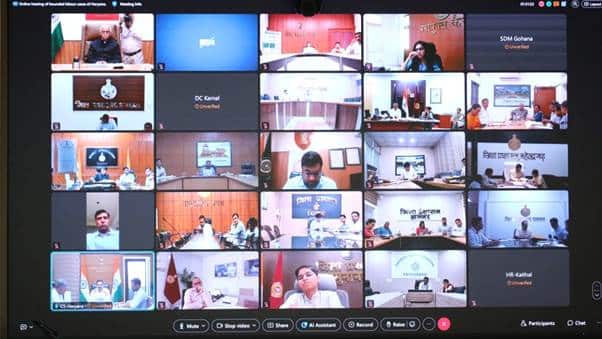
The Haryana Chief Secretary, Labour Commissioner, and District Magistrates presented updates on the status of the 86 cases before the Commission. They explained the steps taken so far and responded to the observations made by the NHRC during the review.
After examining the reports, the Haryana Government assured the Commission that all 86 cases would be re-examined in detail. The Chief Secretary and the Labour Commissioner committed to reviewing each complaint thoroughly and submitting the required information and updated reports to the NHRC in accordance with its directions.
The state authorities also assured the Commission that they would ensure full compliance with the directives of the Supreme Court as well as all applicable laws relating to bonded labour. They stated that immediate remedial action would be taken wherever violations are established, including rescue, rehabilitation, and legal proceedings against those found responsible.
The NHRC reiterated that the eradication of bonded labour requires coordinated efforts by district administrations, labour departments, law enforcement agencies, and local authorities. It stressed that accurate documentation, timely investigations, strict adherence to legal procedures, and effective rehabilitation measures are essential to protecting the rights and dignity of vulnerable workers.
The Commission’s review reflects its continued focus on strengthening enforcement mechanisms against bonded labour and ensuring that victims receive prompt justice, rehabilitation, and protection under the law.