
Pregabalin Added to Schedule H1: India Tightens Controls on Popular Pain and Anxiety Drug

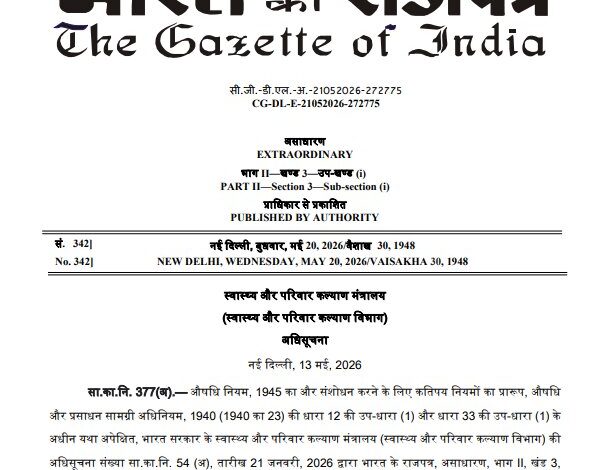
The Government of India has officially notified the inclusion of Pregabalin in Schedule H1 of the Drugs and Cosmetics Rules, 1945, through the Drugs (Second Amendment) Rules, 2026. The move, published in the Extraordinary Gazette of India on May 13, 2026, aims to curb the misuse and over-the-counter availability of the drug, which has been increasingly linked to substance abuse across the country.
The notification, issued by the Ministry of Health and Family Welfare (Department of Health and Family Welfare) under G.S.R. 377(E), inserts Pregabalin as Serial No. 51 in Schedule H1. This places the drug alongside other restricted medications that can only be sold by licensed pharmacies against a valid prescription from a registered medical practitioner. The amendment will come into force after eighty days from the date of publication in the Official Gazette.
Key Provisions of the Notification
According to the gazette notification:
- Pregabalin will now be subject to stricter regulatory oversight.
- Pharmacies must maintain detailed records of sales, including the name and address of the prescriber and the patient.
- The drug cannot be sold without a prescription, and repeated sales of the same drug will require fresh prescriptions.
- Violations will attract penalties under the Drugs and Cosmetics Act, 1940.
The government followed the due process of pre-publication of the draft rules and considered objections and suggestions received from the public before finalizing the amendment.
Why Pregabalin Was Brought Under Schedule H1
Pregabalin, marketed under brand names such as Lyrica and several generics, is a gabapentinoid used primarily for the treatment of neuropathic pain, fibromyalgia, epilepsy, and generalized anxiety disorder. While therapeutically valuable when used under medical supervision, the drug has gained notoriety for its psychoactive effects, including euphoria, sedation, and relaxation, leading to widespread recreational abuse.
In recent years, health authorities and drug enforcement agencies have reported a sharp rise in Pregabalin misuse, particularly among young adults. Cases of addiction, overdose, and its combination with other substances like opioids and alcohol have raised serious public health concerns. Several states had already flagged the issue and demanded central intervention to regulate its sale.
The decision aligns with global trends where countries have tightened controls on gabapentinoids due to rising dependency rates. By placing it under Schedule H1 — which already includes drugs like Tramadol, certain antibiotics, and other habit-forming medicines — the government seeks to strike a balance between ensuring legitimate medical access and preventing diversion for non-medical use.
Implications for Stakeholders
For Patients and Doctors: Legitimate users will continue to have access to the drug through prescriptions. However, patients may face more scrutiny while procuring the medicine. Doctors are expected to exercise greater caution while prescribing, documenting the clinical need clearly.
For Pharmacists: Retail chemists will need to update their record-keeping systems and ensure compliance. Non-compliance could result in suspension or cancellation of licenses.
For the Pharmaceutical Industry: Manufacturers and marketers of Pregabalin will have to adapt to the new regulatory environment. While the move may slightly impact sales volumes in the short term, it is expected to promote responsible marketing practices.
Public Health Impact: The amendment is being welcomed by medical professionals and de-addiction experts who have been witnessing the harmful effects of unchecked availability. It is seen as a proactive step to prevent another public health crisis similar to the one witnessed with other prescription drugs in the past.
Background and Timeline
The process for this amendment began with a draft notification inviting public comments. After due consultation with the Drugs Technical Advisory Board and other stakeholders, the final rules were notified. The gazette explicitly mentions that the rules will take effect following the statutory period, expected around late July or early August 2026.
This is part of a broader government effort to strengthen the regulatory framework for pharmaceuticals in India. Earlier, several other drugs with potential for abuse were brought under stricter schedules to ensure their rational use.