Union Cabinet Approves Major Push for Farmers, Energy Security and Infrastructure with ₹1.74 Lakh Crore Decisions

In a significant boost to agriculture, energy security, urban mobility and regional development, the Union Cabinet chaired by Prime Minister Narendra Modi on Wednesday approved a series of key proposals with a combined outlay of approximately ₹1.74 lakh crore. The decisions include a substantial nutrient-based subsidy for the upcoming Kharif 2026 season, a major cost revision for the HPCL Rajasthan Refinery, approval for Jaipur Metro Phase-2, and two large hydroelectric projects in Arunachal Pradesh.
These approvals reflect the government’s continued focus on shielding farmers from global price shocks, enhancing domestic refining and petrochemical capacity, expanding public transport in growing cities, and harnessing clean hydropower in the North-East while creating jobs and infrastructure.
Strong Support for Farmers: ₹41,534 Crore Nutrient-Based Subsidy for Kharif 2026
The Cabinet approved the Nutrient Based Subsidy (NBS) rates for Phosphatic and Potassic (P&K) fertilizers for the Kharif 2026 season (April 1 to September 30, 2026), entailing a total support of ₹41,534 crore. This marks an increase of about ₹4,317 crore over the previous Kharif season, driven by elevated global fertilizer prices, particularly after disruptions since the Covid period.
The government has kept the Maximum Retail Price (MRP) of Di-Ammonium Phosphate (DAP) unchanged at ₹1,350 per 50 kg bag to protect farmers from international market volatility. The subsidy covers 28 grades of P&K fertilizers, including DAP, Muriate of Potash (MOP), and various NPKS complexes.
Additional measures include provisions to handle global price fluctuations, extension of similar support to imported Triple Super Phosphate (TSP) for supply stability, continuation of freight subsidy for Single Super Phosphate (SSP), and inclusion of both imported and domestically manufactured Ammonium Sulphate under the NBS scheme.
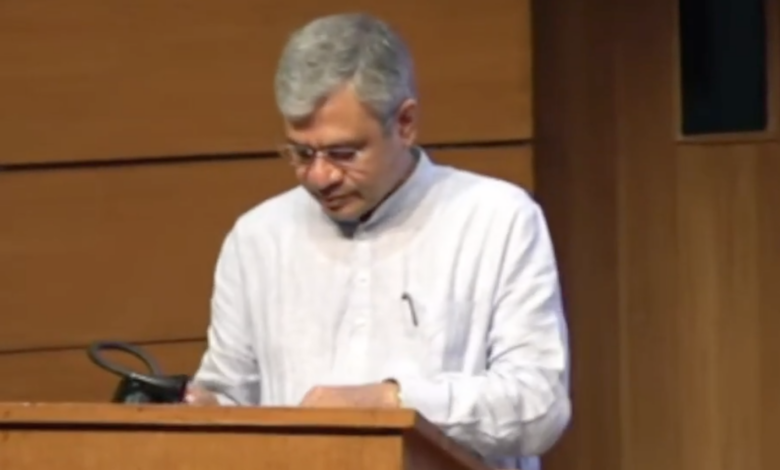
Union Minister Ashwini Vaishnaw, while briefing the media, emphasised that these steps will ensure affordable and adequate availability of essential fertilizers to India’s ‘Annadatas’ (farmers), promoting balanced nutrient use and supporting food security during the monsoon-dependent Kharif planting season.
HPCL Rajasthan Refinery: Revised Cost of ₹79,459 Crore Approved
In a major development for India’s energy infrastructure, the Cabinet approved the revised project cost of HPCL Rajasthan Refinery Ltd (HRRL) at Pachpadra in Balotra district, Rajasthan, raising it to ₹79,459 crore. The Cabinet also cleared HPCL’s equity contribution of ₹19,600 crore.
The 9 MMTPA (million metric tonnes per annum) refinery-cum-petrochemical complex, one of the largest in the country, is now nearing completion, with commercial operations expected to commence in July 2026. A crude oil pipeline from Mundra has already been commissioned.
The project features a world-scale Polypropylene plant and India’s largest Polyethylene plant, with a high Petrochemical Intensity Index of 26% — the highest in India. It boasts a Nelson Complexity Index of 17 (second highest in the country) and will operate with zero liquid effluent discharge.
Upon full operations, the refinery will produce Motor Spirit (MS), High Speed Diesel (HSD), Polypropylene, LLDPE, HDPE, Benzene, Butadiene, Sulphur, LPG and other value-added products. It is expected to generate approximately 1 lakh jobs during construction and 10,000 direct jobs during operations, plus many indirect employment opportunities.
The project will significantly augment India’s refining capacity (currently the world’s fourth largest at 258 MMTPA), reduce dependence on imported petroleum products, promote downstream industries, and contribute around ₹21,000 crore annually to the central and state exchequers.
Jaipur Metro Phase-2 Gets Nod: 41 km Corridor at ₹13,038 Crore
To address growing urban mobility needs in the Pink City, the Cabinet approved Jaipur Metro Rail Phase-2 — a 41-km North-South corridor from Prahladpura to Todi Mod — at an estimated cost of ₹13,038 crore. The project will feature 36 stations (34 elevated and 2 underground) and is expected to be completed in 5.5 years.
It will have direct interchange with the existing Phase-1 at Khasa Kothi and will be implemented by the Rajasthan Metro Rail Corporation Ltd, a joint SPV of the Government of India and Government of Rajasthan.
The corridor will connect major passenger traffic generation points, industrial hubs, and upcoming satellite towns, including areas near Jaitpura (North) and RIICO industrial area at Hukkan (South). As Jaipur heads towards a 10-million population, the project will cater to strong North-South travel demand and is projected to remove about 2.4 lakh vehicles from roads by 2055, reducing congestion and pollution.
Phase-1 of Jaipur Metro is already operational, with Phases 1A, 1B, 1C and 1D under various stages of construction. Phase-2 will further integrate the network and support sustainable urban growth.
Boost to Clean Energy: Two Major Hydro Projects in Arunachal Pradesh
The Cabinet gave approval to two significant hydroelectric projects in Arunachal Pradesh to strengthen India’s renewable energy portfolio and provide firm balancing power for grid stability.
- Kamala Hydro Electric Project (1,720 MW) on the Subansiri River (in Kamle, Kra Daadi and Kurung Kumey districts) with an investment of ₹26,070 crore. To be implemented as a Joint Venture between NHPC Ltd and the Government of Arunachal Pradesh, the project has a timeline of 96 months and is expected to generate 6,870 million units of clean energy annually.Key benefits include flood moderation in the Brahmaputra valley through a 15-metre flood cushion, 12% free power to Arunachal Pradesh (approx. ₹486 crore per year), and a ₹1,340 crore grant for developing 196 km of roads, bridges and culverts in the project-affected districts. It will create about 2,800 jobs during construction.
- Kalai-II Hydro Electric Project (1,200 MW) — the first hydropower project in the Lohit Basin in Anjaw district — with an outlay of ₹14,106 crore. To be developed as a JV between THDC India Ltd and the Government of Arunachal Pradesh, it has a 78-month timeline and will generate 4,853 million units annually.Benefits include 12% free power to the state (approx. ₹335 crore per year), a ₹600 crore grant for 29 km of infrastructure in Namsai and Anjaw districts, and employment for about 1,700 personnel during construction. Both projects will contribute to grid stability by providing reliable, dispatchable renewable energy.
Broader Infrastructure Push Since June 2024
These approvals add to the government’s aggressive infrastructure agenda. Since June 2024, the Cabinet has cleared projects worth over ₹23 lakh crore, including:
- 51 Railway projects (₹1,84,638 crore)
- 30 Highway projects (₹2,54,187 crore)
- 11 Metro projects (₹1,44,275 crore)
- 5 new airports + modified UDAN (₹37,846 crore)
- 2 ropeways (₹6,811 crore)
- 1 major port + shipping reforms (₹1,45,945 crore)
- Hydro projects + budgetary support (₹71,193 crore)
- PMAY housing (₹5,36,137 crore)
- 12 industrial smart cities/parks (₹62,262 crore)
- Jal Jeevan Mission (₹8.7 lakh crore)
Collectively, these initiatives are aimed at job creation, economic growth, energy security, and improving quality of life across urban and rural India.
The decisions taken today underscore the government’s commitment to supporting farmers, strengthening energy infrastructure, promoting sustainable urban development, and unlocking the potential of India’s North-Eastern region through clean energy and connectivity.