Indian Railways Announces Marginal Passenger Fare Rationalisation Effective December 26, 2025: A Prudent Step Amid Rising Costs


Indian Railways, the lifeline of India’s mobility, has unveiled a modest rationalisation of passenger fares set to take effect from December 26, 2025. Described by officials as a “balanced approach” to offset escalating operational expenses, the revision introduces negligible increases for most categories while fully shielding suburban commuters and short-distance travellers. This move comes against a backdrop of significant network expansion, safety enhancements, and surging manpower and pension liabilities, underscoring the perpetual challenge of maintaining affordability in a socially vital public service.
The announcement emphasises minimal impact on the average passenger. Suburban fares and Monthly Season Tickets (MSTs) remain untouched, ensuring daily commuters—often from lower-income groups—face no additional burden. Ordinary non-AC class journeys up to 215 kilometres will retain current rates, with fares beyond this distance rising by just 1 paise per kilometre. For Mail/Express trains, non-AC classes see a capped hike of 1 paise per km, while AC classes are limited to 2 paise per km.
To illustrate the modest nature of these changes, consider a typical 500 km journey in a non-AC coach: the extra cost amounts to a mere ₹10—less than the price of a roadside chai. Railways projects this rationalisation to yield an additional ₹2400 crore annually, a figure that pales in comparison to its overall operational outlay but provides crucial breathing room for sustained investments.
Escalating Costs in an Expanding Network
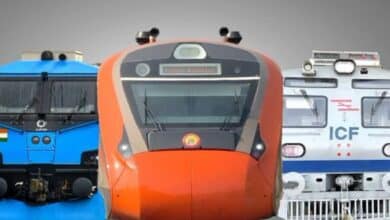
Indian Railways’ operational landscape has transformed dramatically over the past decade. The network has grown extensively, with thousands of kilometres of new tracks, electrification of nearly the entire broad-gauge system, and the introduction of modern trains like Vande Bharat and Amrit Bharat. These advancements have boosted capacity, safety, and efficiency—evidenced by a sharp drop in accidents and the successful running of over 12,000 special trains during peak festive seasons.
However, progress comes at a price. Manpower costs have ballooned to approximately ₹1.15 lakh crore in recent years, driven by expanded staffing to manage increased traffic and safety protocols. Pension expenditures stand at around ₹60,000 crore, reflecting the legacy commitments to a vast workforce. Total operational costs for 2024-25 hovered near ₹2.63 lakh crore, straining the system’s finances.
Freight operations remain the backbone, with India now ranking as the world’s second-largest cargo-carrying railway. Yet, passenger services are heavily subsidised to fulfil social obligations, often running below cost recovery. The cross-subsidisation model—where freight earnings offset passenger losses—has long been debated, but sharp hikes in passenger fares risk political and public backlash in a nation where rail travel is democratised.
This rationalisation aligns with a post-2014 policy of restraint. Unlike pre-2014 eras marked by infrequent but steep increases, recent adjustments have been rare, gradual, and targeted. The last significant revision occurred years ago, allowing real fares to erode amid inflation. By protecting the most vulnerable segments—suburban and short-haul ordinary travellers—the government reaffirms its commitment to inclusivity.
Impact on Passengers: Negligible for Most, Strategic for Sustainability
For the majority, the changes are imperceptible. Daily wage earners, students, and office-goers reliant on suburban networks or short trips will see no difference. Long-distance non-AC travellers, who form the bulk of passengers, face additions that rarely exceed a few rupees per hundred kilometres.
Even in AC classes, catering to a smaller but growing middle-class segment, the 2 paise per km cap ensures competitiveness with alternatives like budget airlines or buses. Premium services such as Rajdhani or Vande Bharat may see proportional adjustments, but dynamic pricing mechanisms already account for demand fluctuations.
Critics may argue that any increase burdens the common citizen, yet the scale here defies such claims. The expected ₹600 crore revenue boost represents a tiny fraction of total expenditure but aids in bridging the gap caused by rising input costs—fuel, electricity, and maintenance—without resorting to drastic measures.
Broader Context: Safety, Efficiency, and Social Role
Safety remains paramount. Post-2014 investments in track renewal, automatic signalling, and elimination of unmanned level crossings have yielded dividends, with accident rates plummeting. These require ongoing funding, partly supported by such incremental revenues alongside freight growth.
Operational efficiencies further mitigate pressures: near-complete electrification reduces diesel dependency, while digital initiatives streamline ticketing and reduce leakages. India’s railways now handle massive volumes, emerging as a global leader in cargo while keeping passenger travel among the world’s most affordable.
Politically, fare revisions are delicate. In a diverse democracy, railways symbolise equity—connecting remote villages to urban centres at subsidised rates. This announcement navigates that sensitivity adeptly, generating modest funds without alienating core users.
Comparatively, many global railways operate with higher fares or heavier government subsidies. India’s model prioritises volume over per-ticket revenue, carrying billions annually while fostering economic mobility.
Looking Ahead: Sustainable Modernisation
As Indian Railways eyes ambitious targets—higher speeds, dedicated freight corridors, and bullet trains—the need for financial prudence intensifies. The December 26 rationalisation exemplifies a calibrated strategy: incremental pricing to fund growth, coupled with efficiency drives and freight optimisation.
Ultimately, this move reinforces railways’ dual mandate—commercial viability and social welfare. By imposing the lightest possible touch on passengers, it sustains a system that moves India forward, one affordable journey at a time. As costs rise inexorably, such measured steps ensure the network remains accessible, safe, and robust for generations.