PM Modi Inaugurates FICCI Annual Convention, Urges Indian Industry to Make ‘India First’ the Foundation of Long-Term Investments
Addressing FICCI’s Centenary Celebrations at Bharat Mandapam, Prime Minister Calls for Greater Self-Reliance, Manufacturing Expansion and Global Competitiveness; Highlights India’s Growth Prospects, Economic Reforms and New Export Opportunities

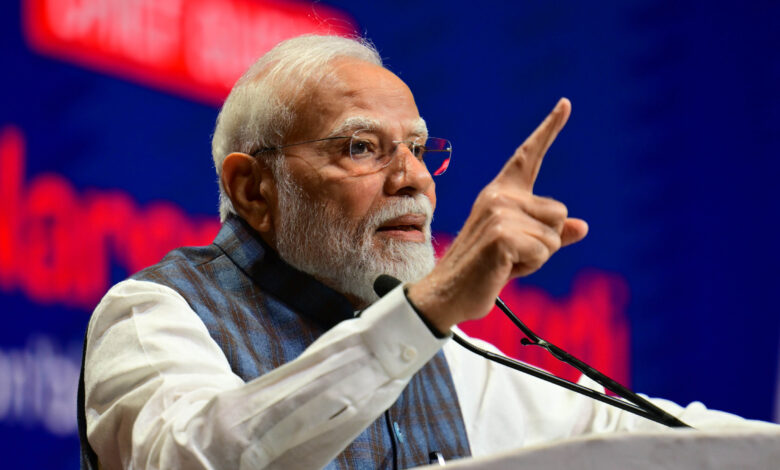
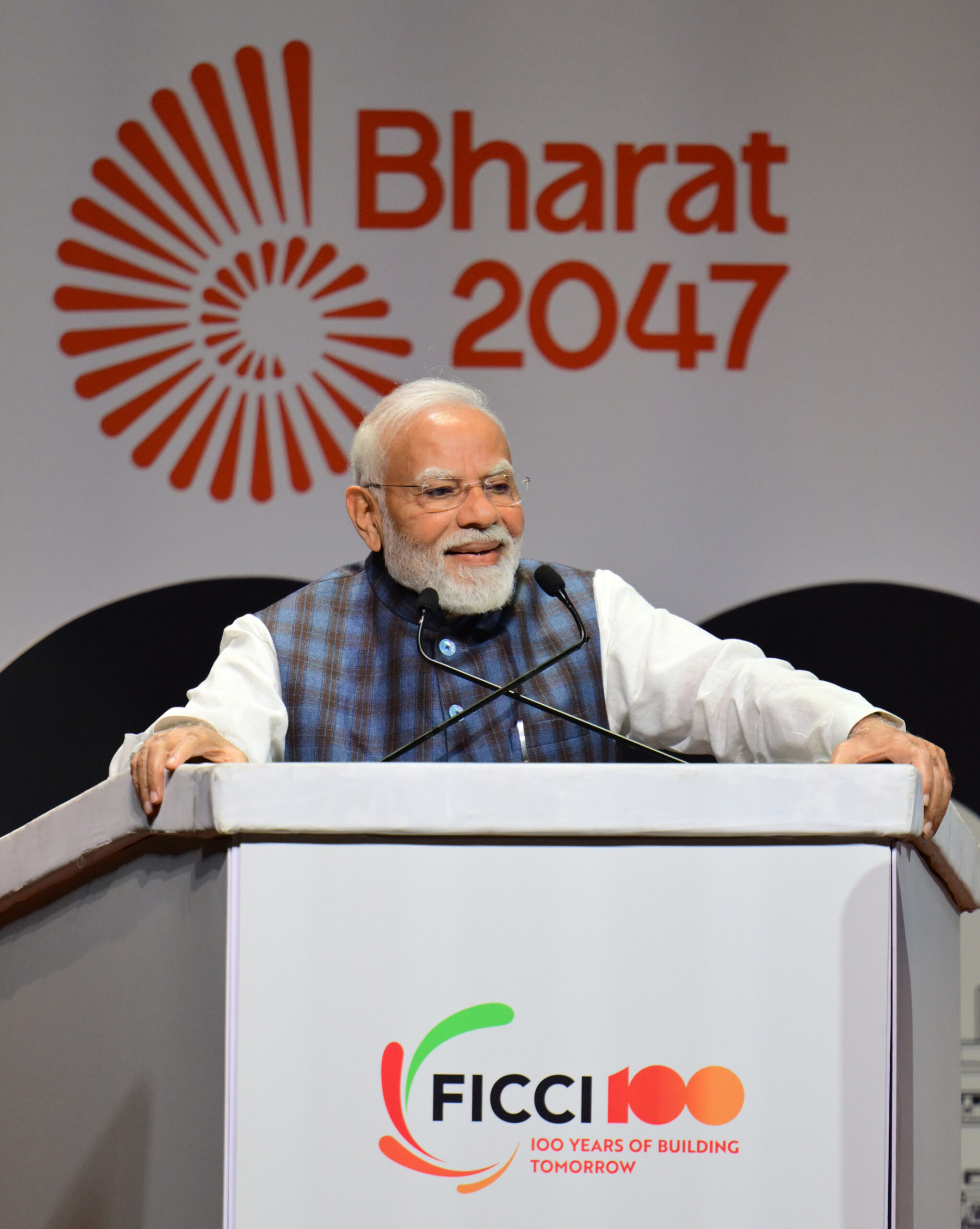
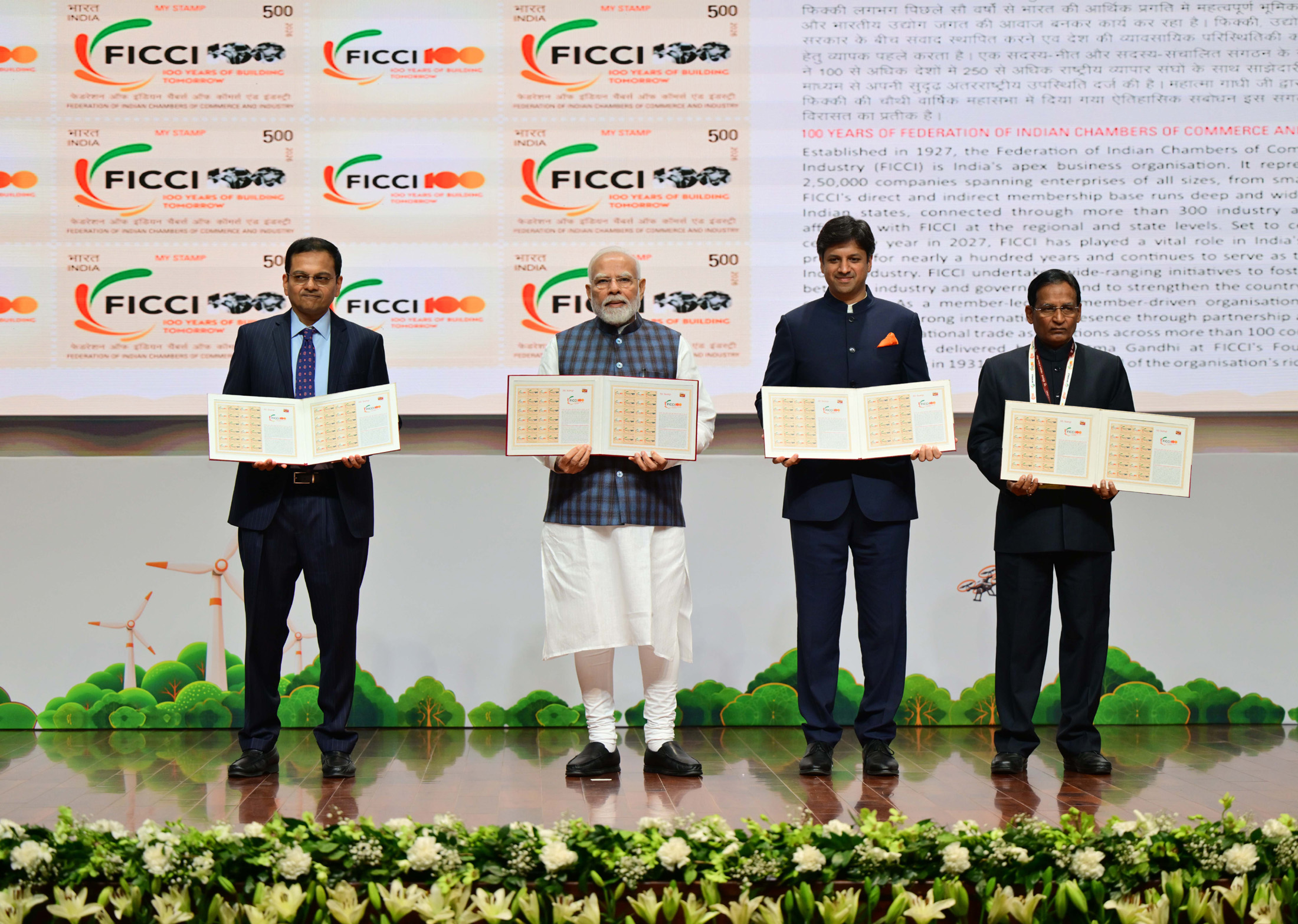
Prime Minister Narendra Modi on Wednesday inaugurated the Annual General Meeting and Annual Convention of the Federation of Indian Chambers of Commerce and Industry (FICCI) at Bharat Mandapam in New Delhi. Addressing industry leaders and business representatives during the organisation’s centenary celebrations, the Prime Minister called upon Indian businesses to make ‘India First’ the guiding principle of their long-term investment decisions and strengthen the country’s manufacturing capabilities.
Highlighting India’s expanding economic opportunities, PM Modi said the country’s growth story was creating new possibilities for businesses and industries, which must be prepared to seize them. He emphasised that India’s domestic market should not become a comfort zone for businesses but should provide the confidence to compete in international markets.
The Prime Minister also congratulated FICCI on completing 100 years of its establishment, describing the organisation’s century-long journey as a significant achievement. He noted that remaining active, adapting to changing circumstances and contributing consistently to the country’s economic development for a century demonstrated institutional strength and commitment.
While acknowledging FICCI’s contribution to India’s industrial development over the past 100 years, PM Modi said the time had come to look beyond past achievements and determine what Indian industry could accomplish over the next two decades.
India’s Economic Growth and Poverty Reduction
Reflecting on India’s economic transformation, the Prime Minister highlighted the contribution of citizens, farmers, workers, young people and the industrial sector in changing the country’s development trajectory over the past 12 to 13 years.
He said India was witnessing rapid economic progress alongside an unprecedented pace of poverty reduction. Referring to a recent World Bank report, PM Modi stated that approximately 50 crore Indians had moved out of poverty during the last 12 to 13 years.
According to the Prime Minister, this achievement reflected the impact of appropriate policies, determination and sustained efforts towards inclusive development. He said the country’s current development path demonstrated that India was moving in the right direction and had the potential to achieve greater economic success.
PM Modi also highlighted India’s position as the world’s fastest-growing major economy, with growth projections of around seven per cent. He pointed to the country’s export performance, particularly the record monthly merchandise exports of nearly US$50 billion in October.
He further noted that several international institutions, including Moody’s Ratings, S&P Global Ratings, Fitch Ratings, the World Bank and the Asian Development Bank, had revised their growth projections for India upwards.
Industry Must Plan for the Next 20 Years
Urging Indian industry to undertake regular self-assessment, the Prime Minister referred to the Sanskrit verse, ‘Uddharet Atmana Atmanam, Na Atmanam Avsadayet’, which conveys the message that individuals must uplift themselves through their own efforts.
He said the principle was equally relevant to businesses and nations. Industry should not remain dependent on established sectors, existing capabilities or short-term commercial gains. Instead, companies must continuously identify weaknesses, explore emerging opportunities and invest in future technologies.
Against the backdrop of growing global competition and the strategic use of resources as economic instruments, PM Modi called for stronger domestic manufacturing capabilities.
He urged business leaders to make ‘India First’ the foundation of every major long-term investment decision over the next 20 years. Such an approach, he said, would strengthen India’s self-reliance while creating fresh opportunities for business expansion and economic growth.
Pharmaceutical Sector Urged to Strengthen Domestic Manufacturing
Highlighting opportunities in the pharmaceutical industry, the Prime Minister said India had established itself as the ‘Pharmacy of the World’ through its strong capabilities in the production and export of finished medicines.
However, he pointed out that the country continued to import substantial quantities of active pharmaceutical ingredients (APIs), bulk drugs and drug intermediates across hundreds of product categories.
He urged pharmaceutical companies to identify these import-dependent segments and develop domestic manufacturing capabilities through investment in advanced technologies and large-scale production facilities.
According to PM Modi, India’s established strength in finished medicines must now be complemented by greater self-reliance in the production of essential ingredients and pharmaceutical raw materials.
He said developing these capabilities would reduce import dependence and improve India’s competitiveness in global pharmaceutical supply chains.
Focus on Iron, Steel and Aluminium Manufacturing
The Prime Minister also highlighted opportunities in the iron, steel and aluminium industries, where India has significant natural resources but continues to depend on imports for several finished and specialised products.
He noted that India exports substantial quantities of iron ore and possesses extensive bauxite reserves, yet imports specialised steel grades, aluminium alloys and other value-added products.
Calling for a change in this situation, PM Modi urged industry leaders to identify the specific categories of imported products that could be manufactured domestically.
He stressed the need to develop advanced manufacturing technologies, improve technical expertise and establish capabilities across the entire mineral value chain.
The Prime Minister said greater domestic production of specialised materials would help India move beyond exporting raw materials towards manufacturing higher-value industrial products.
Agriculture and Food Processing Offer Major Opportunities
Highlighting the potential of India’s agricultural sector, PM Modi observed that the country’s share in global agricultural exports remained relatively low at around two to two-and-a-half per cent, despite its large agricultural base.
He also pointed to the progress made in processed food exports. The share of processed food in India’s agri-food exports has increased from approximately 13 per cent to more than 20 per cent over the past 12 years.
The Prime Minister said this growth demonstrated the potential of value addition and food processing in expanding India’s presence in international markets.
He called upon industry representatives to develop a joint strategy aligned with global consumer demand and invest more in agricultural processing, procurement infrastructure and reliable supply chains.
He emphasised that Indian businesses should establish dependable product lines capable of meeting international quality requirements and serving overseas markets consistently.
Engineering and Machinery Manufacturing Need Greater Attention
PM Modi also drew attention to opportunities in engineering products and machinery manufacturing.
He said India’s share in global exports of everyday engineering products, including hand tools and power tools, remained relatively limited despite the country’s manufacturing potential.
He encouraged large industrial companies to support smaller enterprises in improving production quality, adopting advanced manufacturing processes and expanding their international presence.
The Prime Minister also identified opportunities in machinery and equipment required by developing countries and nations across the Global South.
Products such as packaging equipment, irrigation systems and factory machinery could provide Indian manufacturers with new export opportunities.
He said collaboration between large companies and smaller manufacturing units could help develop competitive supply chains and increase India’s share in global engineering markets.
PM Modi Highlights Tax Reforms and Business-Friendly Policies
Emphasising the importance of wealth creators, farmers, small entrepreneurs, industries and taxpayers in national development, the Prime Minister outlined several economic and tax reforms undertaken by the government.
He noted that the basic corporate tax rate had been reduced from 30 per cent in 2014 to 22 per cent, providing relief to companies and encouraging investment.
He also highlighted the income tax exemption for individuals earning up to Rs 12 lakh under the applicable tax regime, saying that the measure was intended to increase disposable income and strengthen purchasing power.
Other measures included simplification of income tax returns, faster refunds and reductions in GST rates on several goods to encourage consumption and stimulate market demand.
According to PM Modi, these reforms were designed to create a more supportive business environment and directly benefit industries and business houses.
Trade Agreements and Global Market Expansion
Concluding his address, the Prime Minister encouraged Indian businesses to take advantage of the country’s expanding network of trade agreements and the government’s ongoing reform initiatives.
He said the domestic market of approximately 140 crore people provided Indian businesses with a strong foundation for growth. However, companies should not limit their ambitions to domestic consumption.
Instead, they should invest in understanding the preferences of consumers in different international markets, comply with global quality standards and establish effective distribution networks.
PM Modi also assured industry representatives that the government remained open to suggestions from businesses and would continue working with the private sector to create new opportunities.
Reiterating the importance of global competitiveness, he said India’s domestic market should provide confidence to businesses to expand internationally rather than become a comfort zone.
The Prime Minister’s address at FICCI’s centenary convention outlined a broad economic vision centred on manufacturing self-reliance, value addition, technological advancement, export growth and long-term investment.
As FICCI enters its second century, the message to Indian industry was clear: build on the country’s economic progress, address critical manufacturing gaps and prepare to compete more effectively in global markets over the next 20 years.