India’s First Hydrogen Train Records Strong Start, Covers Around 900 Km in First Five Days

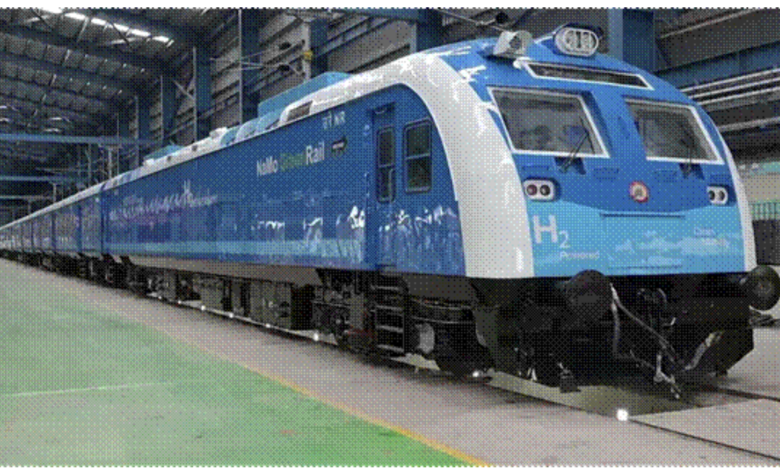
India has achieved a significant milestone in sustainable railway transportation with the successful commercial operation of its first hydrogen fuel cell-powered passenger train. Launched by Prime Minister Narendra Modi on July 17, 2026, the country’s first hydrogen-powered train has delivered an impressive performance on the Jind-Sonipat route, covering approximately 900 kilometres during its first five days of service.
The successful rollout marks a major step in India’s transition towards cleaner and greener transportation while placing the country among a select group of nations operating advanced hydrogen-powered railway technology.
The hydrogen train operates with two 1,200-kilowatt hydrogen-electric propulsion systems, replacing conventional diesel engines. The advanced fuel cell technology generates electricity by combining hydrogen with oxygen, producing only water vapour and heat as by-products. As a result, the train operates with zero direct carbon emissions, making it one of the cleanest passenger rail services introduced by Indian Railways.
Officials said the encouraging performance during the initial days of operation demonstrates the reliability and operational readiness of hydrogen-powered rail technology under Indian conditions. The successful completion of nearly 900 km without major operational issues is being viewed as an important validation of the country’s indigenous efforts in green mobility.
Apart from reducing dependence on diesel, the hydrogen-powered train also lowers the consumption of conventional electricity, contributing to Indian Railways’ long-term objective of achieving greater energy efficiency and environmental sustainability. The project represents a major technological advancement in India’s railway sector and aligns with the government’s broader clean energy and decarbonisation goals.
One of the most notable aspects of the project is that passengers are not required to pay any premium for travelling on the country’s first hydrogen-powered train. Railway authorities have retained fares at the same level as conventional Diesel Multiple Unit (DMU) services, with ticket prices ranging between ₹10 and ₹25 depending on the distance travelled. By maintaining affordable fares, Indian Railways aims to ensure that environmentally friendly transportation remains accessible to ordinary commuters without increasing their travel expenses.
The train consists of 10 coaches and has been designed as a cost-effective alternative to conventional fuel-powered passenger services. Besides offering a cleaner mode of transport, the hydrogen train is expected to reduce dependence on imported fossil fuels over the long term, thereby supporting India’s energy security objectives.
Supporting the operation is a dedicated hydrogen production, storage and refuelling facility at Jind, developed to ensure uninterrupted supply for the train. The indigenous infrastructure has been established specifically to support hydrogen-based railway operations and is expected to play a crucial role in evaluating the long-term commercial viability of the technology across the Indian Railways network.
The project also complements the objectives of the National Green Hydrogen Mission, under which the government is promoting hydrogen as a clean alternative fuel across multiple sectors, including transportation, industry and energy. Railway officials believe the successful operation of the Jind-Sonipat service could pave the way for wider deployment of hydrogen-powered trains on non-electrified railway routes in the future.
The early success of the hydrogen train is being viewed as an important demonstration project that could serve as a blueprint for expanding clean and self-reliant transportation infrastructure across the country. As Indian Railways continues its journey towards achieving net-zero carbon emissions, hydrogen fuel cell technology is expected to emerge as a key component of its future mobility strategy.
With strong initial operational performance, affordable fares, indigenous infrastructure and zero-emission technology, India’s first hydrogen passenger train has begun its journey on a promising note, showcasing the country’s growing capabilities in developing next-generation sustainable transport solutions while reinforcing its commitment to green growth and technological innovation.