
IIT Delhi Showcases Advanced Research Infrastructure During CRF Day 2026

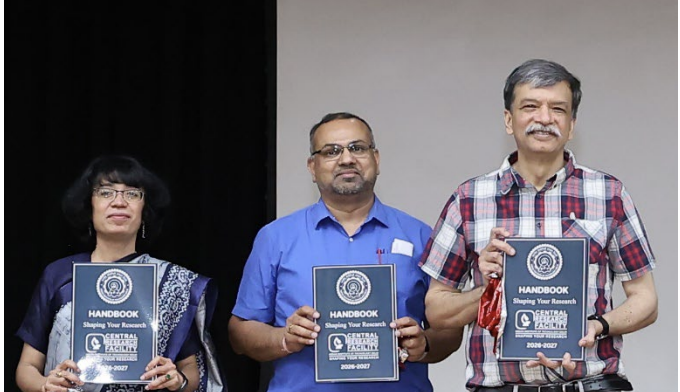
The Indian Institute of Technology Delhi celebrated “CRF Day 2026” on May 27, bringing together researchers, industry leaders, startups, funding agencies and technology partners to showcase the institute’s advanced scientific infrastructure and ongoing collaborations in cutting-edge research.
The event was organised by IIT Delhi’s Central Research Facility (CRF), one of the country’s largest integrated research infrastructure ecosystems spread across the Hauz Khas and Sonipat campuses. During the programme, IIT Delhi Director Rangan Banerjee launched the “CRF Handbook,” a detailed guide highlighting the specifications and capabilities of the institute’s sophisticated scientific instruments and laboratories.
Speaking at the event, Prof. Banerjee said the primary objective of the Central Research Facility is to provide world-class research infrastructure that supports globally competitive and locally relevant scientific innovation. He said IIT Delhi aims to ensure round-the-clock access to advanced research facilities for students and researchers from across the country.
CRF Day featured demonstrations of several high-end scientific instruments and technology platforms that are supporting research in areas such as nanotechnology, healthcare, pharmaceuticals, clean energy, semiconductors, advanced materials and environmental sciences.
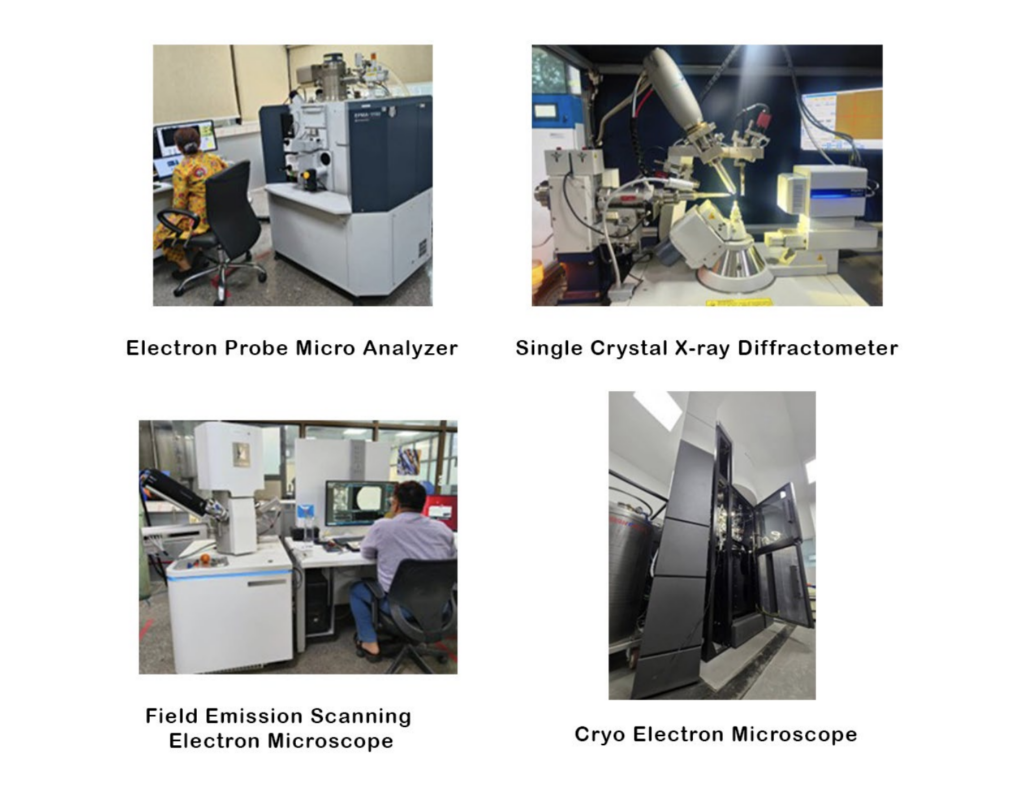
Among the key facilities showcased was the state-of-the-art 300 kV Cryo Electron Microscope under the SATHI Foundation at IIT Delhi. The advanced microscope enables scientists to capture near-atomic resolution 3D images of biomolecules and cellular structures in their natural frozen state, supporting critical research in biology and medicine.
Researchers also highlighted the capabilities of the Electron Probe Micro Analyzer (EPMA), which is used for identifying and measuring elements in materials with high precision. The instrument plays an important role in the analysis of metals, minerals, semiconductors and advanced materials.
Another major attraction was the Field Emission Scanning Electron Microscope (FESEM), which provides ultra-high magnification imaging for studying nanoscale structures and microscopic surface defects. The facility is widely used in materials science and nanotechnology research.
The Single Crystal X-ray Diffractometer (SCXRD) and Transmission Electron Microscope (TEM) were also showcased during the event. These instruments help scientists study atomic structures, crystal arrangements and nanoparticles, contributing to advancements in chemistry, pharmaceuticals and electronics research.
The Gas Chromatography–Mass Spectrometry (GCMS) system demonstrated IIT Delhi’s capabilities in chemical analysis and testing. The technology is used in environmental monitoring, forensic science, food safety and pharmaceutical analysis by identifying chemical compounds with high accuracy.
One of the major highlights of the event was mPRAGATI, a national centre focused on the development, manufacturing and testing of medical devices and healthcare technologies. The platform supports the translation of medical innovations from proof-of-concept stages to commercial products, strengthening India’s med-tech ecosystem.
Head of CRF at IIT Delhi, Manidipa Banerjee said the institute hosts one of the country’s most sophisticated research ecosystems and CRF Day serves as a platform to promote collaboration between academia, industry and government stakeholders.
Officials said the Central Research Facility has been designed to make advanced scientific infrastructure accessible to a wider research community across India through a transparent online booking system. Industries, startups, educational institutions, MSMEs and government organisations can use the facilities for research, product development and innovation activities.
The CRF ecosystem integrates advanced instrumentation, technical expertise and interdisciplinary scientific support under a single platform. IIT Delhi said the initiative is helping accelerate technology development, translational science and product innovation across multiple sectors.
The institute also highlighted the role of CRF in skill development and industry-academia collaboration by providing students and startups access to sophisticated technologies that are otherwise difficult to establish independently due to high costs.
The event included technical presentations, research posters and interactive sessions involving CRF facilities, the Sophisticated Analytical and Technical Help Institute (SATHI) Foundation and mPRAGATI. These sessions showcased ongoing scientific projects and explored opportunities for deeper collaboration between academia and industry.
Through initiatives such as CRF, SATHI and mPRAGATI, IIT Delhi said it continues to contribute to strengthening India’s scientific ecosystem and supporting the country’s goal of becoming self-reliant in advanced technologies and innovation-driven growth.