Eastern Railway Restores New Farakka–Tildanga Rail Link After Rain-Induced Subsidence

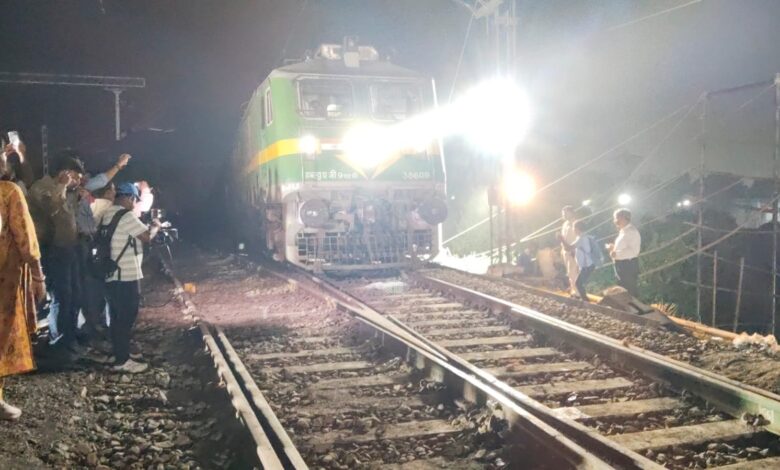
Eastern Railway has restored train services on the critical New Farakka–Tildanga section in West Bengal after a rain-induced railway embankment collapse disrupted train operations for nearly three days. The restoration was completed on a war footing, allowing normal passenger services to resume from Saturday evening, September 5.
The disruption occurred following heavy and continuous rainfall during the night of September 2–3, which triggered soil subsidence beneath the railway embankment near New Farakka in Malda district. Water seepage between the Up and Down lines, coupled with erosion from a nearby pond, weakened the clay-rich soil and caused a portion of the Up-line track to sink.
The problem was detected promptly by a monsoon patrol team, following which train movement was immediately suspended as a precautionary measure. The timely intervention helped prevent any accident or untoward incident.
The affected section forms an important rail corridor connecting South Bengal with North Bengal and the Northeast. The disruption resulted in the cancellation, regulation and diversion of several trains, causing considerable inconvenience to passengers. With rail services affected, demand for alternative road transport also increased, with reports of higher bus fares on routes connecting Kolkata and Siliguri.
Round-the-Clock Restoration Operation
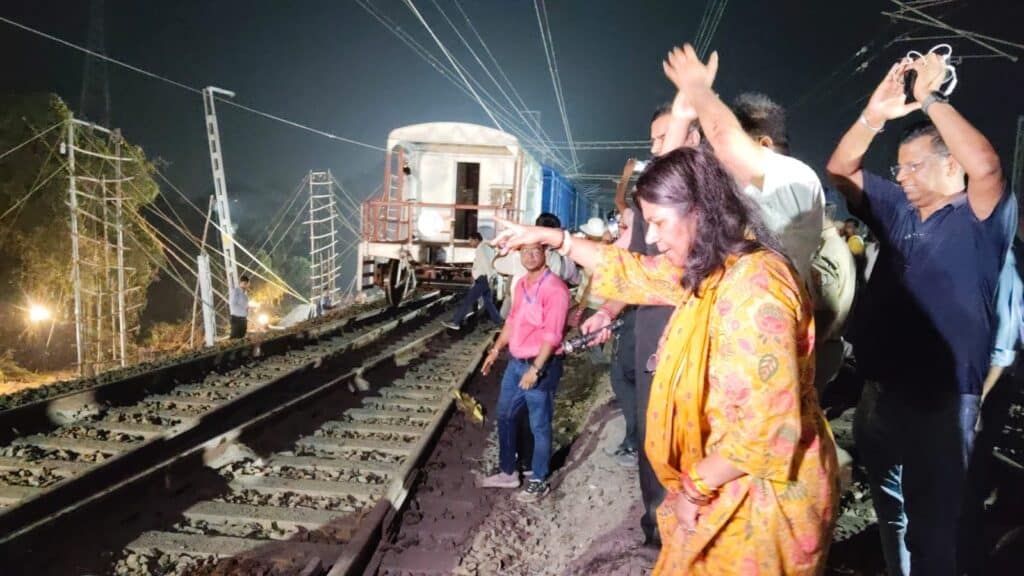
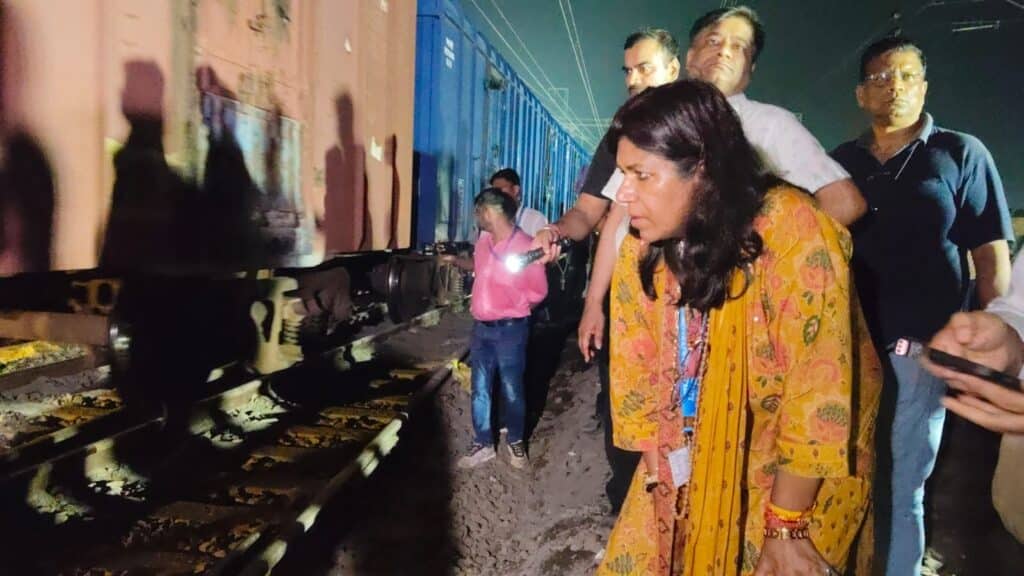
Eastern Railway launched an intensive restoration operation immediately after the subsidence was detected. General Manager Gitika Pandey personally supervised the restoration efforts at the site, supported by Principal Chief Engineer Vikram Gupta and teams from the Malda Division.
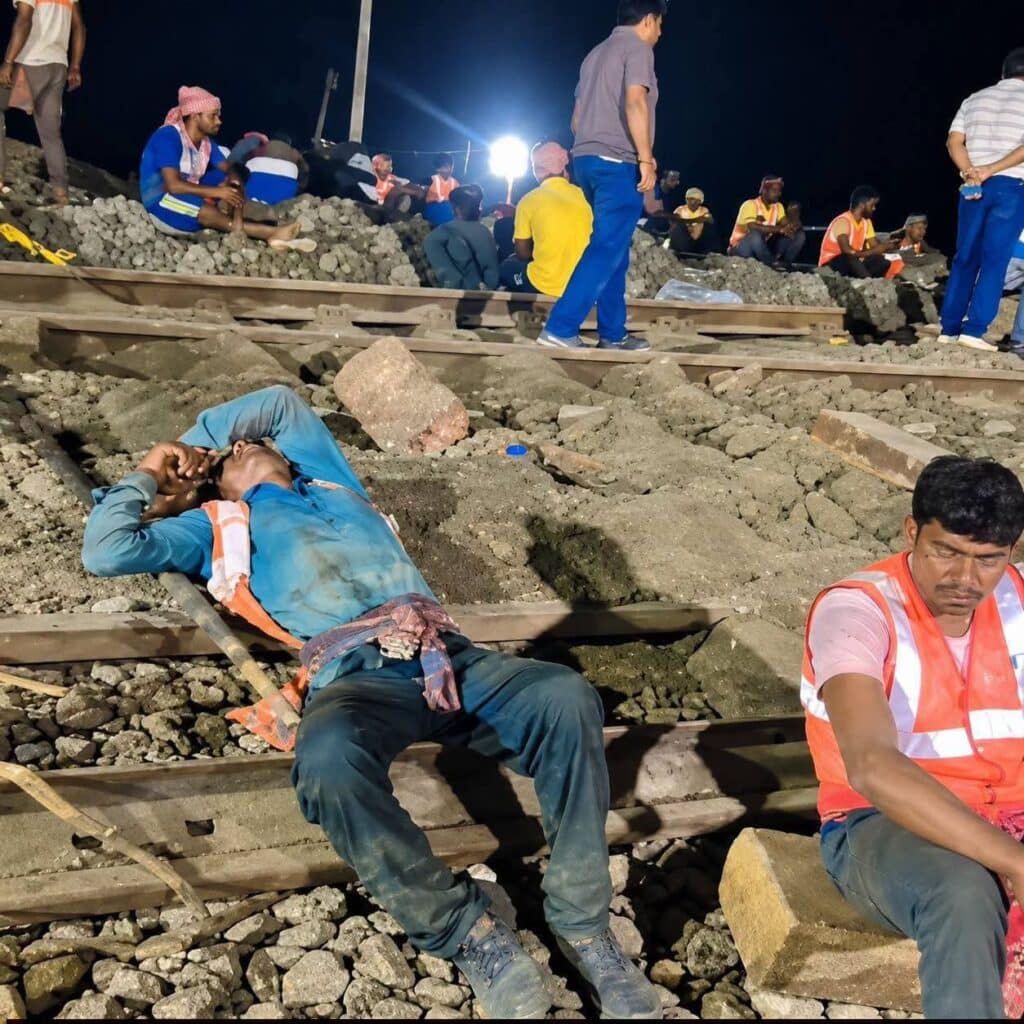
Engineers, railway officials, workers and specialised equipment were deployed from multiple locations. Restoration work continued round the clock despite persistent rainfall, waterlogging and unstable soil conditions.
The repair operation involved extensive engineering work, including piling, filling with stone dust, ballast packing and careful realignment of the affected track. Teams also worked on strengthening the railway embankment and ensuring that the restored track could safely withstand train operations.
Hundreds of railway personnel were involved in the emergency operation, with teams working continuously through difficult weather conditions to bring the crucial route back into service at the earliest.
Safety Checks Before Train Movement
By Saturday morning, the major restoration work had been completed. However, passenger services were resumed only after a series of trial runs and comprehensive safety inspections.
Goods trains and specialised empty runs were operated to assess the stability and fitness of the restored track. Railway teams also conducted checks of the track alignment, points and overhead equipment before granting clearance for regular train movement.
At New Farakka, the final preparations were personally inspected by Eastern Railway General Manager Gitika Pandey, who reviewed the restoration site and the overhead electrification system before the resumption of normal services.
The final run began after the completion of safety checks, with railway personnel marking the occasion with the traditional breaking of a coconut.
Services Gradually Returning to Normal
Eastern Railway confirmed that train services on the affected corridor had resumed. However, officials indicated that full timetable regularity could take some time because of the backlog created by cancelled and diverted trains during the disruption.
The restoration has provided major relief to passengers travelling between South Bengal, North Bengal and destinations further towards the Northeast.
The incident has also highlighted the importance of railway monsoon patrols and rapid emergency response during periods of extreme rainfall. The early detection of the subsidence enabled railway authorities to stop train movement before the situation could result in a major accident.
Eastern Railway officials credited the coordinated efforts of engineers, patrol teams, workers and divisional staff for completing the restoration under challenging conditions.
With the New Farakka section now operational, railway authorities are working towards the progressive normalisation of train services, while continuing to maintain heightened vigilance amid the ongoing monsoon season.