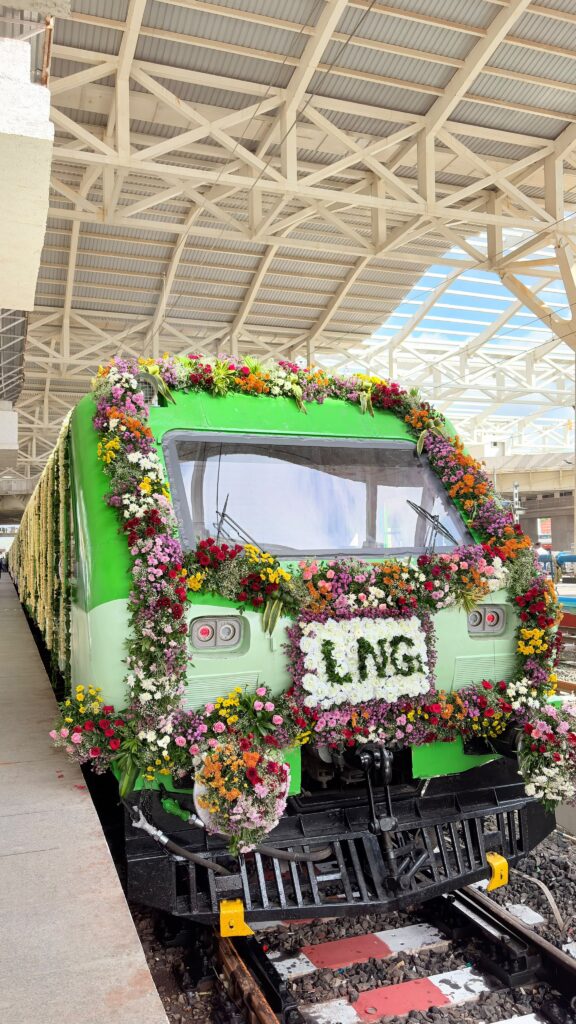
Amit Shah inaugurates ₹1,472 crore railway projects, flags off India’s first LNG-powered train in Ahmedabad

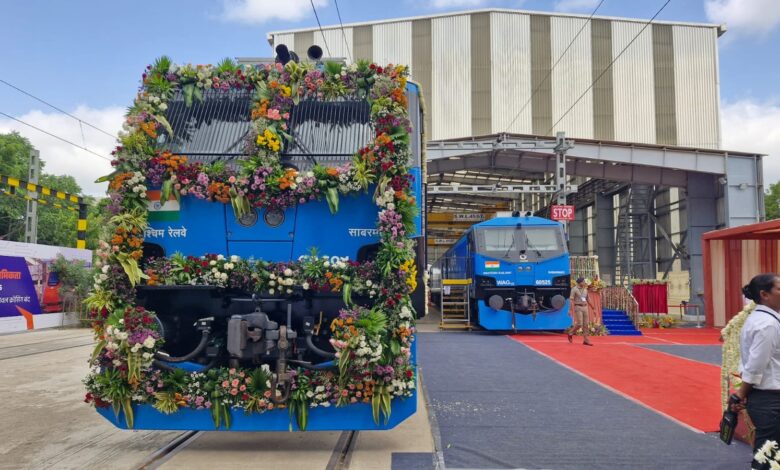
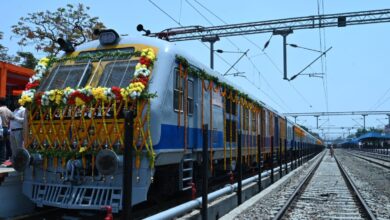
Union Home Minister and Minister of Cooperation Amit Shah on Saturday inaugurated development projects worth ₹1,472 crore and flagged off the country’s first LNG-powered train from Sabarmati Railway Station in Ahmedabad, Gujarat. Gujarat Chief Minister Bhupendra Patel and several other dignitaries attended the event.
Addressing the gathering, Amit Shah dedicated the LNG-powered train to the nation and said the initiative would prove beneficial for environmental protection. He noted that the projects inaugurated and foundation stones laid that day, focused on environmental sustainability, passenger amenities and rail safety, would hold lasting significance for the region.
Shah recalled the historical importance of Sabarmati, observing that the journey of translating experiments in Satyagraha, simple living, rural development and khadi into ground-level action had begun from the same place. He contrasted the station’s past with its present, saying that in the 1980s passengers had to walk nearly two kilometres even to find a rickshaw, whereas the station has now undergone major transformation in amenities, safety and connectivity.
Among the key projects, Shah inaugurated the WAG-12 Maintenance Shed, built at a cost of ₹700 crore for the upkeep of railway locomotive engines. He said an engine with 12,000-horsepower twin-section capacity had been commissioned, capable of hauling freight equivalent to nearly 600 trucks. Earlier two locomotives were needed for the same task; now a single WAG-12 can perform it. This, he added, would mark an important milestone in the history of Indian Railways.
The ‘Kavach’ train protection system was introduced on the Sabarmati–Kalol–Sabarmati section at a cost of ₹48 crore. Works also commenced for implementing Kavach on the Ahmedabad–Palanpur and Ahmedabad–Samakhiali sections, along with the doubling of the Sabarmati–Sarkhej railway line.
Highlighting broader railway modernisation since 2014, Shah said several new facilities had been introduced after Narendra Modi became Prime Minister, making the network more modern. Dedicated Freight Corridors, the Rapid Rail System and premium railway stations were among the initiatives launched. He pointed to the successful trial run of the country’s first long-haul double-stack container train from Jawaharlal Nehru Port Trust in Mumbai to Vadodara, stating that success of the double-stack concept would nearly double freight-carrying capacity on limited tracks. An 11,000-kilometre corridor is being converted into a four-lane network to ease movement towards Delhi–Howrah and Delhi–Guwahati.
Shah noted that by inaugurating India’s hydrogen-powered train, Modi had brought the country into the league of only four nations possessing the technology. He listed further gains: diesel consumption by the Railways fell from 293 crore litres in 2015–16 to 108 crore litres in 2024–25; 98 per cent of railway coaches have been equipped with bio-toilets; LHB coach production rose by 57 per cent; locomotive production capacity increased by 66 per cent; and the budget for railway safety grew by 67 per cent.
On electrification, Shah said the network stood at only 30 per cent before 2014 and has now reached 99.6 per cent, with the remaining 0.4 per cent to be completed soon. He compared the pace: only 75 kilometres were electrified in the entire year 2010–11, against 7,188 kilometres in 2023–24. India, he said, would soon surpass countries such as China (92 per cent), Spain (68 per cent), France (60 per cent) and the United Kingdom (49 per cent). Sweden remains the only nation with 100 per cent electrification, yet its total railway length is nearly ten times smaller than India’s.
The Home Minister credited the concepts of ‘Make in India’ and ‘Aatmanirbhar Bharat’ for enabling substantial domestic manufacturing of equipment such as locomotives. Using Gujarat as an example of budgetary growth, he said the rail budget from 2009 to 2014 totalled a mere ₹589 crore, while the allocation for 2026–27 alone stands at ₹17,366 crore, reflecting a clear difference in the pace of development.
Shah urged the public to ask opposition leaders who make reckless statements to discuss issues with facts and figures. He claimed the previous government had done little apart from scams and corruption amounting to ₹12 lakh crore over a decade, whereas in 12 years not even the slightest allegation of corruption had been levelled against Modi.
The LNG-powered train and the suite of projects inaugurated at Sabarmati underscore the government’s emphasis on cleaner technology, higher freight efficiency, enhanced safety systems such as Kavach, and accelerated infrastructure expansion. Officials present described the day’s events as a significant step in modernising India’s rail network while advancing environmental goals and passenger convenience. The combination of the first LNG train, the powerful WAG-12 locomotive capability, extensive Kavach coverage and ongoing track doubling is expected to improve both operational efficiency and safety on key routes in Gujarat and beyond.
Shah’s address repeatedly linked local projects at Sabarmati to the national transformation of Indian Railways over the past decade, from reduced diesel dependence and near-complete electrification to indigenous manufacturing capacity and advanced propulsion technologies. The successful trial of the double-stack container train was presented as a practical demonstration of how existing infrastructure can be leveraged for higher throughput without proportional expansion of track length.
As the remaining electrification is completed and further sections receive Kavach protection, railway authorities anticipate continued gains in reliability and capacity. The WAG-12 shed is expected to support sustained operation of high-horsepower locomotives critical for freight corridors. Meanwhile, the LNG train’s introduction signals a broader shift toward alternative fuels that could lower emissions on non-electrified or mixed-traffic routes.
The event at Sabarmati Railway Station thus served both as a ceremonial dedication of concrete assets and as a platform to review cumulative progress in railway modernisation, safety investment and self-reliance in manufacturing. With projects valued at ₹1,472 crore now inaugurated or underway, the focus turns to timely execution and measurable improvements in freight movement, passenger experience and environmental performance across the network.