India’s First Indigenous Bullet Train Takes Shape: BEML Develops 280 kmph High-Speed Trainsets for Mumbai–Ahmedabad Corridor
Eight-coach Bharat-made Bullet Train combines indigenous engineering, advanced safety systems, passenger comfort and energy-efficient technologies; designed for 249 kmph operational speed and a maximum test speed of 280 kmph

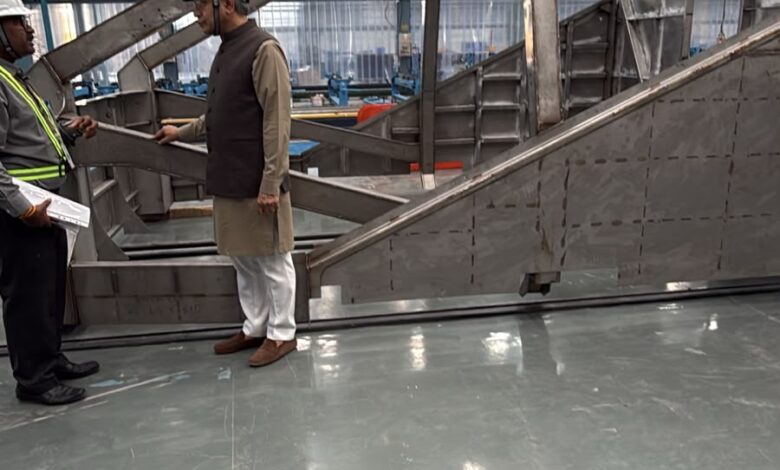
Designed to meet Indian operating conditions, the indigenous bullet train combines high-speed performance, modern engineering, passenger-friendly interiors and advanced safety features. The project aims to bring together domestic manufacturing expertise and modern high-speed railway technologies to develop a train that offers a comfortable, efficient and reliable travel experience.
The train has been designed with particular attention to passenger comfort, accessibility, operational efficiency and aerodynamic performance. Its development also represents an important step towards establishing an indigenous manufacturing ecosystem for future high-speed railway requirements.
Train Specifications: Designed for 280 kmph
The Bharat-made Bullet Train has been designed with a maximum test speed of 280 kmph and a proposed operational speed of 249 kmph.
The train will have a total length of approximately 202 metres and will consist of eight coaches, comprising four motor cars and four trailer cars. The configuration is intended to provide an appropriate balance between propulsion performance, passenger capacity and operational efficiency.
The eight-coach trainset will accommodate approximately 557 passengers, including dedicated seating spaces for two Divyangjan or Persons with Reduced Mobility (PRM) passengers.
The passenger accommodation will comprise seven standard-class coaches with a 3×2 seating arrangement and one executive-class coach featuring a more spacious 2×2 seating configuration.
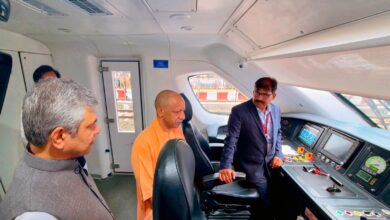
The train will have driving cabs at both ends, equipped with an Intelligent On-Board Control System. This system is designed to support operational decision-making and coordination with the Operation Control Centre.
Another important feature is the provision to couple two eight-coach trainsets to form a 16-coach formation. This arrangement will provide operational flexibility and allow passenger capacity to be increased according to future requirements.
Passenger Comfort at the Centre of Design
The train’s interiors have been ergonomically designed, keeping Indian anthropometric requirements and passenger travel preferences in mind.
The seating arrangements are designed to provide adequate legroom and comfort during high-speed journeys. The standard-class and executive-class configurations will offer different seating experiences while maintaining passenger convenience.
The interiors will feature modern LED lighting, overhead luggage racks and additional floor-mounted luggage stands for larger baggage. Power outlets will also be available for passengers to charge mobile phones and operate laptops during their journeys.
Wide windows along the passenger seating areas will provide better outside visibility and a more open travel environment.
The train will also feature modern bio-digester toilets designed to minimise effluent discharge. A sealed, single-piece gangway connecting adjacent coaches will allow passengers to move between cars more comfortably while helping maintain a continuous interior environment.
These features are intended to provide a modern passenger experience while addressing the practical requirements of long-distance journeys.
Advanced Passenger Information and Communication Systems
A comprehensive Passenger Information System will keep passengers informed throughout their journey.
LCD displays inside the coaches will provide important travel-related information in English, Hindi and regional languages. The system will be supported by public address facilities and automatic audio announcements.
Emergency talk-back units will be installed in passenger cabins and vestibules. These facilities will allow passengers to communicate directly with train crew members in case of emergencies or other situations requiring assistance.
The train will also feature a Wi-Fi-based passenger infotainment system, enabling travellers to access preloaded entertainment and information content during the journey.
The combination of visual displays, audio announcements and emergency communication facilities is intended to improve passenger convenience and provide better access to essential travel information.
Accessibility Designed for All Passengers
Accessibility has been incorporated into the train’s design to make high-speed travel more convenient for passengers with disabilities and reduced mobility.
The train floor is designed to align with platform height, facilitating level boarding and reducing the need for passengers to negotiate steps while entering or exiting the coaches.
Retractable footsteps integrated into the doors will help minimise the horizontal gap between the train and platform.
Dedicated seating arrangements and accessible toilets will cater to Divyangjan and PRM passengers. The doors will also be designed to facilitate wheelchair movement.
Braille-enabled information signage will further assist passengers with visual impairments in navigating the train.
These provisions reflect an effort to integrate accessibility into the overall design rather than treating it as an additional facility.
Climate-Controlled Interiors for Indian Conditions
The train’s Heating, Ventilation and Air Conditioning (HVAC) system has been designed to maintain comfortable temperature and humidity levels inside the coaches under varying climatic conditions.
Each coach will be equipped with two HVAC units to support the interior climate-control requirements.
The system is particularly relevant for Indian operating conditions, where trains may encounter significant variations in temperature and humidity across different regions and seasons.
Maintaining a comfortable interior environment will be an important component of the overall passenger experience, particularly during long-distance journeys.
Noise Reduction for a Smoother Journey
High-speed trains require special attention to noise and vibration management because aerodynamic noise and mechanical vibrations can increase with operating speed.
The indigenous bullet train incorporates multiple features to reduce noise levels inside the passenger compartments.
These include sound insulation in the car body and floor structure, noise-damping coatings and specially designed exterior components.
Skirts, bogie covers and aerodynamic fairings will help manage airflow around the train’s underbody and running gear.
Together, these measures are intended to reduce external noise transmission and improve the overall travel environment for passengers.
Advanced Traction and Regenerative Braking Technology
The train will operate using a 25 kV, 50 Hz single-phase AC traction system supplied through a heavy compound catenary arrangement.
This electrical traction system will provide the power required for high-speed operations.
An important energy-efficiency feature is its regenerative braking system. During braking, the system is designed to recover kinetic energy and feed it back into the electrical system, helping reduce overall energy consumption.
Regenerative braking is increasingly used in modern railway systems because it improves energy utilisation while supporting efficient train operations.
Aerodynamic Design for High-Speed Performance
Aerodynamics plays a critical role in the performance of high-speed trains. As train speeds increase, air resistance, pressure variations and aerodynamic noise become more significant.
The indigenous bullet train’s nose and carbody profiles have been optimised using Computational Fluid Dynamics (CFD) simulations. These computer-based simulations help engineers study airflow around the train and assess its aerodynamic behaviour under different operating conditions.
The aerodynamic design aims to reduce air resistance, minimise turbulence and mitigate pressure waves generated during high-speed operations, particularly while passing through tunnels.
The design also considers the possibility of pressure-related effects, including tunnel pressure waves and sonic-boom-like phenomena.
The rooftop HVAC profile, roof panels and airflow deflectors have been integrated into the overall aerodynamic configuration to minimise unnecessary airflow disturbances.
Exterior wind-guiding profiles will further support aerodynamic performance, while the sealed carbody is designed to help manage pressure differences and maintain passenger comfort.
A New Chapter in Indigenous High-Speed Rail Manufacturing
The Bharat-made Bullet Train represents an important development in India’s railway manufacturing ambitions. Beyond the introduction of high-speed passenger services, the project focuses on building domestic expertise in advanced train design, engineering, manufacturing and integration of modern railway systems.
With a maximum test speed of 280 kmph, an operational speed of 249 kmph and passenger capacity of approximately 557, the eight-coach trainset brings together several technologies aimed at delivering high-speed mobility suited to Indian requirements.
As the Mumbai–Ahmedabad High-Speed Rail Project progresses, the indigenous train manufacturing programme will remain an important component of India’s broader high-speed railway development strategy.
The project is expected to contribute to the expansion of domestic railway manufacturing capabilities and provide a foundation for future generations of high-speed trains designed and manufactured in India.