Railway Board Chief Reviews IRCTC War Room, Orders Stronger Monitoring of Catering Services

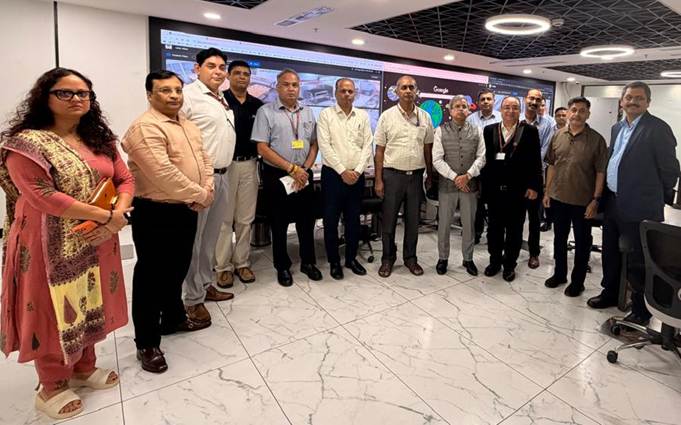
The Railway Board has directed the Indian Railway Catering and Tourism Corporation (IRCTC) to strengthen passenger feedback mechanisms, improve real-time monitoring of railway catering kitchens and ensure faster corrective action on deficiencies. The directions came during a review of the IRCTC War Room by Railway Board Chairman and Chief Executive Officer Satish Kumar at the IRCTC office.
The review focused on improving the quality, hygiene and reliability of catering services provided to railway passengers. Emphasis was placed on making existing monitoring systems more responsive, technology-driven and outcome-oriented, with particular attention to passenger complaints, kitchen surveillance and inspections.
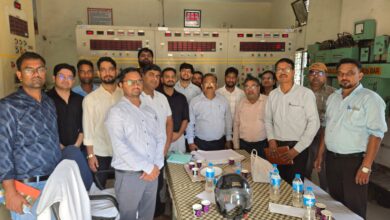
During the review, Satish Kumar interacted with the team responsible for monitoring catering services and passenger feedback. He stressed the need to ensure that passenger concerns are not only recorded but also followed up systematically until they are resolved.
Rail Madad Interface to Be Strengthened
The Railway Board Chairman directed that the Rail Madad interface should be further automated to make it easier for passengers to communicate their concerns with the relevant authorities.
The objective is to simplify the complaint process and allow passengers to reach the concerned system through a more convenient, single-click mechanism. The move is intended to make the grievance redressal process faster and more accessible, particularly for passengers reporting issues related to food quality, hygiene, service or other onboard catering concerns.
The Chairman also called for closer monitoring of complaints received through Rail Madad. Where necessary, officials should directly interact with passengers to understand the nature of their concerns and ensure that complaints are resolved effectively.
The emphasis on direct passenger interaction is aimed at improving the quality of feedback available to railway authorities. Instead of relying only on complaint records, officials will be encouraged to understand the actual experience of passengers and identify recurring deficiencies.
Greater Accountability for Inspecting Agencies
The review also examined the functioning of agencies responsible for inspecting railway catering facilities.
Satish Kumar directed that inspecting agencies should systematically record and post details of deficiencies identified during inspections, along with information about their inspection performance. This will allow the authorities to continuously assess whether inspection agencies are carrying out their responsibilities effectively.
The Railway Board stressed that inspections should not be treated merely as a routine compliance exercise. Instead, they should result in measurable improvements in catering operations.
Agencies whose performance is consistently found to be ineffective may face appropriate action, including delisting wherever warranted. The objective is to ensure that third-party inspection mechanisms provide meaningful quality assurance and contribute to improving standards across the railway catering network.
Real-Time Surveillance of Railway Kitchens
A major focus of the review was the expansion of camera-based monitoring of railway catering kitchens.
At present, four camera feeds are available for monitoring kitchen operations through the IRCTC War Room. The Railway Board Chairman directed that the surveillance network be expanded to provide wider visibility into kitchen activities.
Additional cameras have been proposed for raw material storage areas, where the condition and handling of food ingredients can be monitored. A PTZ, or Pan-Tilt-Zoom, camera is also to be provided to enable wider and more flexible surveillance of kitchen operations.
The expanded camera monitoring system is expected to allow officials to observe kitchen conditions remotely and identify potential deficiencies without depending exclusively on physical inspections.
The system will also be used to assess the overall condition and functioning of kitchens. Where poor conditions are observed through inspection or video monitoring, appropriate notices and corrective measures are to be initiated.
During the review, the condition of a kitchen at Anantapur under South Central Railway was identified as an area requiring improvement based on inspection findings and video monitoring.
The case highlights the intended role of real-time surveillance in identifying deficiencies and ensuring that corrective action is initiated promptly.
Special Focus on Roti and Paratha Preparation
The preparation of roti and paratha was identified as another area requiring focused attention.
The Railway Board Chairman directed that the entire process involved in preparing these food items should be comprehensively reviewed. The objective is to identify gaps in preparation, handling, hygiene and quality control and to ensure that the food served to passengers meets the required standards consistently.
The review of the complete preparation process is expected to cover the various stages involved in producing these items, enabling authorities to identify potential shortcomings rather than addressing complaints only after food reaches passengers.
The focus reflects the Railway Board’s broader objective of improving the consistency of food quality across railway catering operations.
AI-Based Monitoring to Trigger Corrective Action
The Railway Board also reviewed the use of Artificial Intelligence-based monitoring and detection systems in railway catering facilities.
AI-enabled systems can help identify issues such as the presence of rodents, cockroaches and other deficiencies through automated monitoring. However, Satish Kumar stressed that detection alone should not be considered sufficient.
The Chairman directed that AI-generated alerts should lead to appropriate follow-up action. Where such deficiencies are detected, warning letters and deterrent measures should be initiated as required.
The objective is to establish a clear chain between detection, reporting and corrective action. This would prevent technology-based monitoring systems from becoming passive surveillance tools and instead make them part of an active quality-control mechanism.
The approach is also expected to strengthen accountability among catering service providers and other agencies responsible for maintaining hygiene and food safety standards.
Technology-Driven Passenger-Centric Catering System
The review of the IRCTC War Room comes amid efforts by Indian Railways to make catering services more responsive to passenger expectations.
The War Room provides a central mechanism for monitoring passenger feedback and operational issues. Strengthening its systems is expected to improve the ability of railway authorities and IRCTC to identify emerging problems and respond to them more quickly.
The Railway Board’s directions cover multiple aspects of catering quality, including passenger feedback, grievance monitoring, physical inspections, third-party inspections, kitchen surveillance, food preparation and AI-based detection.
The emphasis is on creating an integrated system in which passenger complaints and technology-based alerts lead to inspections and corrective action rather than merely being recorded.
The authorities are also seeking greater accountability from inspecting agencies by tracking both deficiencies identified during inspections and the effectiveness of the agencies themselves. This could help distinguish between inspections that produce meaningful results and those that fail to address recurring problems.
Focus on Quality, Hygiene and Passenger Confidence
The review ultimately focused on improving passenger confidence in railway catering services. Food quality and hygiene remain important components of the overall passenger experience, particularly on long-distance and premium train services where passengers depend on onboard catering for extended journeys.
By combining real-time kitchen surveillance, automated passenger feedback systems, stronger inspections and AI-based detection, the Railway Board aims to establish a more proactive quality assurance framework.
The directions also underline the importance of prompt action. Identifying a deficiency through a camera, inspection or passenger complaint is only the first step; the system must ensure that the issue is communicated to the responsible agency and resolved within an appropriate timeframe.
The Railway Board has therefore stressed a monitoring model based on continuous assessment, accountability and measurable outcomes.
The initiatives reviewed at the IRCTC War Room are expected to strengthen catering oversight across Indian Railways and support efforts to provide passengers with better food quality, improved hygiene and more responsive grievance redressal. The increased use of technology, combined with stronger inspection and enforcement mechanisms, is aimed at creating a more transparent and passenger-centric railway catering ecosystem.