Indian Railways Announces Major Push for Safer, Smarter Tracks: Composite Sleepers and AI Monitoring to Revolutionize Rail Infrastructure

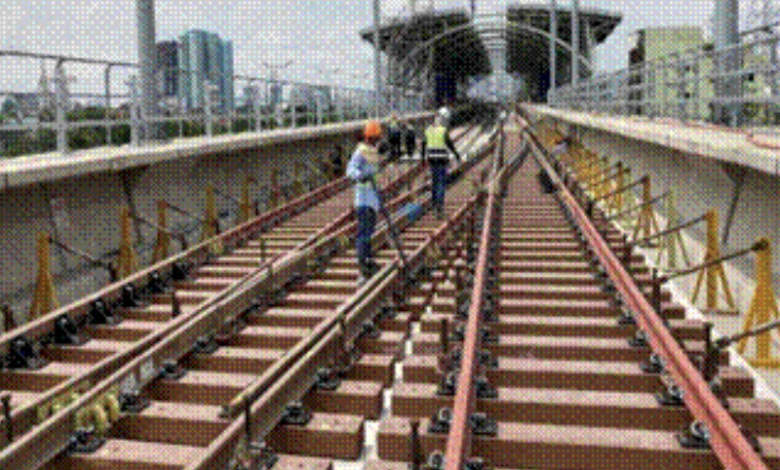
In a decisive move to enhance passenger safety, comfort, and operational efficiency, Indian Railways has decided to introduce modern composite sleepers on bridge approaches, points, and crossings across its vast network. The landmark decision was taken by Union Railway Minister Ashwini Vaishnaw during a high-level review meeting with senior officials at Rail Bhavan here on April 9, 2026.
The Ministry of Railways described the initiatives as a reflection of its strong commitment to passenger-centric development and zero-tolerance approach towards safety. Alongside the shift to composite sleepers, the Railways will deploy Artificial Intelligence (AI)-enabled track monitoring systems and adopt advanced Magnetic Particle Testing for superior weld quality. These measures are expected to make rail travel smoother, reduce maintenance costs, and strengthen overall track resilience.
Composite Sleepers: Lighter, Stronger, and More Durable
Traditionally, Indian Railways has relied heavily on prestressed concrete (PSC) sleepers and iron sleepers for most applications. While concrete sleepers offer long service life (typically 40–60 years) and are cost-effective for large-scale mainline use, they pose challenges in specific high-stress zones such as bridge approaches and turnouts.
Concrete sleepers are heavy (often 200–300 kg or more each), making handling, transportation, and installation labour-intensive and equipment-dependent. They can also create stiffness transitions that affect ride quality, especially near bridges or points & crossings, where differential settlement or higher dynamic loads occur.
The new composite sleepers — made from mixed materials including recycled plastics, fibre-reinforced polymers, or other engineered composites — address these limitations effectively. According to the Ministry, these sleepers are significantly lighter than conventional iron or concrete options, yet they boast superior load-bearing capacity, with some designs capable of withstanding up to 700 kg per square centimetre. They provide better cushioning, which translates into reduced vibration and a smoother experience for passengers when trains pass over bridges or navigate complex turnouts.
Key advantages highlighted by the Railways include:
- Easier and faster laying and repair, often requiring less heavy machinery.
- Custom design flexibility to suit specific site conditions (terrain, load, climate).
- Longer service life with lower maintenance needs, as composites resist rot, insects, chemicals, and corrosion far better than timber or steel in certain environments.
- Improved vibration damping and electrical insulation properties.
In terms of cost comparison, concrete sleepers remain cheaper upfront in India — typically ranging from ₹2,000–4,000+ per unit depending on specifications and volume. Polymer or composite sleepers generally cost 1.5–3 times more initially due to specialized manufacturing. However, their lighter weight (often one-third or less of concrete) leads to substantial savings in transportation, labour, and installation. Over the full lifecycle, composites can become competitive or even superior, especially in challenging locations, due to reduced maintenance and longer durability. Studies suggest that with increased use of recycled content and economies of scale, lifecycle costs can approach or match those of concrete in targeted applications.
The decision to deploy composites selectively on bridge approaches and points & crossings is strategic. These are high-maintenance and high-risk zones where traditional sleepers face accelerated wear. By switching here first, Indian Railways aims to achieve quicker benefits in safety and ride quality without overhauling the entire network at once. Implementation will begin in phases, with focus on critical sections.
This move aligns with global trends where railways in countries like Australia, the UK, and parts of Europe have successfully adopted composite sleepers for bridges, turnouts, and environmentally sensitive areas. In India, where the network exceeds 68,000 route kilometres and carries millions of passengers daily, even marginal improvements in track performance can yield significant gains in safety and punctuality.
AI-Powered Track Surveillance and Advanced Welding Standards
In parallel with the material upgrade, Indian Railways will introduce AI-based monitoring to elevate track surveillance to the next level. Special inspection vehicles will be equipped with Ground Penetration Radar (GPR) — an AI-enabled device that non-invasively assesses the condition of the track foundation, ballast, and subgrade. This technology will help detect hidden issues such as voids, moisture ingress, or ballast degradation early, enabling proactive maintenance and preventing potential failures.
Furthermore, to improve the quality of rail welding — a critical aspect of track integrity — the Railways has decided to adopt Magnetic Particle Testing (MPT). This non-destructive testing method is highly effective in identifying minute surface and near-surface defects in welded joints that might escape conventional visual or basic ultrasonic checks. Better weld quality will reduce the risk of rail fractures and enhance overall track strength under heavy axle loads and high-speed operations.
A Commitment to Safety and Passenger Comfort
All decisions taken in yesterday’s meeting underscore Indian Railways’ sensitivity towards the safety of its passengers and the dedication of the “railway family” to continuous improvement. Railway Minister Ashwini Vaishnaw has consistently emphasised the use of modern technology and materials to build a world-class rail network capable of supporting Vande Bharat and other high-speed services while maintaining affordability and reliability.
These initiatives come at a time when Indian Railways is rapidly modernising under schemes like Amrit Bharat Station redevelopment, track doubling, and electrification. The introduction of composite sleepers in vulnerable sections and AI-driven monitoring will complement existing systems such as the Kavach anti-collision technology and Track Recording Cars.
Experts believe the changes will not only lower long-term maintenance expenditure but also contribute to environmental goals by promoting recyclable composite materials and reducing the carbon footprint associated with heavy concrete production and transport.
While full nationwide rollout will take time, the phased approach ensures that benefits reach passengers quickly in high-traffic corridors. Detailed technical specifications, procurement processes, and field trials are expected to follow soon, with RDSO (Research Designs and Standards Organisation) playing a key role in validation.
As India’s lifeline expands to meet growing mobility demands, today’s announcements signal a clear shift towards smarter, more resilient infrastructure. Rail users can look forward to safer journeys with fewer jerks over bridges and smoother transitions at turnouts, while the system itself becomes more predictive and less reactive in maintenance.
The coming months will reveal how swiftly these technologies are integrated, but the direction is unmistakable: Indian Railways is embracing innovation to deliver safer, greener, and more comfortable travel for millions.