
What Has Changed After the Passage of the SHANTI Bill?

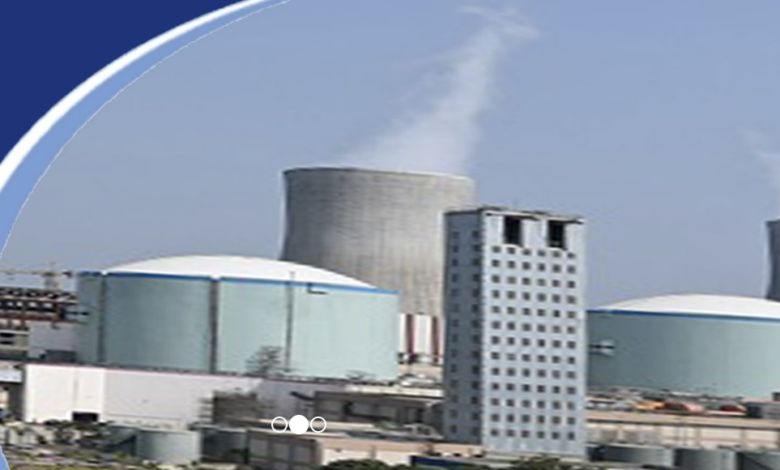
The Sustainable Harnessing and Advancement of Nuclear Energy for Transforming India (SHANTI) Bill, 2025 was passed by both Houses of Parliament on December 18, 2025. This landmark reform modernizes India’s nuclear sector, previously under strict state monopoly, to enable clean, reliable baseload power for AI data centers, green manufacturing, electric vehicles, and hydrogen production—aligning with targets of 100 GW nuclear capacity by 2047 and net-zero emissions by 2070.
Key Changes:
- Private Sector Participation
- Previously: Restricted to government entities (mainly NPCIL).
- Now: Indian private companies, joint ventures, and permitted entities can apply for licenses to build, own, operate, and decommission nuclear plants. Private investment capped at 49% minority equity; foreign participation regulated (no foreign-controlled entities for licenses). Strategic areas (fuel production, heavy water, waste management) remain government-controlled.
- Unified Legal Framework
- Repeals Atomic Energy Act, 1962, and Civil Liability for Nuclear Damage Act, 2010.
- Creates one modern law with streamlined licensing and regulation.
- Regulatory Strengthening
- Grants statutory independence to Atomic Energy Regulatory Board (AERB).
- Establishes Nuclear Damage Claims Commission and dedicated tribunal for faster dispute resolution.
- Liability Reforms
- Operator liability capped (graded by reactor size, e.g., lower for SMRs under 300 MW).
- Removes supplier liability for defective equipment; recourse only via contract or intentional acts.
- Government backstop fund for excess claims.
- Innovation and Expansion
- Promotes small modular reactors (SMRs up to 300 MW), R&D, and non-power uses (medicine, agriculture).
These changes aim to attract investment, accelerate capacity growth (from ~9 GW currently), and provide 24/7 clean energy for India’s growth.
Focus on Make in India Small Modular Reactor Technology
The SHANTI Bill strongly supports indigenous (“Make in India”) small modular reactor (SMR) development, backed by a ₹20,000 crore Nuclear Energy Mission (announced in Budget 2025) to operationalize at least five indigenously designed SMRs by 2033.
Key indigenous designs under development by Bhabha Atomic Research Centre (BARC), NPCIL, and BHAVINI:
- Bharat Small Modular Reactor (BSMR-200): 200 MWe pressurized water reactor-based, modified from proven Indian PHWR technology.
- Bharat Small Reactor (BSR)/SMR-55: 55 MWe compact design for captive industrial use and remote locations.
- Indian High-Temperature Gas-Cooled Reactor: 5 MWth, dedicated to green hydrogen production.
These “Bharat” series reactors emphasize local manufacturing, with most equipment producible by Indian industry. Private partnerships (e.g., with conglomerates) will accelerate deployment, while maintaining government oversight for technology transfer and self-reliance. Graded liability caps make SMRs more viable for investors.
Companies Likely to Benefit
The Bill opens opportunities across the nuclear value chain (construction, equipment supply, operation via JVs). Key Indian companies positioned to gain:
- Larsen & Toubro (L&T): Major beneficiary with expertise in nuclear equipment (reactor vessels, steam generators) and EPC contracts.
- MTAR Technologies: Specializes in precision components for nuclear reactors; qualified for advanced products and expanded capacity.
- Bharat Heavy Electricals Limited (BHEL): Potential for turbine and heavy engineering supply.
- Conglomerates with expressed interest: Reliance Industries, Tata Power, Adani Power, NTPC, JSW Energy—these have indicated intent to invest in nuclear projects, especially indigenous SMRs, and partner with global vendors if needed.
- Others: Jindal Steel & Power, Hindalco—eyeing participation in upcoming projects.
Public sector NPCIL and BHAVINI remain dominant for indigenous tech, but private firms can now bid for roles in new builds.
Critical Analysis: Comparison with Other Countries
India’s model is a hybrid—limited private involvement with strong government oversight and emphasis on indigenous tech—unlike fully privatized systems elsewhere.
- USA: Highly privatized; utilities own/operate plants under NRC regulation. Benefits: Innovation and scale (largest fleet). Risks: Cost overruns (e.g., Vogtle project delays), reliance on subsidies/loan guarantees. Liability capped via Price-Anderson Act; suppliers largely shielded. India differs by prioritizing “Make in India” over full foreign designs.
- France: Mostly state-owned (EDF majority). Benefits: Standardized designs, low costs, ~70% nuclear electricity. Risks: Centralized vulnerabilities. Strong operator liability, but state backs.
- UK/Canada: Mixed; private operators with regulated models. Benefits: Attracts private capital. Risks: High costs, public funding needed.
India’s approach is cautious (minority private stakes, no full foreign ownership) compared to USA/UK, but liability dilution and SMR focus align with global norms to encourage investment. Indigenous emphasis sets it apart, reducing import dependence unlike many nations.
Hidden Dangers and Criticisms
While the Bill boosts growth and indigenous tech, critics highlight risks:
- Safety Compromises: Profit-driven private operators may cut corners; diluted supplier liability removes incentive for quality equipment. Lower caps for SMRs could encourage risky deployment near populations.
- Liability Gaps: Caps seen as inadequate for major accidents; shifts risk to state/public.
- Proliferation Risks: More facilities increase material diversion potential.
- Waste and Decommissioning: Long-term hazardous waste unresolved; private exit could leave cleanup to government.
- Sovereignty and Accountability: Fears of favoring big corporates; rushed passage without broad consultation.
Balanced reform could drive clean, indigenous energy, but weak safeguards risk catastrophic burdens. Renewables (solar/wind + storage) offer faster, safer alternatives without these perils.