SHANTI Bill 2025: Opening India’s Nuclear Energy Sector to Private Participation – A Critical Analysis

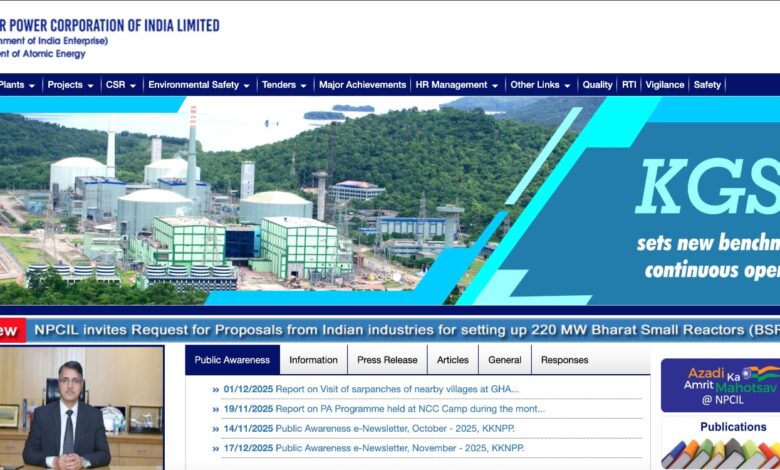
The Sustainable Harnessing and Advancement of Nuclear Energy for Transforming India (SHANTI) Bill, 2025, passed by the Lok Sabha on December 17, 2025, amid an Opposition walkout, represents a paradigm shift in India’s nuclear policy. By amending the Atomic Energy Act, 1962, and the Civil Liability for Nuclear Damage Act, 2010, it ends the state’s near-monopoly—primarily through the Nuclear Power Corporation of India Limited (NPCIL)—and permits private companies to build, own, operate, and decommission nuclear power plants. This reform aims to propel India’s nuclear capacity from ~8 GW to 100 GW by 2047, aligning with net-zero goals by 2070 and rising energy demands from data centers and industrialization.
The bill introduces a “pragmatic” liability regime, capping operator liability at ₹3,000 crore (with government backstopping excess), easing supplier burdens, and allowing up to 49% FDI in joint ventures. It promotes Small Modular Reactors (SMRs) for faster, cost-effective deployment and strengthens the Atomic Energy Regulatory Board (AERB) with statutory status. Sensitive areas like fuel mining and waste management remain government-exclusive.
Benefiting Companies
Major beneficiaries include:
- Indian Conglomerates: Reliance Industries, Adani Power, and Tata Power—poised for diversification via partnerships.
- Engineering Giants: Larsen & Toubro (L&T) and Bharat Heavy Electricals (BHEL)—for construction and equipment.
- Global Players: Westinghouse (USA), GE-Hitachi, EDF (France), and Rosatom (Russia)—attracted by reduced liability risks.
This could unlock billions in investments, foster innovation, and create jobs.
Critical Concerns and Risks
While proponents hail it as essential for capital mobilization—nuclear projects are notoriously expensive and slow—critics, including Congress MPs Manish Tewari, Shashi Tharoor, and others, decry it as a “dangerous leap” into privatization. Key issues:
- Diluted Liability and Safety Risks: Removing supplier liability (a 2010 consensus post-Fukushima) could encourage corner-cutting by profit-driven entities. Tharoor warned that “pursuit of capital cannot override public safety,” citing inadequate compensation caps (~₹3,900 crore adjusted) and potential socialization of risks (taxpayers bear accidents).
- Regulatory Independence: AERB’s autonomy remains questionable, with government influence in appointments eroding trust.
- Corporate Favoritism and Transparency: Opposition alleges “corporate push,” noting timing with conglomerates’ interests, and RTI restrictions on “restricted” information limit scrutiny.
- Execution and Commercial Challenges: High capital costs (₹16-20 crore/MW), long timelines (8-10 years), and lack of private track record raise tariff competitiveness doubts.
- National Security: Opening sensitive tech to private/foreign players risks proliferation, despite safeguards.
The rushed passage without committee referral fueled accusations of undermining accountability. Historical protests against nuclear plants (e.g., Kudankulam) highlight public fears of environmental and health impacts.
Balanced Perspective
The SHANTI Bill addresses genuine bottlenecks—state funding limits and foreign vendor hesitance—potentially accelerating clean baseload power. Yet, without robust independent regulation, stringent liability, and public consultation, it risks prioritizing speed over safety in a zero-error domain. Global precedents (e.g., USA’s private nuclear) succeed with strong oversight; India must ensure the same to avoid disasters. As it heads to Rajya Sabha, deeper scrutiny could refine this ambitious but contentious reform.