Indian Railways Accelerates Modernisation, Produces Over 42,600 LHB Coaches in 11 Years

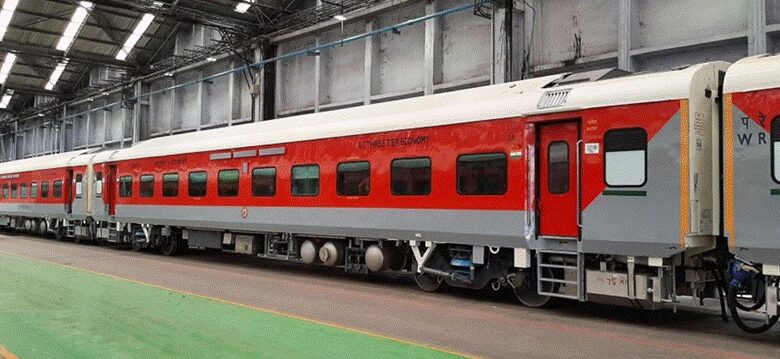
Indian Railways has made a significant stride in modernising the country’s passenger rolling stock, manufacturing more than 42,600 Linke Hofmann Busch (LHB) coaches over the past 11 years. The large-scale production marks a decisive shift towards safer, more comfortable and efficient rail travel, while also strengthening the government’s flagship initiatives of Atmanirbhar Bharat and Make in India through enhanced indigenous manufacturing.
LHB coaches, which have now become the backbone of long-distance and premium train services, are widely regarded for their superior safety features, better riding comfort and lower maintenance requirements. Designed with advanced engineering, these coaches offer higher speed potential, improved crashworthiness and a smoother travel experience compared to the older conventional ICF coaches.
The current financial year has witnessed a strong momentum in production. During 2025–26, up to November 2025, Indian Railways manufactured more than 4,224 LHB coaches. This represents an 18 per cent increase compared to the 3,590 coaches produced during the corresponding period of the previous year. Officials attribute the growth to strengthened manufacturing capacity, improved production planning and greater coordination across railway production units.
Factory-wise data highlights robust performance across all major coach manufacturing units. The Integral Coach Factory (ICF) in Chennai led the output during this period with the production of 1,659 LHB coaches. It was followed by the Modern Coach Factory (MCF) at Raebareli, which manufactured 1,234 coaches, while the Rail Coach Factory (RCF) at Kapurthala produced 1,331 coaches. Together, these units have played a crucial role in sustaining high production levels and meeting the growing demand for modern coaches.
A longer-term comparison underscores the scale of transformation achieved by Indian Railways. Between 2014 and 2025, over 42,600 LHB coaches were produced—an almost 18-fold increase over the approximately 2,300 coaches manufactured during the decade from 2004 to 2014. This sharp rise reflects a sustained policy focus on replacing ageing conventional coaches with LHB designs across the rail network.
The widespread induction of LHB coaches has also had a direct impact on passenger safety. Equipped with anti-climbing features, improved braking systems and better structural integrity, these coaches significantly reduce the risk of fatalities and injuries during accidents. Their lighter weight and modern suspension systems further enhance energy efficiency and riding comfort, making them suitable for higher speeds and long-distance operations.
Beyond passenger benefits, the LHB coach programme has emerged as a key pillar of India’s self-reliance drive. By indigenising production and developing domestic supply chains for components and sub-systems, Indian Railways has reduced dependence on imports and boosted local manufacturing capabilities. The initiative has also generated employment, encouraged skill development and strengthened ancillary industries linked to rail coach production.
Looking ahead, Indian Railways plans to further augment its manufacturing strength to cater to the country’s expanding mobility needs. With passenger volumes steadily rising and expectations for safer and more comfortable travel increasing, the focus will remain on scaling up production of modern coaches while maintaining quality and safety standards.
The rapid expansion in LHB coach manufacturing stands as a testament to Indian Railways’ commitment to modernisation, self-reliance and passenger-centric reforms. As more of these advanced coaches enter service, they are set to redefine rail travel in India, offering a safer, smoother and more efficient journey for millions of passengers every day.