Make in India in Railways: MSMEs Need Bigger Role to Boost Local Manufacturing, Says Daulat Ram Engineering MD

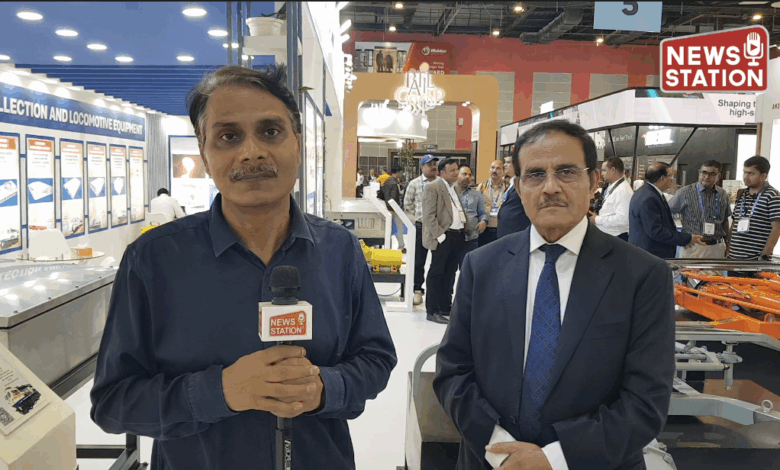
In an exclusive interview with NewsStation, C.P. Sharma, Managing Director of Daulat Ram Engineering, hailed the government’s Make in India initiative as a game-changer for India’s railway sector but called for urgent reforms to empower micro, small, and medium enterprises (MSMEs). Speaking amid massive investments in infrastructure like Vande Bharat trains and high-speed corridors, Sharma argued that restrictive tender frameworks are sidelining local players in favor of large corporations—many of which are foreign firms masquerading as domestic entities.
“India’s time has come,” Sharma said, adapting Prime Minister Narendra Modi’s slogan “Local Arise, Global Search” to emphasize producing world-class products with global quality and mindset. His company, a homegrown engineering firm, exemplifies this ethos. Daulat Ram Engineering manufactures traction motors for locomotives, which are exported to advanced markets like the United States, Africa, and Australia—despite a recent 50% U.S. tariff hike imposed under former President Donald Trump.
“Our prices are already highly competitive,” Sharma noted. “Even after the 50% tariff, orders keep coming. It feels like we’ve been selling too cheaply sometimes, but we’re still profitable, and our products are moving.” He attributed this success to rigorous quality controls, from premium materials and innovative designs to meticulous testing and export-grade packaging. “Quality is paramount,” he stressed. “We’ve even salvaged India’s reputation abroad after rejections from other suppliers. Now, foreign customers embrace our products openly.”
Exports form a cornerstone of the company’s strategy. Beyond the U.S., Daulat Ram sends substantial volumes to African nations including Mozambique, South Africa, Kenya, and Zimbabwe. “These partners trust us for reliable, high-performance components,” Sharma added.
Turning to domestic opportunities, Sharma expressed optimism about projects like Vande Bharat semi-high-speed trains and the upcoming Vande Sleeper variant. “Indian industries like ours, with decades in the railway ecosystem, will certainly benefit,” he said. However, he voiced a strong caveat: MSMEs must play a central role. “Foreign companies are coming in as ‘desi’ firms and scooping up big orders. That’s not true Make in India.”
The core issue, according to Sharma, lies in overly restrictive qualification criteria for railway tenders. Requirements like prior production of 250 coaches or sky-high turnover thresholds exclude capable MSMEs. “We need a window for new players,” he urged. “Trust local capabilities—look at a company’s 40-year track record in a competitive global market, where even foreign firms use our products. Turnover or facilities shouldn’t be barriers; we’ll build them if given the chance.”
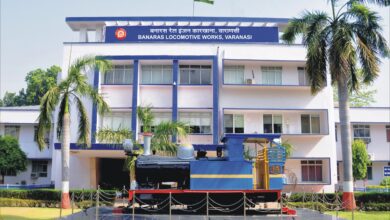
Sharma shared a poignant anecdote from his early days to illustrate the “real spirit of Make in India.” In the 1980s, as a fledgling entrepreneur, he bid on a tender for traction alternators—devices that generate power for locomotive motors—at the Diesel Loco Works (now Banaras Locomotive Works, or BLW). Approaching General Manager Robin Sharma (no relation), he admitted lacking facilities, including even a crane to lift the 6.5-ton product.
“Robin Sharma ji said, ‘Take this order—it’s worth just ₹1 on paper. If you deliver, it’s yours; if not, it’s worthless,'” C.P. Sharma recalled emotionally. Despite his clean image and initial team skepticism, Robin Sharma trusted his potential. “He believed I’d make it happen.” That small order sparked Daulat Ram’s growth into a key supplier, all without foreign collaborations. “Railway officers like him opened doors for local firms. Today, that’s the trust we need to revive.”
Daulat Ram Engineering now supplies a range of critical railway components, including traction motors for locomotives built at facilities like Ranjan, BLW Varanasi, and Patiala. Among its innovations is a reverse-cycle air conditioner approved by the Research Designs and Standards Organisation (RDSO). This heater-free unit provides hot air in winters and cool air in summers—ideal for extreme climates like Kashmir—while enhancing safety by eliminating fire risks from heating elements. “It electronically reverses the cycle: expels hot air in summer, draws in cold air in winter,” Sharma explained.
The company also produces pantographs for locomotives and high-reach variants for semi-high-speed and double-stack container freight trains. For Vande Bharat coaches, it supplies specialized AC units with advanced compressors and superior build quality. “The technology is similar to standard units, but the quality sets it apart,” he said.
As the interview wrapped, Sharma praised media coverage of the sector. “Exhibitions like this showcase Indian industry’s prowess. If journalists like Siddharth deliver facts to the right places, it will do the nation immense good,” he said, complimenting NewsStation’s dedicated railway reporting.
The conversation underscores a pivotal challenge for India’s manufacturing ambitions: To become a global hub, railways must prioritize MSMEs over entrenched giants. “Small firms worldwide have grown into behemoths,” Sharma concluded. “We did it from scratch—give us the chance, and Make in India will truly thrive.”