Abhayrab Vaccine Alert: Counterfeit Vials Detected in Delhi, Manufacturer Says Seized Samples Were Not Genuine Product

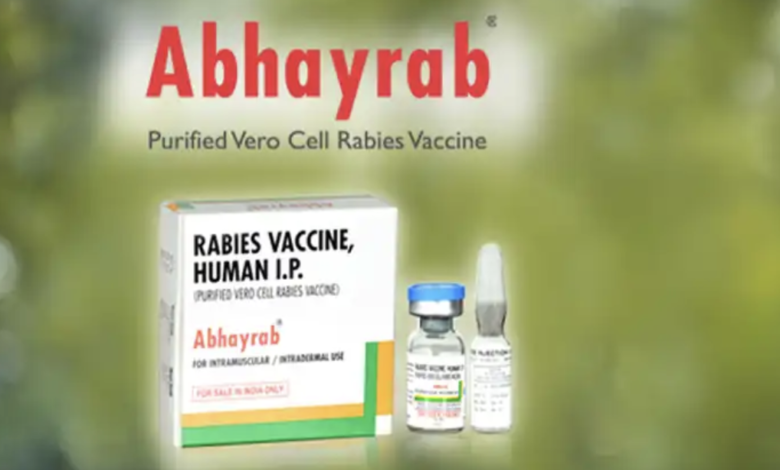
A controversy over Abhayrab, a human anti-rabies vaccine, has raised concerns among patients and healthcare professionals after vaccine vials carrying the label of Abhayrab Batch No. KE25012 were found during an enforcement action at an unlicensed residential premises in Mukherjee Nagar, Delhi.
Human Biologicals Institute, a division of Indian Immunologicals Limited, has clarified that the vials seized from the premises were not manufactured by the company, despite carrying the label and batch number of its vaccine. The company said the samples were tested by the Central Drugs Laboratory (CDL), Kasauli, and were reported as “Not of Standard Quality” (NSQ) and misbranded.
The development has triggered renewed concern over the risks posed by counterfeit medicines and vaccines, particularly in the case of rabies, a disease that becomes fatal once clinical symptoms appear.
17 discrepancies found between genuine and seized vials
According to the manufacturer’s official statement dated September 4, 2026, the laboratory found 17 differences between the seized vials and the genuine retention samples of Batch KE25012 maintained by Human Biologicals Institute.
Based on these discrepancies, the company said the samples examined by the authorities were not a product manufactured by Human Biologicals Institute.
The company has therefore sought an investigation into the origin of the seized vials and how they came to bear the name, labelling and batch details of Abhayrab.
The manufacturer said it submitted its manufacturing, quality-control, reconciliation and distribution records to CDSCO on August 14, 2026. It subsequently submitted a representation dated September 4 to the Drugs Controller General of India (DCGI), requesting authorities to trace the source of the seized vials and take action against those responsible.
Genuine Abhayrab batch was released after testing
Human Biologicals Institute has also emphasised that the genuine Abhayrab Batch KE25012 underwent regulatory testing before being released.
According to the company, the batch was tested and released by the Central Drugs Laboratory under Batch Release Certificate No. CDL/2025/8392 dated November 7, 2025.
A total of 83,370 vials from this genuine batch were supplied through authorised distribution channels, the company said. It also stated that there had been no market complaints concerning the genuine batch.
The manufacturer has stressed that every batch of Abhayrab is released only after independent testing and batch-release certification by the Central Drugs Laboratory.
Pediatrician raises alarm on social media
Amid the controversy, Dr. Sivaranjini, a pediatrician, also posted a warning on social media, describing people involved in releasing counterfeit anti-rabies vaccines as criminals and stressing the potentially fatal consequences of rabies.
In her post, she referred specifically to Abhayrab Batch No. KE25012 and said counterfeit versions had recently been detected by drug-control authorities. She highlighted the reported differences between the genuine and counterfeit versions and advised people with concerns about a vaccine dose to consult a healthcare professional.
Dr. Sivaranjini also mentioned checking the vaccine’s QR code as one way of identifying the product. However, patients should not independently conclude that a vaccine is counterfeit solely on the basis of a QR-code check. Any suspected counterfeit or questionable vaccine should be verified by a qualified healthcare professional or the relevant drug-control authority.
The pediatrician further advised people who believe they may have received a suspect vaccine to contact their healthcare provider rather than making decisions about additional doses themselves.
What if someone received Abhayrab KE25012?
The manufacturer’s statement does not say that genuine Abhayrab Batch KE25012 released through authorised channels is ineffective. Rather, the company has specifically stated that the vials seized from the unlicensed premises did not match its genuine retention samples.
Therefore, a person who received Abhayrab through a hospital, government healthcare facility, licensed clinic or authorised pharmacy should not assume that the vaccine was counterfeit merely because the batch number is KE25012.
Anyone who has doubts about the authenticity of a vaccine dose should take the vaccination records, vial details and, if available, packaging to a healthcare professional or appropriate drug-control authority. Whether another dose is required should be determined medically and according to the applicable rabies post-exposure protocol.
Rabies treatment should not be delayed
The issue is particularly serious because rabies is almost invariably fatal once clinical symptoms develop. The World Health Organization says rabies causes tens of thousands of deaths every year, with children accounting for a substantial proportion of deaths. At the same time, deaths can be prevented when appropriate post-exposure prophylaxis is administered promptly. (World Health Organization)
India’s National Guidelines for Rabies Prophylaxis state that, because India is a rabies-endemic country, treatment should be started immediately after a potentially risky animal exposure rather than waiting to see whether symptoms develop. (NCDC)
WHO similarly advises people who are bitten or scratched by a potentially rabid animal to immediately wash the wound thoroughly with soap and water and seek medical care for assessment and post-exposure treatment. (World Health Organization)
Rabies vaccine should not be injected in the buttocks
Another important point raised by Dr. Sivaranjini concerns the site of administration of rabies vaccine.
She warned that anti-rabies vaccine should not be administered in the buttocks and said a dose given there should not automatically be considered a valid dose.
This warning is consistent with established rabies vaccination guidance. WHO guidance states that, for intramuscular administration, rabies vaccine is given in the deltoid region in adults and older children, while the anterolateral thigh is used for infants and small children. WHO guidance specifically says rabies vaccine should not be administered in the gluteal region. (WHO IRIS)
However, patients who believe they received a vaccine in the wrong anatomical site should not decide on their own to restart or repeat the vaccination schedule. They should consult a healthcare professional promptly, who can assess the exposure, vaccination route, timing and appropriate next steps.
Rabies vaccines may also be administered through intradermal (ID) regimens under appropriate protocols and by trained healthcare personnel, so the route and schedule need to be considered when assessing whether a particular dose was correctly administered. (World Health Organization)
What about the 10-day observation rule?
The social-media post also referred to the commonly discussed 10-day observation period for dogs and cats.
India’s National Guidelines for Rabies Prophylaxis clarify that the 10-day observation period is applicable only to dogs and cats. Importantly, the guidelines state that post-exposure prophylaxis should be started immediately after exposure; treatment may subsequently be modified under specified circumstances if the dog or cat remains healthy throughout the 10-day observation period. (NCDC)
WHO also recommends that, where possible, a potentially suspect dog be safely confined and observed for 10 days under appropriate supervision. Availability of the animal for observation should not delay the victim from seeking post-exposure prophylaxis. (World Health Organization)
The 10-day observation principle therefore should not be casually extended to other mammals. India’s national guidelines specifically state that the 10-day observation period does not apply to mammals other than dogs and cats because the natural history of rabies in those animals is not fully understood. (NCDC)
Patients should rely on authorised healthcare channels
The Abhayrab controversy underscores the importance of obtaining vaccines only through licensed hospitals, clinics, government health facilities and authorised pharmacies.
The manufacturer has said that the specific vials seized from the Mukherjee Nagar premises were not genuine products manufactured by Human Biologicals Institute. The company has requested authorities to identify the source of those vials and take action against those responsible.
For patients, the key message is not to panic but also not to ignore a possible rabies exposure or a suspected vaccine-quality issue. Anyone who has received a potentially questionable vaccine should contact a qualified healthcare professional and carry the available vaccination record, vial, packaging and batch details for verification.
Rabies is preventable when appropriate post-exposure treatment is administered correctly and without delay. WHO stresses that prompt wound care, vaccination and, where indicated, rabies immunoglobulin form the basis of effective post-exposure prophylaxis. (World Health Organization)
As the investigation into the seized Abhayrab-labelled vials continues, further clarification from CDSCO, the DCGI and Indian Immunologicals Limited will be important in establishing their source and determining whether any wider distribution occurred. Until then, suspected counterfeit vaccines should be treated as a serious regulatory and public-health concern, while genuine vaccines obtained through authorised channels should not be presumed counterfeit solely because they belong to the same batch number.